If you are new to the custom apparel industry, you have probably noticed a massive shift in how people are creating custom garments. You might be hearing a lot of confusing jargon, and you are likely asking yourself: what exactly is a DTF printer, and why is everyone talking about it?
When I first started exploring different printing methods for garments, I felt completely overwhelmed by the sheer number of options. Between screen printing, DTG printing, and sublimation printing, it seemed like you needed a chemistry degree just to understand how to put a logo on a shirt. You see people creating incredible, vibrant apparel online, but the technical barrier to entry can look incredibly steep from the outside.
I wrote this guide to clear up the confusion. I am going to explain everything you need to know about DTF printing in plain, straightforward language. We will walk through the entire process, look at the equipment involved, and weigh the pros and cons.
More importantly, I will help you answer a critical question: do you actually need to buy a printer to get these professional results? As you will soon discover, there is a much simpler way to get the exact same high-quality prints without ever dealing with clogged ink lines or expensive machine maintenance.

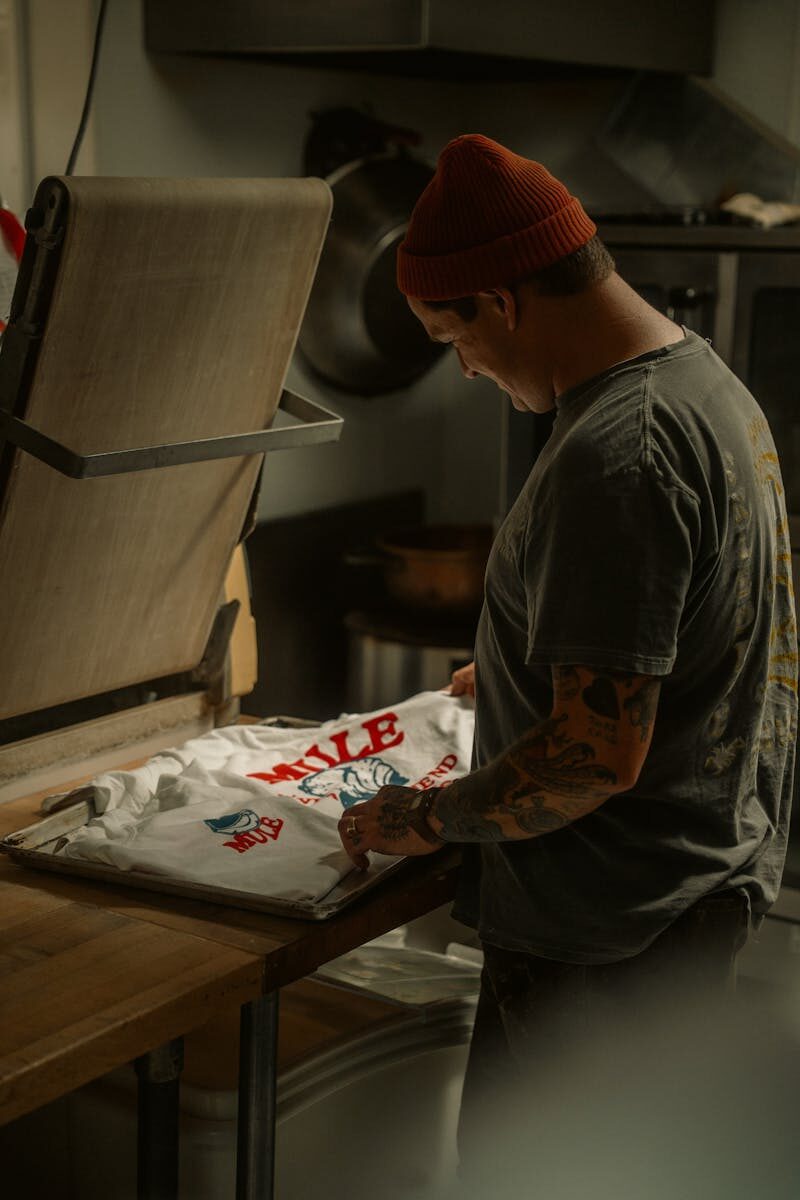
Photo by Michael Kyule on Unsplash
What Is a DTF Printer
A DTF printer is a specialized inkjet machine designed specifically for direct to film printing. Instead of printing ink directly onto a piece of fabric, this printer prints your design onto a piece of special film.
This might sound like a minor detail, but it changes everything. A DTF printer uses specific water-based inks to lay down the CMYK colors first, followed by a thick white ink layer on top. This white layer acts as a base, ensuring your design looks incredibly vibrant regardless of the color of the shirt you eventually press it onto. Once the design is on the printed film, an adhesive powder is applied and melted, turning that flat image into a ready-to-press transfer.
To really understand why DTF technology has taken the textile industry by storm, it helps to compare it to other popular methods:
- DTG printing (Direct to Garment): A DTG printer prints directly onto the fabric. While this works beautifully on 100% cotton fabrics, it struggles with polyester blends and requires messy, time-consuming pretreatment sprays for dark fabrics.
- Screen printing: This is the traditional method of pushing ink through a mesh stencil. It yields excellent durability but requires a massive amount of setup. You have to burn a new screen for every single color in your design, making it highly impractical for small orders or highly detailed, multi-color images.
- Sublimation printing: This process turns ink into a gas that dyes the fabric. It leaves zero feel on the shirt, but it only works on light fabrics and garments made of at least 65% polyester. You cannot sublimate onto a black cotton t-shirt.
This is where the magic of DTF direct to film printing shines. It works beautifully on cotton fabrics, polyester blends, dark fabrics, nylon, denim, canvas, and even hard surfaces like wood or leather. You get crisp edges, vivid colors, and excellent durability without the restrictions of older printing methods.
How the DTF Printing Process Works
While the results look like magic, the dtf printing process is actually a straightforward sequence of steps. Here is exactly how DTF printing works from the computer screen to the final product.
Step 1: Design Preparation
Everything starts on your computer. You create or upload a design using specialized software known as RIP software. This software translates your digital image into language the printer understands, dictating exactly how much color and white ink to lay down so you get high-quality designs.
Step 2: Printing on DTF Film
Once you hit print, the machine goes to work. The printer prints the entire design onto the transfer film. It first lays down the vibrant CMYK colors. Immediately after, it prints a solid white layer directly over the colors. This white base is crucial because it ensures the colors remain opaque and bright when transferred onto dark fabrics.
Step 3: Apply Adhesive Powder
While the ink is still wet on the PET film, you move to the powdering stage. If you have an automated setup, the film feeds into a powder shaker. If you are doing it manually, you sprinkle the adhesive powder (a fine powder made of polyurethane) over the wet ink. The white powder sticks only to the wet ink, and you shake off the excess.
Step 4: Curing the Design
Next, the powder needs to be melted so it binds with the ink. The film passes through a curing oven, or you can hover a heat source over the film. The heat turns the fine powder into a flexible, rubbery adhesive layer. At this point, the transfer is fully cured and can be stored for months or used immediately.
Step 5: Heat Press Application
When you are ready to decorate a garment, you position the cured transfer film onto your item. You place it on the lower platen of a heat press machine, pull down the upper platen, and apply heat and pressure. The heat melts the adhesive again, permanently binding the design transferred to the fabric fibers.
Step 6: Peel and Finish
After the heat press timer goes off, you lift the press and peel away the clear plastic carrier. Depending on the film you use, this is either a hot peel (peeling immediately) or a cold peel (waiting for it to cool). A true hot peel offers faster production times. The final result is a beautiful, professional graphic with a soft-hand feel and incredible wash resistance.
Equipment Needed for a DTF Printing Machine
If you want to run the entire printing process yourself, you are going to need more than just the printer. A proper setup requires a full ecosystem of equipment and supplies.
Core Equipment
- DTF Printer: The central machine that handles the ink application.
- Heat Press Machine: A commercial-grade press is mandatory. You need accurate temperature and heavy, even pressure to ensure the design is heat transferred correctly. An iron simply will not work.
- Computer and RIP Software: The brain of the operation, ensuring your colors are accurate and your white underbase is properly aligned.
Additional Tools and Supplies
- Powder Shaker: If you want to automate your workflow, an automatic powder shaker applies and shakes off the adhesive powder for you.
- Curing Oven: A dedicated oven ensures the adhesive powder melts evenly without risking damage to the film.
- Consumables: You will need a constant supply of PET film, fine adhesive powder, and specialized water-based inks.
It is important to have a reality check here. The initial investment for a reliable DTF printer and the necessary accessories can run into thousands of dollars. Beyond that, these machines require significant space and strict climate control to keep the ink from drying out in the lines.
Photo by Chris Lynch on Unsplash
Pros and Cons of DTF Printing vs Other Methods
Like any piece of technology in the printing industry, direct to film has distinct advantages and notable drawbacks.
The Pros of Owning a Printer
The biggest advantage is the sheer print quality. You can achieve eye-catching designs with vivid colors that rival any other printing method. Because the printer handles the complexity, it is fantastic for highly detailed designs, photographic prints, and producing multiple designs on a single run.
Unlike screen printing or vinyl, there is absolutely no weeding required. You simply print, powder, cure, and press. Furthermore, the wash resistance and excellent durability ensure your customers receive a premium product that will not crack or fade prematurely.
The Cons of Owning a Printer
While the output is fantastic, the operational reality can be challenging. The high upfront cost of a commercial DTF printing machine is a massive barrier.
Maintenance is the single biggest friction point. The white ink used in DTF contains titanium dioxide, which settles quickly and clogs printheads if the machine is not used and cleaned daily. You have a steep learning curve ahead of you when it comes to managing humidity, performing daily printhead cleanings, and troubleshooting RIP software errors. Managing the workflow of printing, powdering, and curing can also become highly complex compared to other techniques if your process is not heavily optimized.
Do You Need a DTF Printer or Just DTF Film Transfers for T Shirts?
This is the most important question you need to ask yourself: does it actually make sense for your business to own and operate a printer?
Owning a printer makes sense if you are running a large-scale production facility. If you are an established print shop running hundreds of custom garments a day and have dedicated staff to handle daily maintenance, bringing a machine in-house gives you full control over your margins and production schedule.
However, for the vast majority of people, buying a printer is an expensive mistake. If you are a beginner starting a t-shirt business, an e-commerce seller on Shopify or Etsy, or a small business owner lacking warehouse space, you do not need the headache of equipment maintenance. Even DIY creators who want professional results usually find the maintenance requirements of DTF printers completely overwhelming.
The Simpler Alternative: Pre-Made Transfers
You can get all the benefits of DTF technology without owning the printer. By ordering pre-made DTF transfers, you skip the messy ink, the expensive equipment, and the daily maintenance. All you need is a heat press machine.
This is exactly why we built Limitless Transfers. We saw talented creators getting bogged down by clogged printheads and technical errors, so we decided to handle the printing process for them.
When you use Limitless Transfers, you are getting award-winning print quality. We proudly took home 1st Place for DTF Quality in both 2024 and 2025. We use expanded gamut CMYK+RGBO+W printing, which guarantees unmatched color accuracy and a beautiful soft-hand feel.
We provide true hot-peel transfers, which radically speeds up your production time compared to frustrating cold-peel alternatives. We also know that speed is everything in the apparel business. That is why we offer same-day shipping on orders placed by noon EST, along with free UPS Ground shipping on orders over $50.
Whether you need a single logo or a massive 22.5-inch gang sheet, we have absolutely no minimum order requirements. You simply upload your artwork using our user-friendly gang sheet builder, let us handle the messy printing process, and wait for your professional-grade transfers to arrive at your door. You press them onto almost any fabric types, peel the film hot, and immediately have a retail-ready product to sell.
The Right Path to High-Quality Custom Apparel
DTF printing has completely revolutionized the way we decorate garments. It offers the versatility to print vibrant, detailed images on almost any material, bridging the gap between the limitations of DTG, screen printing, and sublimation.
But as we have covered, understanding how a DTF printer works and actually running one are two very different things. The high costs, space requirements, and strict maintenance routines make owning a printer a difficult hurdle for many small businesses and creators.
You don’t have to be a printer technician to run a highly successful custom apparel brand. It is not just about whether you can run a printer—it is about whether you should. Your time is incredibly valuable, and spending hours unclogging printheads takes you away from designing, marketing, and growing your business.
If you are ready for a faster, easier path to creating high-quality apparel without the stress of maintaining equipment, we are here to help. Let us handle the printing, so you can focus on pressing for profit. Start creating today with Limitless Transfers—no printer required.
Helpful Resources
- DTF Printing 101 – Discover the basics of DTF printing and how it stands apart from other methods in this comprehensive guide from Printful. Read more here.
- Optimizing Your DTF Printer Settings – Check out tips and tricks to fine-tune your DTF printer settings and get the best results at AllPrintHeads Blog. Learn here.
- The Science Behind DTF Adhesive Powders – Gain insight into how adhesive powders work in the DTF printing process from The Graphics Fairy. Find out more here.
- Essential Maintenance Tips for DTF Printers – Stay ahead of potential printer issues by following maintenance guidelines. See details here.
- Eco-Friendly Practices in DTF Printing – Learn how to make your DTF printing process more sustainable with advice from Green Print Solutions. Check it out here.
- Understanding RIP Software for DTF Printing – Discover why RIP software is essential for managing color and quality control at CADlink Technology. Read more here.