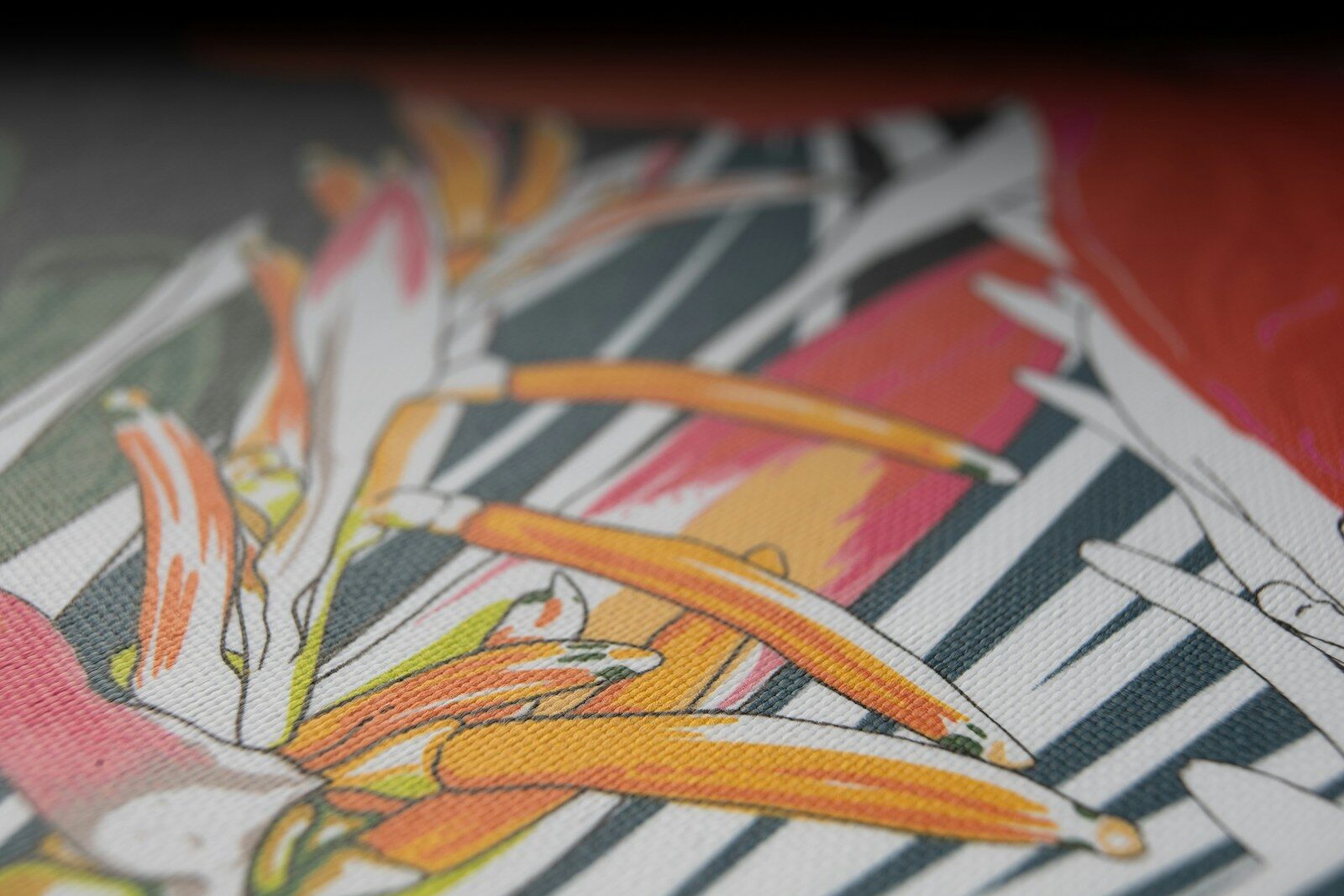
DTF printing (Direct-to-Film printing) is a method where a full-color design is printed onto a specialized PET film, coated with adhesive powder, cured, and then heat pressed onto fabric. It works on cotton, polyester, blends, nylon, denim, and more—with no weeding, no minimum orders, and no need to own a printer.
Custom apparel production has changed considerably in recent years. One technology sits at the center of that shift: DTF printing. Whether you’re running a growing Shopify store, pressing shirts in your garage, or managing a high-volume print shop, DTF transfers have quietly become one of the most accessible and capable decoration methods available.
What makes DTF so compelling isn’t just one feature—it’s the combination. Full-color artwork. Fine details. Compatibility with light and dark fabrics. No weeding. No color limits. No minimum order requirements. The ability to produce transfers in advance and press them when orders arrive. That’s a meaningful set of advantages, especially for businesses that need flexibility.
At Limitless Transfers, we handle the printing, powdering, curing, and quality control so our customers receive professional, ready-to-press DTF transfers—no DTF printer required. Recognized with back-to-back 1st Place Quality awards in 2024 and 2025, we’ve built our process around helping everyone from first-time crafters to established print shops get professional results with less friction.
This guide covers everything you need to know about DTF printing: how it works, what it works on, how it compares to other methods, and how to get the most from every transfer you press.
Roland DG’s DTF workflow overview provides useful background on the technical stages of DTF production, from printing to heat pressing.
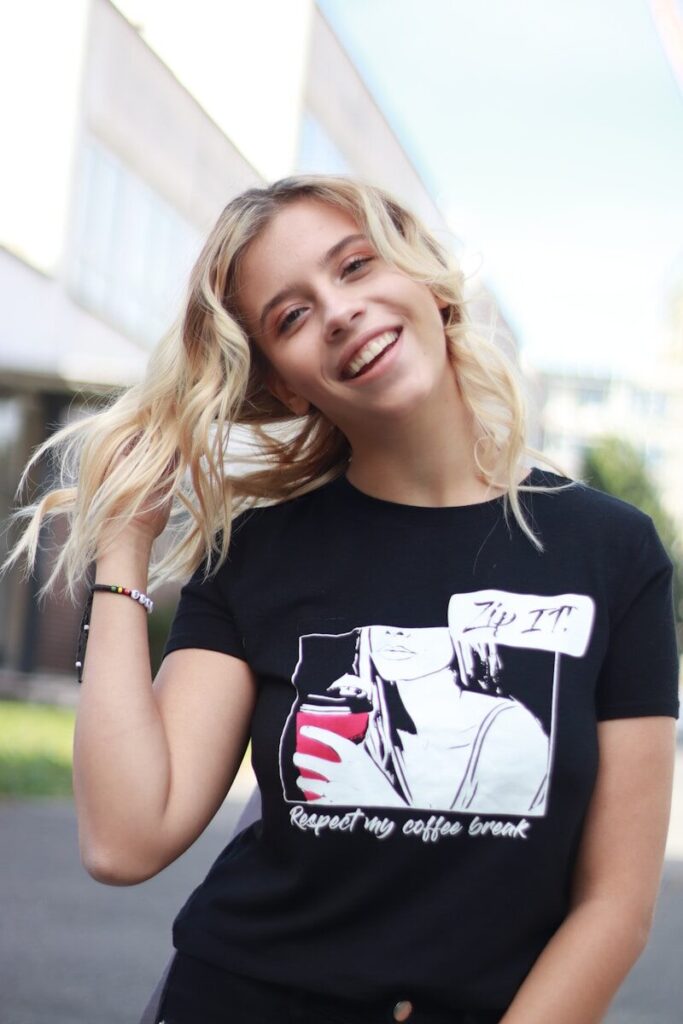
Photo by Patrik Velich on Unsplash
What Is DTF Printing?
DTF stands for Direct-to-Film printing. Instead of printing ink directly onto a garment, the artwork is printed onto a specialized transparent PET film. A layer of white ink sits beneath the color, which allows designs to remain vivid and bright even on dark-colored garments. Once printed and cured, the film becomes a ready-to-press transfer.
The result is a full-color graphic capable of reproducing gradients, fine lines, small text, intricate details, and complex illustrations—all without the color restrictions associated with screen printing or the weeding requirements of heat transfer vinyl.
DTF transfers work across a wide range of applications:
- Custom T-shirts and hoodies
- Tote bags and canvas products
- Workwear and team uniforms
- Promotional merchandise
- Small-batch and one-off orders
- E-commerce apparel businesses
Why Direct-to-Film Is Different From Direct-to-Garment Printing
DTG (Direct-to-Garment) printing applies ink directly onto the garment using a specialized printer. DTF takes a different approach: the design is printed onto film first, then transferred via heat press.
That additional transfer step is actually what gives DTF broader material flexibility. DTG works best on high-cotton fabrics and struggles on many synthetics. DTF, by contrast, bonds to a much wider range of materials.
One trade-off worth noting: large DTF designs can feel slightly thicker than a DTG print because the transfer layer sits on top of the fabric rather than soaking into it. For most applications, this is a non-issue. But the right printing method always depends on artwork type, fabric, desired feel, and production requirements.
How Does DTF Printing Work?
Step 1 — Preparing the Artwork
Everything starts with clean, high-quality digital artwork. Files should be high-resolution, correctly sized, with clean edges and—when appropriate—a transparent background. We accept all major professional formats, including:
- PNG (recommended for most designs)
- PSD
- TIFF
- AI
- SVG
A high-resolution PNG with a transparent background is typically the best starting point. The cleaner the source file, the better the final print.
Adobe’s overview of PNG files explains why PNG is widely used for graphics work, including its support for transparent backgrounds and lossless image compression—both relevant to preparing artwork for DTF printing.
Step 2 — Printing the Design Onto PET Film
The prepared artwork is printed onto specialized PET film. Professional DTF printers lay down color and white ink in precise layers. Our expanded-gamut CMYK+RGBO+W printing goes beyond standard four-color output, achieving a wider color range that supports vivid gradients, accurate hues, and fine detail reproduction.
White ink plays a critical role here. Without it, designs printed on dark garments would look washed out or invisible. The white layer acts as a foundation, ensuring every color remains accurate and vibrant regardless of the garment color beneath.
Step 3 — Applying Adhesive Powder
While the ink is still wet, a fine hot-melt adhesive powder is applied across the printed surface. This powder adheres to the wet ink and will ultimately bond the design to the fabric during heat pressing. Excess powder is removed so adhesive coverage remains where it needs to be.
Consistent powder application is one of those behind-the-scenes factors that most customers never see—but it directly affects how well a transfer adheres and how long it lasts.
Roland DG’s adhesive powder product page describes the hot-melt powder used in Direct-to-Film production and its role in bonding printed graphics to fabric.
Step 4 — Curing the Transfer
Heat is applied to melt and cure the adhesive powder. This step transforms the printed film into a stable, ready-to-press transfer. Proper curing is essential—undercured transfers may not bond correctly, while improper heat application can affect detail and longevity.
Our customers don’t need to manage this step. We handle printing, powdering, and curing, and ship professionally finished transfers ready for the heat press.
Step 5 — Applying the Transfer With a Heat Press
The finished transfer is positioned on the garment, then heat, pressure, and time are applied using a heat press machine. Our transfers are true hot-peel, which means the carrier film can be removed while the transfer is still hot—no waiting for it to cool. For high-volume pressing sessions, this makes a noticeable difference in production speed.
Always follow the specific pressing instructions included with your transfers. A finishing press with parchment paper may be recommended depending on the garment and desired finish.
Why DTF Transfers Have Become So Popular
According to a January 2025 press release from Roland DGA, DTF “has gained tremendous popularity over a short period of time,” with businesses across screen printing, print bureaus, and e-commerce actively integrating the technology into their workflows.
That growth isn’t surprising when you look at the practical advantages.
No Weeding or Masking
Traditional heat transfer vinyl workflows often require individually cutting and weeding designs—removing the unwanted vinyl from around each graphic by hand. Intricate artwork with fine details or multiple colors can take significant time to prepare uv DTF transfers skip this entirely. Position the transfer, press, peel. That’s the workflow.
Unlimited Colors and Fine Detail
Screen printing charges per color. A six-color design requires six screens. DTF has no such limitation. Full-color artwork, photographic elements, gradients, fine lines, small lettering, and detailed logos all translate without additional setup costs. This makes colorful, detailed artwork practical for short runs and one-off orders in a way that traditional screen printing simply isn’t.
Low Quantities Without Setup Costs
Screen printing becomes more economical as quantities rise because setup costs are spread across a larger run. Small orders can be disproportionately expensive. DTF transfers have no screen setup, which means a single transfer costs roughly the same per unit as a hundred. At Limitless Transfers, we have no minimum order quantity—making DTF viable for testing new designs, producing limited releases, fulfilling one-off requests, and scaling production at whatever pace suits your business.
What Materials Can Custom DTF Transfers Be Used On?
Material compatibility is one of DTF’s strongest practical advantages. According to Roland DGA’s overview of the DTF process, transfers work on cotton, polyester, cotton/polyester blends, denim, nylon, rayon, and both light and dark materials.
Our transfers extend that list further. At Limitless Transfers, compatible substrates include:
- 100% cotton
- 100% polyester
- 50/50 and tri-blends
- Nylon
- Rayon
- Denim
- Canvas
- Leather
- Neoprene
- Non-woven fabrics
- Wood
- And many other compatible materials
The white ink layer makes full-color designs possible on black, navy, and other dark garments—something sublimation printing cannot achieve on cotton.
Roland DGA’s TY-300 press release (January 2025) confirms DTF compatibility across cotton, polyester, blends, denim, nylon, and rayon, including both light and dark pigmented materials.
Always Test Heat-Sensitive Materials
Broad compatibility doesn’t mean every garment should use identical press settings. Nylon, polyester, rayon, coated fabrics, and specialty materials can react differently to heat and pressure. Before completing a large run on an unfamiliar material, always perform a test press first. Check the garment manufacturer’s care label and follow the pressing instructions included with your transfers.
Siser’s digital media application guide illustrates how application temperatures, pressures, and times vary across fabric types—reinforcing why testing matters before committing to a full production run.
DTF Gang Sheets vs. Individual Custom DTF Transfers
What Is a DTF Gang Sheet?
A DTF gang sheet is a single large sheet containing multiple designs printed together. Rather than ordering each graphic individually on its own piece of film, customers can arrange multiple designs onto one sheet—maximizing usable print area and reducing wasted film.
Common gang sheet strategies include:
- Multiple copies of one logo at the same size
- The same design in different sizes
- Front and back artwork for a single shirt
- Sleeve graphics alongside chest logos
- Multiple customer designs consolidated onto one sheet
The more efficiently the sheet is filled, the lower the cost per transfer.
How Our Gang Sheet Builder Makes Ordering Easier
Our online gang sheet builder allows customers to upload artwork and arrange designs without needing professional design software. It’s straightforward enough for first-time users and efficient enough for high-volume shops. Before submitting, verify image quality, sizing, spacing, and that transparent backgrounds are correctly set.
Order DTF Transfers by Size or Upload Your Own Gang Sheet
Our ordering system supports multiple workflows:
- Upload a completed, print-ready gang sheet
- Build a sheet using our gang sheet builder
- Order individual transfers by size
No minimum order applies to any of these options.
How Long Do DTF Transfers Last?
Durability is one of the most common questions we receive—and the honest answer is that it depends on several factors: transfer quality, correct application, heat press settings, garment material, and laundering habits.
Quality DTF transfers are designed to withstand 50+ washes without significant fading when correctly applied and cared for. Properly applied, high-quality transfers under favorable conditions may remain intact for 100+ washes, though actual results vary based on fabric, pressing accuracy, and care. No DTF transfer—or any decorated garment—comes with an unconditional lifespan guarantee.
How to Make DTF Transfers Last Longer
Proper care makes a measurable difference. Our recommendations:
- Wash garments inside out
- Use cold water when possible
- Use a mild detergent
- Avoid bleach and harsh chemicals
- Avoid ironing directly over the printed design
- Follow care instructions for both the garment and the transfer
- Minimize high-heat drying when possible
Siser’s care guidance for heat-applied graphics recommends washing garments inside out in cold water with mild detergent, avoiding bleach, and avoiding dry cleaning—consistent with best practices for maintaining any heat-applied graphic.
DTF Printing vs. Other Popular Printing Methods
DTF Printing vs. Screen Printing
Screen printing is efficient for large runs of relatively simple designs, and it delivers a classic, slightly textured feel that many customers love. For those applications, it remains a strong option.
DTF outperforms screen printing when:
- Orders are small or involve a single unit
- Artwork is full-color with gradients or fine detail
- Per-color setup costs make screen printing impractical
- No minimum quantity is needed
The two methods aren’t rivals so much as complements. Many screen printing shops use DTF transfers to handle short runs and detailed full-color jobs without converting their presses.
DTF vs. Heat Transfer Vinyl
HTV requires cutting and weeding. A multicolor design may involve several layers of vinyl applied in sequence. DTF handles the same artwork in a single transfer—no weeding, no masking, no layer-by-layer application. For complex or full-color designs, the difference in production time is significant.
DTF vs. Sublimation
Sublimation produces excellent results on polyester and specially coated substrates, with a soft, breathable finish. Its limitation is material: it doesn’t work on cotton, and it can’t produce vibrant colors on dark fabrics without specialty blank garments.
DTF works on cotton, blends, polyester, and many dark fabrics. For creators working across a range of garment types, DTF offers significantly more flexibility.
DTF vs. DTG
DTG prints directly into the garment and can produce an exceptionally soft, breathable result on suitable cotton blanks. Large solid DTF designs may feel slightly thicker by comparison because the transfer layer sits on the fabric surface rather than penetrating the fibers.
DTF offers wider material compatibility and doesn’t require pre-treatment of garments. The right choice depends on fabric type, design, feel preference, and production setup.
Can I Print My Own DTF Transfers?
Yes—but it’s worth understanding what that involves. A complete in-house DTF setup typically requires:
- A DTF printer
- Specialized CMYK and white inks
- PET film
- Adhesive powder
- Powder application equipment
- A curing oven or shaker unit
- A heat press
- RIP software
- Adequate ventilation
White ink is particularly demanding. It settles and clogs more readily than color inks, requiring consistent maintenance and careful management of the ink delivery system. Skipping maintenance can lead to printhead damage and failed prints.
Brother’s printhead maintenance documentation illustrates the level of regular maintenance required for ink-based garment printing systems, including cleaning procedures designed to prevent nozzle clogs and preserve print quality.
Businesses running in-house DTF need to factor in consumables, failed prints, maintenance time, equipment downtime, and the learning curve involved in dialing in consistent results.
Why You Don’t Need a DTF Printer to Start Selling Custom Apparel
This is where outsourcing to a transfer supplier changes the economics. When you order from Limitless Transfers, we handle:
- Printing
- White ink management
- Powder application
- Curing
- Equipment maintenance
- Color consistency
- Quality control checks
You submit artwork, receive ready-to-press transfers, and apply them with a heat press. The capital you’d spend on a DTF printer, oven, and consumables can go toward blank garments, a quality heat press, and customer acquisition instead. For startups and growing e-commerce businesses, that’s a meaningful difference.
How Fast Can I Order DTF Transfers?
Speed matters when you’re working against customer deadlines. Qualifying DTF orders placed before our daily cutoff of noon EST are eligible for same-day shipping. That’s production and shipping turnaround—carrier delivery time depends on your location and chosen shipping method.
Orders over $50 ship free via UPS Ground. We also offer $10 flat-rate 2nd Day Air on orders over $50 for those who need transfers faster.
Fast turnaround helps businesses:
- Replace inventory without long lead times
- Handle last-minute customer requests
- Launch new designs quickly
- Respond to unexpected demand spikes
- Reduce the need to hold large quantities of finished garments
Produce Now, Press Later
One underrated advantage of DTF transfers: they don’t need to be pressed immediately. Transfers can be produced in advance, stored properly, and heat-pressed onto garments when orders come in. A print shop can keep commonly used logos or seasonal designs ready on the shelf, pressing onto whichever blank—size, color, style—each customer needs. This reduces finished-garment inventory and provides far more flexibility in how you manage fulfillment.
What Makes a High-Quality DTF Transfer?
Not all DTF transfers deliver the same results. Quality differences show up in print, in the press, and over time.
When evaluating transfer quality, look for:
- Vivid, accurate color reproduction
- Strong white ink coverage
- Fine-detail and sharp-edge retention
- Consistent adhesive coverage
- Proper curing
- Reliable adhesion to fabric
- Soft-hand feel
- Wash durability across repeated wear
- Consistent results from one order to the next
- Clean film release without residue
Why Print Quality Matters to Us
Limitless Transfers has earned back-to-back 1st Place Quality recognition in 2024 and 2025 for DTF printing. That recognition reflects our commitment to consistency—not just on standout orders, but across every job that leaves our facility.
Our expanded-gamut CMYK+RGBO+W printing goes beyond standard CMYK output, achieving a wider color range that produces vivid colors, accurate gradients, and fine detail. Every transfer is quality checked before shipping. Whether a customer is pressing one shirt or fulfilling hundreds of orders, the standard doesn’t change.
Who Benefits Most From Custom DTF Printing?
Small Businesses and Startups
No minimum order, no printer investment, and the ability to test designs before committing to large quantities makes DTF a practical starting point for new apparel brands and side businesses.
Established Print Shops
Rather than expanding equipment to handle DTF in-house, many print shops outsource transfers to manage overflow, add full-color capabilities, or maintain consistent quality during busy periods. Transfers are pressed as orders arrive rather than decorating garments in advance.
Etsy, Shopify, and E-Commerce Sellers
Test new designs before buying bulk inventory. Keep transfer stock instead of finished shirts. Scale production when a design takes off. DTF fits the on-demand model that most e-commerce sellers rely on.
DIY Crafters
Upload artwork, order a small quantity, and press professional-looking results at home. No complicated production setup required.
Schools, Teams, Events, and Promotional Companies
Full-color graphics across multiple designs, sizes, and garment types—all from gang sheets that maximize efficiency and minimize cost per transfer.
Ready to Make DTF Printing Simpler?
DTF printing combines full color, fine detail, broad material compatibility, no weeding, flexible quantities, fast production, and durable results into one accessible workflow. You don’t need to own a printer, manage white ink, or troubleshoot curing equipment to benefit from it.
We handle the complicated parts. Our customers receive professional, ready-to-press transfers—and focus their energy on creating, pressing, selling, and growing.
Upload your artwork, build a gang sheet, or order individual transfers by size. Orders placed before noon EST on qualifying days ship the same day. Free UPS Ground shipping applies on orders over $50. No minimum quantity required.
Ready to bring your designs to life? Order your DTF transfers from Limitless Transfers, build a gang sheet, or upload your print-ready artwork—and let us handle the printing while you focus on creating and growing your business.
Frequently Asked Questions About DTF Printing
What is DTF in printing?
DTF stands for Direct-to-Film printing. A full-color design is printed onto a specialized PET film, coated with hot-melt adhesive powder, cured under heat, and then transferred to fabric using a heat press. Customers can order finished, ready-to-press transfers from Limitless Transfers without owning or maintaining any DTF printing equipment themselves.
Is DTF better than sublimation for custom apparel?
Neither method is universally better—the right choice depends on the material, design, and desired finish. DTF offers broader fabric compatibility, working on cotton, polyester, blends, nylon, and both light and dark garments. Sublimation produces excellent results on polyester and specially coated substrates but cannot achieve vibrant results on cotton or dark fabrics without specialty blanks. Choose DTF when material flexibility matters most.
What lasts longer, vinyl or DTF?
Both can be durable when properly produced, applied, and cared for. DTF is particularly practical when customers want full-color, detailed artwork without the cutting and weeding that HTV requires. Durability for both methods depends heavily on application accuracy and laundering habits. Quality DTF transfers are designed to withstand 50+ washes with correct application and care.
Can I print my own DTF transfers at home or in my shop?
Yes, but in-house DTF production requires a printer, specialized inks, PET film, adhesive powder, curing equipment, a heat press, RIP software, and consistent maintenance. White ink in particular requires careful management to prevent printhead clogs. Ordering ready-to-press transfers from Limitless Transfers gives you access to professional DTF output—including expanded-gamut CMYK+RGBO+W color and award-winning quality—without owning or maintaining the equipment.
How long do DTF transfers last after pressing?
Quality DTF transfers can withstand 50+ washes with proper application and care. Some properly applied transfers remain durable for 100+ washes under favorable conditions, though actual results vary based on fabric type, press settings, and laundering practices. To maximize longevity: wash inside out in cold water with mild detergent, avoid bleach, and never iron directly over the printed design.
Do DTF transfers work on dark shirts?
Yes. The white ink layer beneath the color artwork ensures vibrant, full-color designs remain visible and accurate on black, navy, and other dark garments. DTF is compatible with both light and dark fabrics across a wide range of materials.
Do DTF transfers need to be pressed immediately after ordering?
No. DTF transfers can be produced in advance, stored properly, and heat-pressed onto garments whenever orders arrive. This makes them particularly useful for print shops and e-commerce sellers managing fluctuating demand—keep transfers ready, press onto the right blank when each order comes in, and avoid holding large quantities of finished inventory.