DTF (Direct-to-Film) transfers let print shops, apparel brands, e-commerce sellers, and creators apply vibrant full-color designs to almost any fabric—without owning a complete printing setup. They work on cotton, polyester, blends, nylon, denim, and more, with no weeding, no pretreatment, and no minimum order requirements.
Custom printing has always involved tradeoffs. More colors meant more cost. Short runs drove up per-piece pricing. New designs required new setups. Fabric variety meant investing in entirely different equipment. For years, those constraints shaped what was practically possible for most print businesses.
DTF transfers change that equation. Instead of building out a full in-house printing operation, shops and creators can order professional-grade transfers—printed designs on PET film with a hot-melt adhesive—press them onto virtually any compatible material, and deliver finished products that look and feel premium. No garment pretreatment. No weeding. No minimum order tied to each design.
At Limitless Transfers, we work with everyone from first-time creators pressing shirts at home to established print shops handling bulk production runs. What we consistently hear is that DTF has fundamentally changed how businesses think about what they can offer and how quickly they can scale. This post explains why.
Photo by NEXT Academy on Unsplash
What Are DTF Transfers and How Does the Process Work?
DTF stands for Direct-to-Film. The professional printing process works in four stages: artwork is printed onto PET film using specialized ink, hot-melt adhesive powder is applied while the ink is still wet, the adhesive is cured, and the finished transfer is ready to ship and press.
From a customer’s perspective, the process is far simpler. You upload your artwork—typically as a PNG, PDF, or SVG file with a transparent background—and receive transfers that are already printed, powdered, and cured. No equipment beyond a heat press is required on your end.
This separation between the printing stage and the pressing stage is what makes DTF so commercially powerful. The complicated, equipment-intensive steps happen on our end. You focus on pressing finished products.
Why Ready-to-Press DTF Transfers Lower the Barrier to Custom Printing
Running an in-house DTF operation means purchasing specialized printers, managing ink, keeping powder and film in stock, maintaining printheads, operating a curing system, and training staff on each stage. That overhead is significant. For many print shops, e-commerce businesses, and startups, it’s not the right investment—especially when high-quality ready-to-press transfers are available on demand.
Ready-to-press DTF transfers let businesses skip that infrastructure entirely. A reliable heat press is the primary tool required. There are no setup fees, and our ordering options include no minimum quantities, which makes it practical to test new designs, fulfill one-off orders, or experiment with new product categories without committing to production volume.
Why DTF Transfers Work Across So Many Materials ands Blank Apparel
Screen printing and some other decoration methods are tied to specific substrate types. DTF transfers are not. They work on:
- 100% cotton
- Polyester and poly blends
- Tri-blends
- Nylon
- Spandex and stretch fabrics
- Denim
- Canvas
- Neoprene
- Leather
- Non-woven materials
They perform on both light and dark fabrics. The white ink layer in CMYK+W printing gives designs strong opacity on dark garments, maintaining color vibrancy that would otherwise be lost without an underbase. For an in-depth look at how CMYK printing works, Instantprint’s guide to CMYK covers the fundamentals clearly.
This breadth of material compatibility means businesses can expand their product catalog without adopting a different printing method for every new blank they want to offer.
Going Beyond Custom T-Shirts With DTF Heat Transfers
T-shirts are the most common application for DTF heat transfers, but the range extends considerably further. Hoodies, sweatshirts, tote bags, canvas products, denim jackets, sportswear, workwear, and promotional items all work well with properly applied transfers. Event merchandise, corporate branded gear, school spirit wear, and sports team uniforms fall naturally into the same category.
That said, any material that sits outside standard apparel types—particularly products with unusual heat tolerance or surface characteristics—should always be tested before full production. That single precaution avoids costly mistakes on specialized blanks.
Short Runs and Multiple Designs Are No Longer a Production Problem
Traditional screen printing involves film output, screen exposure, and per-color setup that makes short runs and varied designs expensive and time-consuming. When a customer wants 12 shirts with 6 different designs, screen printing’s economics don’t hold up well.
DTF handles short runs and design variety without those penalties. Every design costs roughly the same to produce regardless of the quantity, which changes how businesses can respond to customer requests.
According to Research and Markets, the global DTF printing market was valued at $2.72 billion in 2024 and is projected to reach $3.92 billion by 2030, growing at a 6% CAGR. Much of that growth is driven by rising consumer demand for customized, on-demand apparel and the expansion of e-commerce. DTF’s ability to handle one-off orders and multi-design jobs is a direct response to that market shift.
The businesses benefiting most include:
- Etsy and Shopify sellers offering personalized merchandise
- Startup apparel brands testing new designs before committing to large runs
- Print shops serving customers who want small quantities of multiple graphics
- Schools, sports teams, and nonprofits needing event-specific designs
- Event companies and corporate buyers with tight deadlines and varied requirements
For businesses thinking about launching a custom apparel line, Entrepreneur’s step-by-step guide to starting a clothing brand is worth reading before making production decisions.
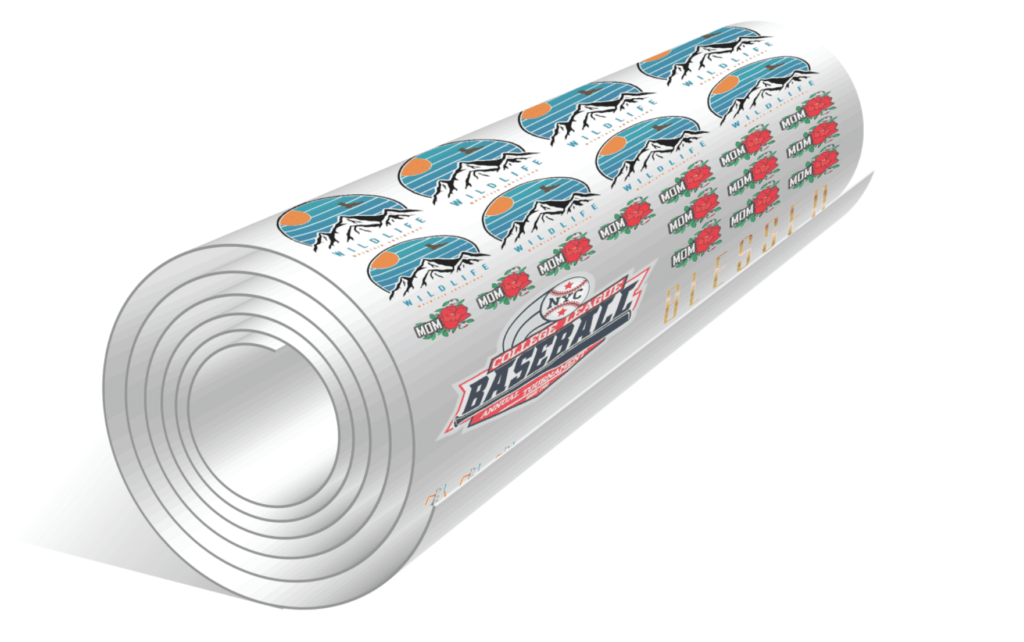
How DTF Gang Sheets Are Changing Print Shop Efficiency
A gang sheet is a single DTF sheet—in our case, 22.5 inches wide—that holds multiple designs arranged together. Rather than printing each design individually, businesses nest several graphics onto one sheet, maximizing printable space and reducing wasted material per order.
Gang sheets are particularly useful for print shops producing a mix of left-chest logos, full-front graphics, sleeve prints, and smaller accent designs for a single order. Everything prints together. Everything ships together.
Upload a Print-Ready Gang Sheet
Experienced designers who already work in design software can prepare their gang sheets independently and upload the finished file directly. We accept PDF, PNG, and vector formats. Designs should be sized correctly, set at the right resolution, and positioned with appropriate spacing before uploading.
For guidance on preparing print-ready artwork files—including resolution, file formats, and transparency—Printful’s print file preparation guide is a practical reference.
Build DTF Gang Sheets With Our Online Builder
Not every customer works with design software. Our gang sheet builder lets customers upload PNG files and arrange designs on the sheet interactively—without needing Adobe Illustrator, Photoshop, or any other specialized tool. The builder is built for production efficiency, but it’s approachable enough that first-time customers can use it without a learning curve.
Order DTF Transfers by Size
Customers who prefer not to work with gang sheets at all can order DTF transfers by size. Upload a single design, select the dimensions you need, and place the order. This option works well for one-off requests, single logos, and smaller custom jobs where assembling a full gang sheet doesn’t make sense.
How a Print Shop Can Scale Without Adding More Equipment
One of DTF’s most significant industry impacts is that it lets print shops expand their capabilities without expanding their equipment footprint. An established shop that primarily does screen printing or embroidery can add DTF output to its service menu by outsourcing the transfer production entirely.
The costs a shop avoids by working with a reliable DTF transfer supplier include:
- DTF printer investment and financing
- Ink procurement and management
- PET film and adhesive powder inventory
- Printhead cleaning, maintenance, and replacement
- Curing equipment and associated power costs
- Production training for new staff
- Dedicated physical space for the printing setup
Instead, that shop invests in pressing. Customer-facing work—order intake, pressing, fulfillment, quality checks—stays in-house. The technically demanding print production comes from a partner with dedicated equipment, refined ICC profiles, and production processes built specifically for high quality DTF transfers.
Ready-to-press transfers also provide overflow capacity. When order volume spikes unexpectedly, a shop that has an established relationship with a quality transfer supplier can absorb that volume without turning customers away.
According to industry data from Kornit Digital’s 2026 digital printing statistics report, print service providers held 65.1% of the direct-to-garment printing market in 2025—and online fulfillment platforms are the fastest-growing sales channel in that market. That shift toward outsourced production and on-demand fulfillment reflects exactly the business model DTF transfers make possible.
Faster Turnaround for Modern Custom Apparel Businesses
Speed matters differently now than it did a decade ago. E-commerce customers expect fast turnaround. Event clients work with tight deadlines. Apparel brands need to respond quickly when a design sells out or a new trend emerges.
Our true hot-peel transfers are engineered specifically for fast production. Unlike cold-peel products that require the transfer to cool before removing the film, hot-peel transfers allow immediate film removal after pressing—keeping production moving without unnecessary delays between pieces.
Orders placed by noon EST on qualifying business days ship the same day. Orders over $50 qualify for free UPS Ground shipping, and a $10 flat rate 2nd Day Air option is also available on qualifying orders. Actual delivery times depend on the shipping method selected and destination, but our fulfillment speed is a starting point that gives businesses more room to work with on tight timelines.
For businesses thinking about building an apparel operation around fast custom production, Shopify’s guide to starting an online T-shirt business covers the e-commerce side of the equation well.
How to Apply Custom DTF Transfers: A Simple Overview
The application process is straightforward for anyone with a quality heat press. Here are the basic steps:
- Pre-press the blank garment briefly to remove moisture and wrinkles
- Position the DTF transfer on the garment, design side up
- Follow the temperature, pressure, and time specifications provided with your transfers
- Apply pressure with the heat press
- Peel the film—immediately for hot-peel transfers, after cooling for cold-peel products
- Complete a finishing press with a parchment sheet or cover sheet if recommended
- Allow the finished garment to cool before handling or packaging
A common DTF pressing range falls around 300–320°F for approximately 10–15 seconds, but the specific instructions supplied with your transfers should always take priority. Different transfer products and different blank materials require different settings. Testing on a sample garment before committing to a full production run is always a smart practice.
For guidance on caring for finished garments after pressing, Printful’s care instructions resource covers washing and maintenance practices that help decorated apparel hold up over time.
Vibrant Colors, Soft Hand, and Professional Print Quality
Part of what has driven DTF adoption is how it looks and feels on finished products. CMYK+W printing—combined with our expanded gamut CMYK+RGBO+W system—produces vibrant, detail-rich output on both light and dark fabrics. Fine details, complex gradients, photographic artwork, and small text all reproduce clearly.
The soft-hand finish matters as much as the visual quality. Transfers that feel thick, plasticky, or heavy on the garment create a finished product that customers notice for the wrong reason. Our transfers are designed to feel lightweight and flexible on the fabric—something customers who wear them appreciate and businesses who sell them benefit from in repeat orders.
We’ve earned back-to-back 1st Place recognition for DTF printing quality in both 2024 and 2025. That recognition reflects the combination of our ICC profile development, film selection, ink performance, and production consistency that go into every order.
Exceptional Durability and Wash Performance
Professional DTF transfers applied correctly hold up well through repeated washing. The combination of proper pressing temperature, correct pressure, and appropriate dwell time determines how well the adhesive bonds to the fabric fibers. A strong bond produces a durable finish.
Actual wash longevity depends on several factors: how accurately the transfer was pressed, the fabric type, and how the garment is cared for afterward. Cold washing, inside-out washing, and avoiding high dryer heat all extend the life of any decorated garment.
From One Shirt to Full-Scale Production: DTF Grows With You
One of DTF’s most practical advantages is that the production model scales without requiring businesses to change methods. The same ordering process that works for a single custom shirt works for gang sheets or DTF transfer sheets with dozens of designs.
- A hobbyist orders one or two transfers without hitting a minimum
- A startup brand tests five new designs before committing to inventory
- An Etsy seller keeps a library of transfers on hand and presses as orders arrive
- A growing apparel business consolidates designs into gang sheets to reduce per-unit costs
- An established print shop outsources DTF production entirely and focuses on pressing and fulfillment
The global custom T-shirt printing market was valued at $7.01 billion in 2025 and is projected to reach $20.05 billion by 2035—an 11.08% CAGR according to Kornit Digital’s industry data. The businesses best positioned to capture that growth are the ones that can fulfill custom orders quickly, offer design variety, and operate without large upfront inventory commitments.
A Note on UV DTF Transfers
Traditional DTF heat transfers are designed for fabric substrates and applied with heat and pressure. UV DTF transfers—sometimes sold as premium0 UV DTF stickers—serve a different purpose. They are intended for compatible hard surfaces such as drinkware, promotional premium custom products, and other smooth rigid items rather than for pressing onto clothing.
If you’re decorating fabric, standard DTF heat transfers are the right technology. If you’re working with hard surfaces, UV DTF is designed for that application. Choosing the right transfer type for the substrate you’re decorating produces the best results and avoids application failures.
Photo by Sven Ciupka on Unsplash
Why We Believe DTF Is the Future of Custom DTF Printing
DTF transfers address several traditional printing limitations at once: no weeding, no garment pretreatment, short-run flexibility, multi-design efficiency, full-color output, wide fabric compatibility, and easy scalability. Taken together, they don’t just add another option for apparel decoration—they change how businesses can structure their production model.
Creators can start small, test ideas, expand product lines, and grow without immediately investing in a full printing operation. Print shops can add DTF output without building a new production department. E-commerce sellers can offer more designs, respond faster to demand, and avoid holding large finished-goods inventory.
That’s why the industry is moving in this direction—and why we’ve committed to being the most reliable partner in that shift towards the best dtf transfer products for your business.
Ready to get started? Explore our custom DTF transfers and choose the ordering method that fits your workflow: upload a finished gang sheet, use our online gang sheet builder, or order custom DTF transfers by size. No minimums. No setup fees. Same-day shipping on qualifying orders placed by noon EST.
Frequently Asked Questions
What are DTF transfers?
DTF stands for Direct-to-Film. Artwork is printed onto PET film with specialized ink, adhesive powder is applied and cured, and the finished transfer ships ready to press. Compatible materials include 100% cotton, polyester, blends, nylon, spandex, denim, canvas, and leather products. DTF transfers produce vibrant, full-color designs on both light and dark fabrics without requiring garment pretreatment or weeding.
How can I make my own DTF transfers?
In-house DTF production requires specialized printing hardware, PET film, DTF ink, adhesive powder, curing equipment, and ongoing maintenance. Most print shops and creators find it more practical to order professional ready-to-press transfers—uploading PNG, PDF, or SVG artwork files and focusing their time and equipment on heat pressing. Options include uploading a finished gang sheet, using an online gang sheet builder, or ordering by size.
How much does a DTF transfer cost?
Pricing varies based on transfer dimensions, quantity, and ordering method. Gang sheets reduce the per-design cost by consolidating multiple graphics onto a single sheet, making them cost-efficient for larger production runs. Because there are no minimum order requirements, single transfers are available at the same base rate structure. Check current pricing when placing an order, as specific costs depend on the size and configuration selected.
Can a Cricut make DTF transfers?
A Cricut is a cutting machine, not a DTF printer. Standard Cricut workflows involve cutting vinyl, heat transfer vinyl, or similar materials—not printing DTF transfers. DTF designs require specialized printing equipment and adhesive powder curing. One of DTF’s advantages over cut-vinyl workflows is that there is typically no weeding involved. Creators who want DTF-quality output without purchasing printing equipment can order ready-to-press transfers and focus on the pressing side of production.
What file formats work for ordering DTF transfers?
PNG files with transparent backgrounds are the most common format for DTF transfer orders. PDF and vector formats are also accepted for gang sheet uploads. Artwork should be high resolution—typically 300 DPI or higher at the intended print size—to ensure sharp detail and accurate color reproduction. If you’re not sure how to prepare your files, our gang sheet builder simplifies the process for PNG-based designs.