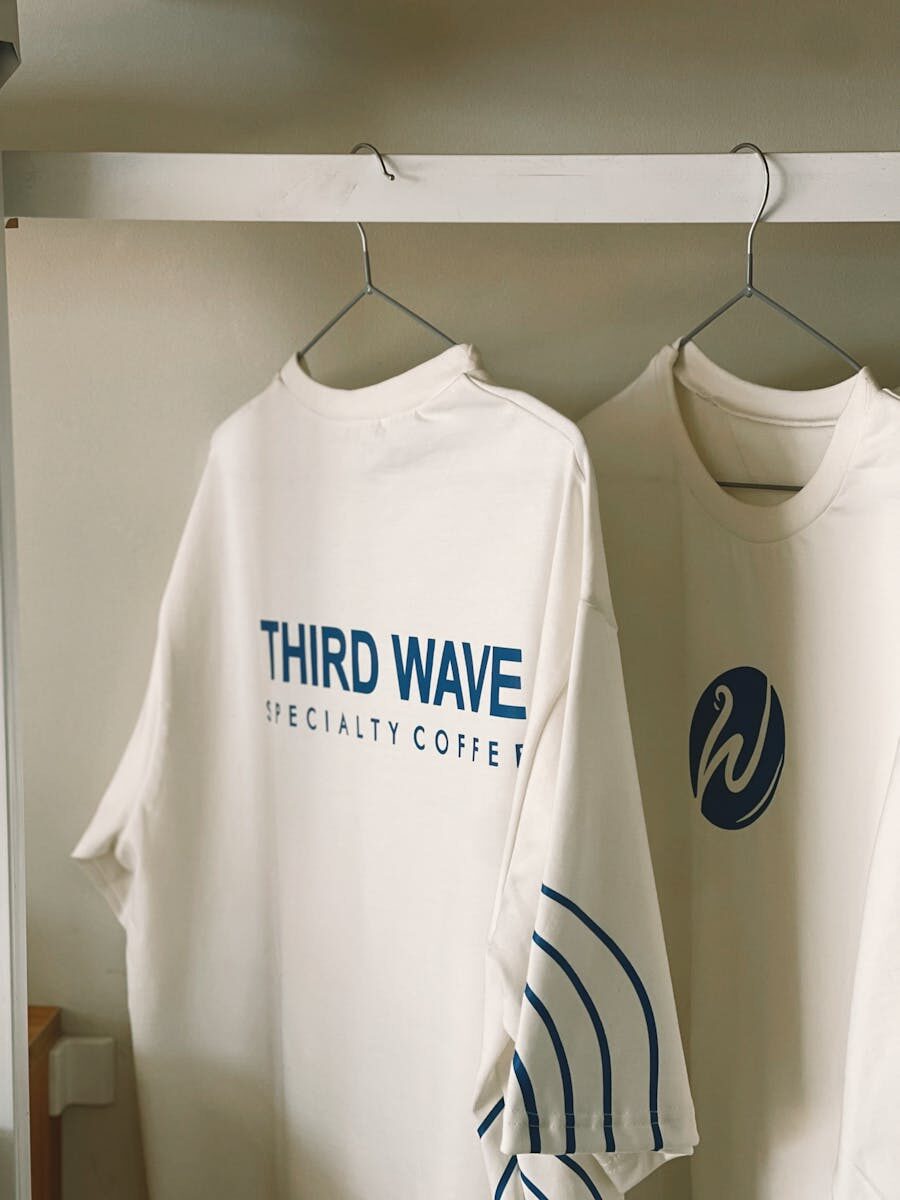
Direct to film (DTF) printing is a transfer-based technique where designs are printed onto a special PET film using CMYK+W ink, coated with hot melt powder, cured, and then heat-pressed onto fabric. DTF transfers work on virtually any material—cotton, polyester, blends, leather, and more—with no fabric pre-treatment required. Compared to screen printing, DTG printing, and sublimation printing, DTF printing stands out for its versatility, color accuracy, and accessibility for both on-demand printing and bulk production.
The custom printing industry looks nothing like it did ten years ago. Screen printing once dominated the space, requiring expensive screens, large minimum orders, and significant setup time before a single shirt could be printed. Vinyl cutting offered more flexibility but struggled with intricate, full-color artwork. Then came direct-to-garment (DTG) printing—genuinely exciting until users hit its limits with synthetic fabrics and mandatory fabric pre-treatment requirements.
Each method moved things forward. But none of them fully solved the core challenge: producing professional, full-color, durable prints quickly, affordably, and across a wide range of materials.
Direct to film printing changed that.
DTF has emerged as a genuine breakthrough for apparel brands, print shops, and independent creators alike. It removes barriers that once made custom printing inaccessible to small operations, and it scales beautifully for high-volume bulk production. At Limitless Transfers, we’ve watched businesses of every size—from solo Etsy sellers to established screen printing shops—adopt DTF and transform how they produce custom apparel.
This guide walks you through everything you need to know: what direct to film printing is, exactly how the DTF printing process works, how DTF printing compares to other printing methods, common mistakes to avoid, and pro tips to get professional results every time.
What Is Direct to Film Printing?
What does “direct to film” mean?
Direct to film printing—also called DTF printing or DTF direct to film—is a printing technique where designs are printed onto a specialized polyethylene terephthalate (PET) film rather than directly onto fabric. Once printed, a hot melt powder adhesive is applied to the wet ink on the film, cured with heat, and the finished film transfer is then pressed onto a garment using a heat press machine.
The name can be slightly misleading. “Film” here refers to the PET carrier sheet the design is printed on—not photographic or cinematic film. The design lives temporarily on the DTF film before being transferred to a garment through heat and pressure.
What makes DTF unique is its ink layering process. DTF printers apply CMYK color inks first, building up the full-color image on the PET film. Then they deposit a white ink underbase on top. That white ink layer is what makes colors pop on dark fabrics—it acts as a foundation, ensuring the final image looks vivid and color-accurate regardless of what’s underneath.
Unlike screen printing, there are no screens to burn or prepare. Unlike DTG printing, there’s no fabric pre-treatment spraying involved. The result is a streamlined DTF printing process that delivers professional, full-color prints with a notably soft feel.
Understanding direct to film DTF technology
One of DTF’s most compelling advantages is its material compatibility. DTF transfers work on an extraordinary range of fabrics and surfaces: 100% cotton, 100% polyester, 50/50 blends, tri-blends, nylon, neoprene, canvas, leather, denim, and even wood. Most competing printing methods have a clear “sweet spot” fabric—DTG printing loves 100% cotton, sublimation printing requires polyester—but DTF direct to film has no such restriction.
This flexibility makes DTF highly attractive for businesses that print across diverse product lines. A single workflow can handle everything from performance athletic wear to tote bags to wooden keepsakes.
DTF printing has gained significant traction since the early 2020s. As DTF printer hardware became more refined and ink formulations improved, the barrier to producing consistent, high-quality transfers dropped considerably—opening the market to a new wave of creators and print professionals.
Key takeaways:
- No fabric pre-treatment required
- Works across cotton, polyester, blends, nylon, leather, canvas, wood, and more
- Produces vibrant, full-color designs on both light and dark fabrics
- Suitable for hobbyists, side hustlers, and large-scale print operations
- Ideal for both on-demand printing and bulk production
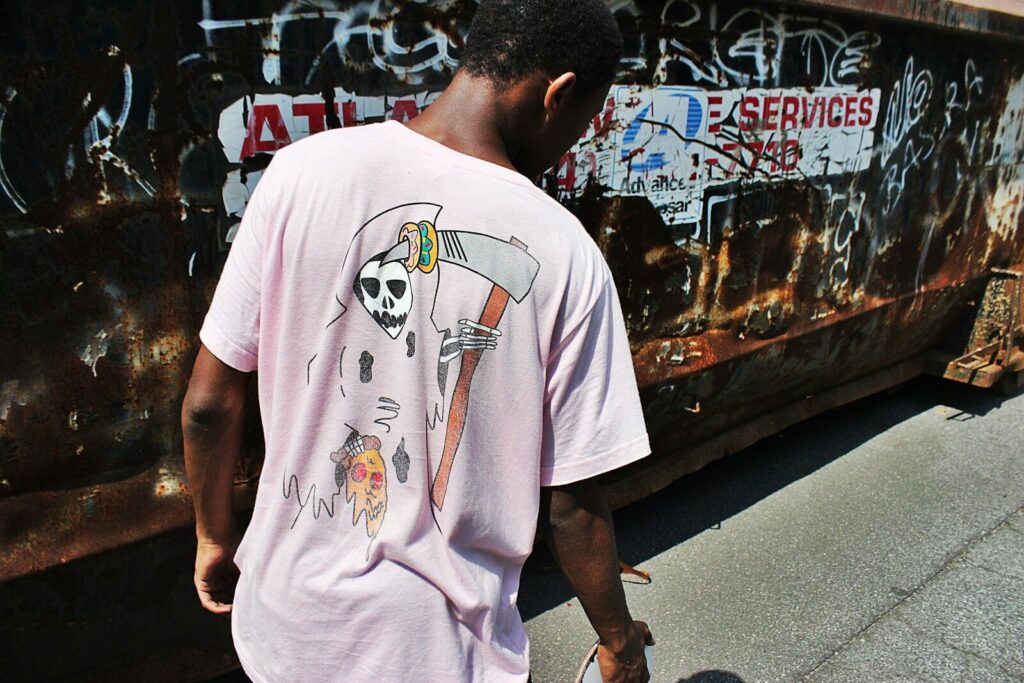
Photo by David Wimmer on Unsplash
How the DTF Printing Process Works
Step 1: Preparing the print file
Everything starts with your artwork. High-resolution print files—ideally 300 DPI or higher—are essential for clean, sharp film transfers. Low-resolution images produce blurry, pixelated prints, and no post-processing fixes a bad source file.
Your design should have a transparent background, not white. This ensures the transfer only includes your design, not an unwanted white rectangle around it. Color profiles should be set to CMYK rather than RGB, since DTF printers operate in the CMYK color space. Converting at the artwork stage—rather than relying on the printer’s software—gives you greater control over final color accuracy.
Intricate designs with fine details, thin lines, or gradients are all achievable with DTF printing—one of the technique’s genuine strengths compared to screen printing, which can struggle to reproduce fine detail cleanly.
Helpful resource: Adobe’s guide to color modes explains RGB vs. CMYK clearly for anyone setting up print-ready files.
Step 2: DTF film printing—printing onto special PET film
Once your file is ready, DTF printers go to work. The DTF printing process starts by applying CMYK inks to the PET film, building up the full-color image layer. Then the printer deposits a white ink layer over the design.
The white ink is not decorative—it’s functional. It acts as the color foundation and adhesive anchor that allows the design to appear vivid and accurate on dark fabrics or colored garments. Without it, colors would look washed out or disappear entirely against anything other than a white surface.
Print quality at this stage depends heavily on the DTF printer’s ink system, ICC color profiles, and the quality of the PET film itself. Premium DTF film holds ink precisely and produces sharper edges and more accurate color reproduction. Budget film can cause ink spreading, reduced vibrancy, and loss of fine detail.
Step 3: Applying hot melt powder adhesive
Immediately after DTF film printing—while the ink is still wet—hot melt powder is applied to the printed side of the film. This adhesive powder sticks to the wet ink and is then cured in an oven or with a heat source, melting into a thin, even adhesive layer.
This adhesive layer is what bonds the design to the garment during pressing. Even powder application is critical: too much hot melt powder creates a stiff, visible residue around the design; too little results in poor adhesion and premature peeling.
Proper curing is equally important. Under-cured adhesive powder remains tacky and uneven. Over-cured powder loses bonding strength. Most professional setups use a dedicated powder shaker and curing oven to ensure consistent results across every DTF transfer.
Helpful resource: The Specialty Graphic Imaging Association (SGIA), now part of PRINTING United Alliance, publishes technical guides on heat-activated adhesive applications in garment decoration.
Step 4: Using a heat press machine to apply DTF transfers
With cured film transfers in hand, it’s time to press. A heat press machine applies the combination of temperature, pressure, and time needed to permanently bond the transfer to the garment.
General settings vary by fabric type, but most DTF transfers press at approximately 300–320°F (149–160°C) with medium-to-firm pressure for 10–15 seconds. Always follow the specific instructions provided with your transfers—different formulations may have slightly different requirements.
True hot-peel transfers—like those produced by Limitless Transfers—are engineered to be peeled immediately while still hot. This speeds up production significantly compared to cold-peel transfers, which require cooling time between each press. For shops handling large orders and bulk production, this throughput difference adds up fast.
After peeling the DTF film carrier, the result is a soft, flexible print with vivid colors and strong adhesion. The white ink underbase ensures color accuracy, while the adhesive powder layer creates long-lasting prints that hold up through repeated washing.
Helpful resource: Stahls’ Heat Applied Resource Center provides practical temperature and pressure guides for heat pressing across different fabric types.
How DTF transfers work: the complete process at a glance
The complete DTF printing process—file preparation, film printing, hot melt powder application, curing, and heat pressing—is notably efficient compared to older printing methods. There are no screens to burn, no fabric pre-treatment stations to maintain, and no lengthy setup time per design.
Small runs are just as practical as bulk production. A single custom transfer costs essentially the same per unit as a run of 100. This makes DTF particularly powerful for on-demand printing, limited-edition drops, and custom personalization—use cases that screen printing handles poorly.
DTF Printing Compared to Other Printing Methods
DTF printing compared to screen printing
Screen printing remains an excellent choice for large runs of simple, few-color designs. It’s fast at scale and produces durable prints. But it comes with real friction: setup fees, color separation costs, minimum order requirements, and long lead times for new designs.
DTF printing eliminates most of that friction. There are no setup fees. No minimums. A design with 12 colors costs the same to produce as one with 2. And turnaround times for short runs are dramatically faster, since there’s no screen preparation involved.
For custom projects, personalized orders, or frequent design changes, DTF printing is simply more practical. It doesn’t replace screen printing for massive, single-design bulk production—but it outperforms it in nearly every other scenario, especially when color accuracy and intricate designs are involved.
|
Feature |
DTF Printing |
Screen Printing |
|---|---|---|
|
Setup fees |
None |
Yes |
|
Minimums |
None |
Often required |
|
Full-color designs |
Yes |
Limited by color count |
|
Fabric pre-treatment |
No |
No |
|
Ideal run size |
Any |
Large runs |
|
Fine detail reproduction |
Excellent |
Limited at small sizes |
DTG printing vs. DTF printing: what’s the difference?
Both DTG printing and DTF printing produce full-color prints, but the comparison isn’t straightforward—it depends on what you’re printing on and how your operation is structured.
DTG printing works beautifully on 100% cotton. It prints directly onto the garment, which eliminates a transfer step. However, DTG printing requires pre-treating garments before printing, adding time and chemical cost to every job. It also struggles on polyester and synthetic fabrics, where ink adhesion becomes inconsistent.
DTF printing skips fabric pre-treatment entirely and works reliably on cotton, polyester, blends, nylon, leather, and more. The DTF transfer is prepared separately from the garment, which means film transfers can be produced in advance and stored until needed—a real logistical advantage for busy shops.
For growing businesses that want to print on a diverse product range without managing a pre-treatment workflow, DTF printing generally offers more flexibility and scalability than DTG printing.
|
Feature |
DTF Printing |
DTG Printing |
|---|---|---|
|
Fabric pre-treatment |
Not required |
Required |
|
Works on polyester |
Yes |
Unreliable |
|
Works on cotton |
Yes |
Yes (excellent) |
|
Pre-production storage |
Yes |
No |
|
Equipment cost |
Heat press only (if outsourcing) |
DTG printer required |
DTF printing compared to sublimation printing
Sublimation printing produces vivid, photographic-quality results—but only on 100% polyester or polyester-coated substrates. Sublimation ink bonds with polyester fibers through heat, becoming part of the fabric itself. On cotton or cotton blends, sublimation printing simply doesn’t work.
DTF printing has no such fabric restriction. It works equally well on polyester, cotton, blends, and a wide range of other materials. And unlike sublimation printing, DTF works on dark fabrics—the white ink underbase ensures colors stay vibrant and accurate regardless of garment color.
For businesses that need to print on diverse fabric types or dark garments, DTF direct to film printing is the more versatile choice.
|
Feature |
DTF Printing |
Sublimation Printing |
|---|---|---|
|
Works on cotton |
Yes |
No |
|
Works on dark fabrics |
Yes |
No |
|
Works on polyester |
Yes |
Yes |
|
Color vibrancy |
Excellent |
Excellent on polyester |
|
White ink underbase |
Yes |
Not applicable |
Is DTF better than vinyl heat transfer?
Vinyl excels at simple, bold graphics—think one- or two-color designs on athletic jerseys. It’s durable and cost-effective for those applications. But vinyl has clear limitations with complex, full-color artwork. Intricate designs require weeding (removing unwanted vinyl by hand), which is time-consuming and error-prone at small sizes.
DTF printing handles intricate, photographic, and gradient-heavy designs with ease. There’s no weeding required. The finished print has a softer feel than most vinyl products, particularly on finer fabrics. And for multi-color work, DTF transfers are faster and more cost-effective than layering vinyl colors.
For simple, bold graphics in high volumes, vinyl remains viable. For anything with fine detail, gradients, or multiple colors, DTF transfers are the more practical and professional choice.
Why DTF Is Changing Custom Print Production
Why modern creators and print shops are embracing DTF printing
The economics of DTF printing make it uniquely accessible. Unlike screen printing or DTG printing, you don’t need to own expensive DTF printers to offer DTF products. Ordering pre-made film transfers from a supplier like Limitless Transfers means you only need a heat press machine to get started—an investment in the hundreds, not thousands, of dollars.
This low barrier to entry has fueled a wave of small-business launches and creative side hustles. An Etsy seller can offer fully custom, professional-quality apparel without a print shop. A local boutique can run limited-edition drops without committing to large minimums. A print shop can expand into new fabric types without purchasing new machinery.
As operations grow, DTF printing scales with them. What starts as a one-person heat-pressing setup can evolve into a multi-press production line, all using the same transfer supply chain—handling everything from on-demand printing to bulk production runs.
What makes DTF printing work for dark fabrics and full-color designs
Many printing methods struggle with dark fabrics. Sublimation printing doesn’t work on them at all. DTG printing requires extra pre-treatment to get acceptable results on dark garments. Screen printing can handle dark fabrics but adds cost and complexity for light-colored inks.
DTF printing handles dark fabrics effortlessly. The white ink underbase printed onto the PET film creates a bright, opaque foundation for the full-color design. When the DTF transfer is pressed onto a black, navy, or any dark-colored garment, the colors appear just as vivid and accurate as they would on white fabric.
This capability—combined with DTF’s compatibility across different fabric types—makes it one of the most versatile printing techniques available for complex, full-color designs.
At Limitless Transfers, we support that entire growth journey with:
- Award-winning quality — back-to-back 1st place recognition in 2024 and 2025
- No minimum orders — order one transfer or one thousand
- Same-day shipping on qualifying orders placed by noon EST
- Free UPS Ground shipping on orders over $50
- User-friendly gang sheet builder — no design software required
- Heat presses and supplies — everything you need in one place
Common DTF Printing Mistakes to Avoid
Using low-quality print files
Low-resolution artwork is one of the most common reasons DTF transfers disappoint. Blurry edges, pixelation, and washed-out colors often trace back to print files that weren’t print-ready. Always work at 300 DPI minimum, use transparent backgrounds, and set your color mode to CMYK before submitting files.
Applying too much or too little hot melt powder
Adhesive powder application requires a consistent, even coat. Excess hot melt powder creates visible halos or rough texture around design edges. Insufficient powder leads to peeling, lifting corners, or sections of the design failing to bond. A powder shaker machine—rather than manual application—dramatically improves consistency across every DTF transfer.
Incorrect heat press machine settings
Temperature, pressure, and time all interact. Too hot and you risk scorching the garment or degrading the transfer. Too cool and the adhesive won’t fully bond. Too much pressure can distort the design; too little leaves uneven adhesion. Always test press settings on scrap fabric before running a full production batch, and calibrate your heat press regularly.
Helpful resource: Pro World on Youtube publishes practical heat press calibration tips and troubleshooting guides that apply broadly to DTF transfer application.
Ignoring fabric type compatibility
While DTF printing works on most materials, different fabric types have different optimal press settings. Cotton tolerates higher temperatures; nylon and certain synthetics require lower heat to avoid damage. Textured surfaces like canvas or denim may need extended press times for complete adhesion. Always confirm compatibility and settings for specialty substrates before committing to a large run.
Choosing poor-quality DTF film and transfers
Not all DTF transfers are equal. Low-quality DTF film produces softer color accuracy, reduced detail retention, and shorter wash durability. Premium transfers—produced with refined ICC profiles, high-grade PET film, and professional-grade inks—deliver noticeably better results across every metric. The cost difference per transfer is small; the quality difference is significant.
Pro Tips for Better DTF Print Results
Start with clean, high-resolution artwork
Sharp, print-ready files are the foundation of every great DTF transfer. Work in vector format when possible, or use high-resolution raster files at 300 DPI or higher. Use transparent backgrounds, check for stray pixels at design edges, and convert your colors to CMYK before uploading your print file.
Helpful resource: Canva’s design school offers beginner-friendly tutorials on preparing artwork for print, including resolution and file format guidance.
Invest in the right heat press machine
A quality, consistent heat press machine is non-negotiable. Commercial-grade presses maintain stable temperature and even pressure across the platen—which directly affects transfer quality. Cheap or poorly calibrated heat presses lead to uneven adhesion, color inconsistencies, and higher rejection rates. If you’re serious about producing professional results, the heat press is not the place to cut costs.
Use high-quality DTF transfers
The difference between budget transfers and premium film transfers shows up in color accuracy, soft feel, edge sharpness, and wash durability. Limitless Transfers uses expanded gamut CMYK+RGBO+W printing with professionally calibrated ICC profiles—delivering color accuracy and print quality that budget suppliers consistently fail to match.
Take advantage of gang sheets
A gang sheet is a single sheet of DTF film that holds multiple designs—maximizing the printable area and reducing cost per transfer. For anyone ordering regularly, gang sheets are the most cost-effective way to produce DTF transfers. Limitless Transfers’ online gang sheet builder makes it straightforward to arrange designs without needing professional design software.
Test before scaling to bulk production
Before running 500 transfers for a major order, run a sample. Apply test transfers to the actual garments you’ll be using, wash them a few times, and check for any issues with adhesion, color accuracy, or feel. A small test run identifies problems before they become expensive ones.

Photo by WebTechExperts on Pixabay
Frequently Asked Questions About Direct to Film Printing
What is direct to film printing?
Direct to film printing—also known as DTF printing or DTF direct to film—involves printing a design onto a specialized PET film using CMYK+W ink, applying hot melt powder adhesive, curing it, and then transferring the image to a garment using a heat press machine. The DTF printing process works on a wide variety of materials and produces vibrant, durable, full-color results with no fabric pre-treatment required.
How does the DTF printing process work step by step?
The DTF printing process follows four main steps: (1) prepare a high-resolution print file with a transparent background in CMYK; (2) print the design onto special PET film using a DTF printer, applying CMYK color inks and a white ink underbase; (3) apply hot melt powder adhesive to the wet ink and cure it; (4) use a heat press machine to transfer the cured DTF film onto the garment. Peel the film while hot, and the design is permanently bonded to the fabric.
How long do DTF transfers last?
When applied correctly using proper heat press settings, DTF transfers produce long-lasting prints that can withstand dozens of wash cycles while maintaining color vibrancy, flexibility, and overall quality. Using high-quality transfers and following recommended care instructions—washing inside out in cold water on a gentle cycle—extends longevity even further.
Is DTF printing better than sublimation printing?
For versatility across different fabric types, DTF printing is the stronger choice. Sublimation printing only works on 100% polyester or polyester-coated surfaces and cannot produce accurate results on dark fabrics. DTF printing works on cotton, polyester, blends, nylon, leather, and more—and handles dark fabrics beautifully thanks to the white ink underbase.
What is better—DTG printing or DTF printing?
The best choice depends on your specific application. DTG printing can produce excellent results on 100% cotton but requires fabric pre-treatment for every garment and is less reliable on synthetic materials. DTF printing eliminates pre-treatment entirely, offers broader compatibility across different fabric types, and provides greater operational flexibility for growing businesses.
Do DTF printers require special film?
Yes. DTF printers require specialized PET film designed to hold CMYK and white ink precisely. The quality of the DTF film directly affects color accuracy, fine detail reproduction, and the durability of the finished transfer. Premium DTF film produces sharper edges, more vivid colors, and longer-lasting prints than budget alternatives.
Can DTF transfers be applied to dark fabrics?
Yes. The white ink underbase in the DTF printing process ensures that full-color designs appear vibrant and accurate on dark fabrics—including black and navy garments. This is one of the key advantages DTF printing has over sublimation printing and certain other printing methods.
Do I need special equipment to apply DTF transfers?
All you need is a quality heat press machine. You don’t need DTF printers, a powder shaker, or a curing oven if you’re sourcing ready-made film transfers from a supplier. This makes DTF one of the most accessible entry points into professional custom apparel production.
Are DTF transfers safe to wash?
Yes, when properly applied and cared for. Machine washing on a gentle cycle, inside out, in cold water maximizes the lifespan of DTF transfers. Avoid high-heat drying cycles, which can degrade adhesion over time.
How does DTF printing work for on-demand printing and bulk production?
DTF printing is equally practical for both. Because there are no setup fees and no minimum order requirements, it’s ideal for on-demand printing—where every order might be different. At the same time, DTF scales efficiently for bulk production, with gang sheets maximizing film usage and hot-peel transfers enabling high-speed output on large orders.

The Future of Custom Printing Is Already Here
Direct to film printing isn’t an emerging trend waiting to prove itself—it’s already reshaping how apparel is decorated at every level of the industry. Its versatility across fabric types, zero pre-treatment requirement, ability to handle any level of design complexity, and accessibility without major equipment investment make it one of the most practical printing methods available today.
Whether you’re launching an Etsy shop, scaling an established print business, producing event apparel, or just getting started with a heat press at home, DTF gives you the tools to produce professional-quality, long-lasting prints without the overhead that once made that level of quality out of reach.
At Limitless Transfers, helping creators and businesses achieve exactly that is what we’re built for. Our back-to-back award-winning DTF transfers, same-day shipping, no minimum orders, and intuitive gang sheet tools exist specifically to remove the friction between your design and a finished product you’re proud of.
Ready to see the difference for yourself? Start your order at Limitless Transfers — no minimums, no setup fees, just professional results.