DTF gang sheets are printable layouts that combine multiple designs onto a single direct-to-film transfer sheet. Print professionals use them to cut per-piece costs by up to 60%, reduce film waste, and dramatically speed up production. With the right file setup, heat press settings, and a reliable transfer partner, gang sheets are one of the most efficient tools in modern apparel decoration.
The apparel decoration industry is growing fast. According to Grand View Research, the global direct-to-film printing market was valued at USD 2.72 billion in 2024 and is projected to reach USD 3.92 billion by 2030—a compound annual growth rate of 6.0%. Much of that growth is being driven by a shift toward on-demand, short-run, and fully customized apparel production.
At Limitless Transfers, we sit at the center of that shift. Every day, we work with screen printers, Etsy sellers, event companies, and in-house decorators who are looking for ways to produce more, spend less, and fast delivery. And across all of those conversations, one thing keeps coming up: DTF gang sheets.
This guide covers everything you need to know. What gang sheets are, how they work, what mistakes to avoid, and how to get the most out of every square inch of film. By the time you’re done reading, you’ll have a clear picture of why gang sheets are the cornerstone of efficient DTF production—and exactly how to use them to your advantage.
What Are DTF Gang Sheets?
How do you define a direct to film gang sheet?
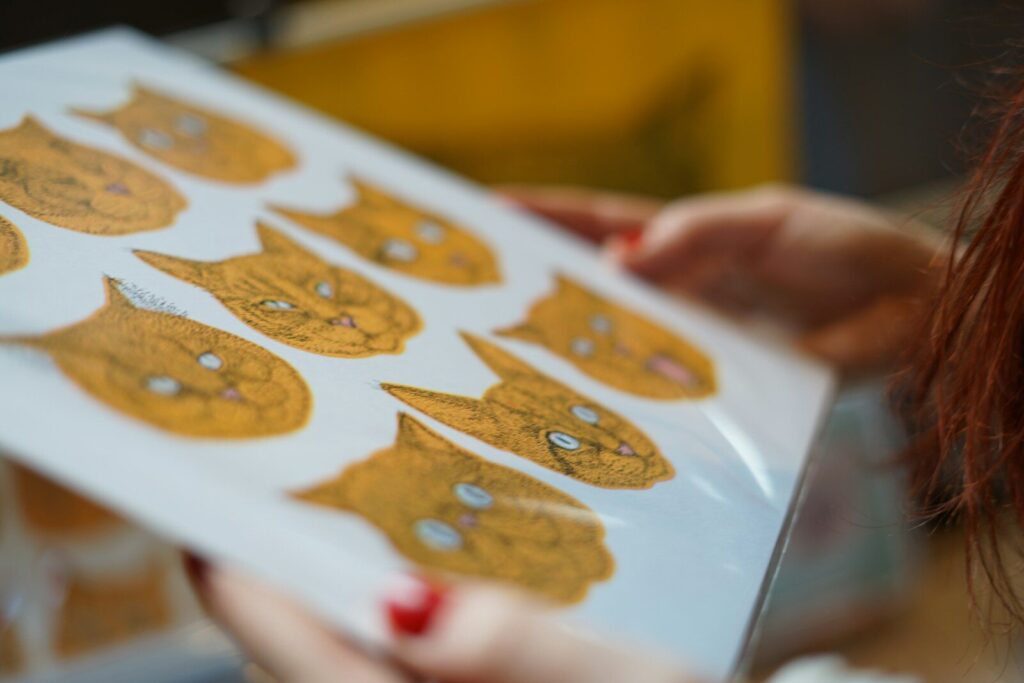
A DTF gang sheet is a single printable layout that holds multiple individual designs. Rather than printing one image at a time on its own sheet of film, you arrange several designs together—logos, artwork, name drops, promotional graphics—and print them all in one pass.
The term “gang” comes from the traditional printing industry, where “ganging up” jobs meant combining multiple orders onto one plate to reduce setup costs. The concept is the same in direct-to-film printing, just applied to heat-press transfers.
Once the gang sheet is printed and the hot-melt powder adhesive is applied and cured, the individual designs are cut out and applied to garments using a heat press. Each design presses independently, giving you the same quality and flexibility as a single transfer—at a fraction of the cost.
What sizes do DTF gang sheets come in?
The most common gang sheet width is 22 inches, which aligns with the output width of most professional DTF printers—and that’s exactly what our rolls are printed on. At Limitless Transfers, our gang sheets are printed on 22-inch wide rolls with customizable lengths, so you can scale your layout to match exactly what you need—whether that’s a short run of a dozen designs or a high-volume production sheet covering hundreds of prints.
Hobbyists and Etsy sellers often start with shorter sheets to test new artwork. Established print shops typically run full-length sheets to maximize output per production cycle. The structure works for both.
Why do gang sheets reduce printing costs significantly?
The cost model for DTF transfers is based on the amount of film used. When you print a single design on its own sheet, you pay for all the blank space surrounding it. Gang sheets eliminate that waste by filling the available film area with usable artwork.
According to Impressions Magazine, decorators who switch to gang sheet production often see per-piece pricing drop by 40 to 60 percent compared to ordering individual transfers. A well-optimized sheet can reduce transfer costs by 30 to 50 percent—savings that go straight to your bottom line.
That math changes how you approach every job. Orders that once felt too small to be profitable become viable. Margins on bulk production improve. And the ability to combine multiple customer orders on a single sheet means you can process more work in less time.
How DTF Gang Sheets Work
What file formats work best for DTF gang sheets?
File preparation is the foundation of a great gang sheet. The format you choose directly affects print clarity, color accuracy, and how cleanly designs transfer to fabric.
According to DTF Print Co’s file format guide, the most commonly used formats include:
- PNG – The preferred format for most gang sheet work. PNG supports transparent backgrounds, which ensures clean, precise edges without any unwanted background color bleeding onto the garment.
- PDF – Excellent for complex multi-layered designs. PDFs support vector and raster elements in the same file and maintain sharpness regardless of scale.
- AI – Adobe Illustrator’s native format, ideal for logos and text-based artwork. AI files are vector-based, meaning designs remain perfectly sharp at any size and are easy to edit before uploading.
Whatever format you use, maintain a minimum resolution of 300 DPI (dots per inch) for best quality. Anything lower will produce blurry results once pressed. Also use the CMYK color profile rather than RGB—CMYK maps directly to printer ink channels, so what you see in your design software will more accurately match the finished transfer.
For transparent backgrounds in Canva, Canva’s support page walks through how to export a PNG with a transparent background, which is a Premium feature.
How do you upload or build a DTF gang sheet?
At Limitless Transfers, we offer three ordering methods, each suited to different workflows:
- Upload Your Gang Sheet File – If you’re working in Adobe Illustrator, Photoshop, or another design program, build your layout at 22.5 inches wide, arrange your designs with appropriate spacing (at least ¼ inch between each), and export as a PDF or PNG at 300 DPI. Then upload directly.
- Use the Gang Sheet Builder – Our web-based drag-and-drop builder lets you upload individual PNG files and arrange them visually on the sheet. No design software required. You’ll see your layout in real time before placing the order. Select your roll length anywhere from 2 to 20 feet to match exactly what you need.
- Order by Size – For single designs, upload a PNG and select from predefined transfer sizes. This is the simplest entry point if you’re just getting started.
Each method produces the same award-winning print quality. The right one for you depends on how much control you want over layout and whether you already have design software experience.
What is the DTF heat press process for applying transfers?
Once your gang sheet arrives, applying your transfers requires a heat press with the right settings. Stahls’ application instructions provide detailed guidance for heat-applied materials, and the principles apply directly to DTF.
General DTF pressing guidelines:
- Temperature: 320–350°F for cotton (adjust as needed for other fabric types)
- Time: 12–15 seconds
- Pressure: Medium-to-firm
- Peel: Hot peel immediately after pressing
At Limitless Transfers, we use true hot-peel technology. That means the transfer releases cleanly and instantly the moment you lift it off the platen—no waiting, no cold-peel delays. Our transfers are printed with commercial-grade CMYK+W ink, engineered for professional results with vibrant colors and a soft hand-feel that your customers will notice wear after wear. Every transfer is built to last, with 60+ washes durability after application so your prints stay looking sharp long after they leave the press. For high-volume shops, the hot-peel design cuts application time significantly. For a finishing press, apply a sheet of parchment paper or Teflon sheet, press for 5 seconds, and peel for a slightly softer hand feel.
Different fabric types may require minor adjustments. Cotton, polyester, nylon, canvas, denim, leather, and even wood all accept DTF transfers, but testing a sample press before running a full order is always a smart practice.
What materials can you press DTF gang sheet transfers onto?
DTF’s versatility is one of its biggest advantages over screen printing and direct-to-garment (DTG) methods. Limitless Transfers gang sheet transfers are compatible with a wide range of fabric types and surfaces, including:
- 100% cotton, 50/50 blends, 100% polyester, and tri-blends
- Nylon, neoprene, and non-woven fabrics
- Polypropylene, canvas, and leather
- Denim, wood, and specialty surfaces
That range opens the door to product categories far beyond t-shirts—bags, hats, jackets, equipment covers, promotional goods, and more.
Why Print Professionals Use Gang Sheets
How do gang sheets improve production speed and workflow efficiency?
Time on the heat press is one of the most constrained resources in a busy print operation. Every time you change out transfers, reposition garments, or wait on supplies, you’re losing throughput.
Gang sheets streamline that process. A single organized sheet containing multiple customer orders means fewer interruptions, a cleaner production line, and less time hunting for the right transfer. Experienced decorators who plan their layouts strategically consistently achieve film utilization rates above 85 percent, according to Impressions Magazine—meaning almost every inch of ordered film goes directly onto a garment.
Same-day shipping also plays a role. At Limitless Transfers, orders placed by noon EST typically ship the same day via free UPS Ground (on orders over $50) or $10 flat-rate 2nd Day Air. That turnaround keeps your production schedule moving, even on tight deadlines.
How do gang sheets help print shops lower costs and improve margins?
The savings compound quickly. When you consolidate multiple customer orders onto one sheet, each individual transfer costs less to produce. The setup and material costs spread across the full sheet rather than being charged per design.
For e-commerce sellers and smaller shops, this shift in economics is significant. According to Shopify’s print-on-demand guide, one of the main challenges of on-demand production is the higher per-unit cost relative to bulk manufacturing. Gang sheets directly address that by bringing per-piece transfer costs closer to what you’d expect from high-volume production—without the volume requirement.
At Limitless Transfers, there are no minimums. A single gang sheet order receives the same quality and turnaround as a large bulk run, which makes low-risk testing and small-batch production genuinely cost-effective.
How do gang sheets give decorators greater design flexibility?
Gang sheets let you mix and match. On a single sheet, you can arrange:
- Multiple sizes of the same logo
- Artwork from different customer orders
- Seasonal or event-specific designs
- Neck labels, sleeve prints, and pocket hits alongside full chest graphics
That flexibility means you can run a diverse workload through a single production cycle. Instead of batching similar jobs together and waiting until you have enough volume to justify a run, you can process a variety of work simultaneously—without sacrificing quality or efficiency.
How can print businesses scale without buying expensive DTF equipment?
Bringing DTF printing in-house requires a significant capital investment—printers, powder shakers, curing ovens, maintenance, and ongoing ink and film costs. For shops that are growing but aren’t yet ready for that commitment, outsourcing gang sheet production to a trusted transfer partner is the smarter move.
Impressions Magazine’s piece on in-house DTF outlines the key considerations for when it makes sense to bring production in-house—and the analysis makes clear that outsourcing remains the right call for many operations, especially those managing variable order volumes.
At Limitless Transfers, our expanded gamut CMYK+RGBO+W printing delivers color accuracy and vibrancy that rivals or outperforms most in-house setups. Backed by back-to-back 1st Place quality awards in 2024 and 2025, the results speak for themselves.
Common Mistakes to Avoid When Building DTF Gang Sheets
Why does low-resolution artwork ruin DTF transfers?
Submitting artwork below 300 DPI is the single most common cause of disappointing print results. Low-resolution files look fine on screen but reveal their pixelation when printed at full size. Always export at 300 DPI and avoid scaling multiple images up beyond their original dimensions.
What happens when you forget to use a transparent background?
Without a transparent background, your design file may include a white or colored rectangle around the artwork. When that transfers to a dark garment, the background box shows up clearly—an unprofessional result that’s entirely avoidable. Always export your designs as PNG files with transparent backgrounds before uploading.
Canva users can follow Canva’s transparent background guide to export correctly. In Adobe Illustrator or Photoshop, confirm that no background layer is active before exporting.
How does leaving blank space on a gang sheet waste money?
Every square inch of film you pay for should carry a design. Leaving large gaps on your sheet is the equivalent of paying for inventory you never use. Fill empty areas with extra copies of popular logos, upcoming seasonal designs, neck tags, or client test prints. That habit alone can meaningfully reduce your cost per transfer over time.
What heat press mistakes damage DTF transfers?
Incorrect heat, pressure, or timing affects adhesion, color vibrancy, and long-term durability. Too little pressure and the transfer won’t bond fully. Too much heat and you risk scorching the fabric or oversetting the adhesive. Peeling cold when the transfer requires a hot peel causes tearing and incomplete release.
Always follow the pressing instructions for your specific transfer type. At Limitless Transfers, application guidelines are included with every order—and our team is available to help troubleshoot any pressing issues. Note that production pauses for low-quality file issues, so submitting clean, properly formatted files upfront keeps your order on track and your timeline intact.
Why does mixing incompatible artwork sizes cause production problems?
Extremely large and extremely small designs have different detail requirements. Text that’s readable at 10 inches may become illegible scaled down to 2 inches. Plan your layout so that each design is sized appropriately for its intended placement, and review every element at actual print size before submitting.
Pro Tips for Getting the Best Results from DTF Gang Sheets
How do you maximize the space on a DTF gang sheet?
Think of your gang sheet like a puzzle—the goal is zero wasted space. Rotate designs to fit more tightly. Use smaller graphics to fill odd-shaped gaps. Add neck labels or small accent pieces in corners. Save customer-specific designs and personal artwork variations in the same sheet when order timing aligns.
Why should you save frequently used logos in a design library?
Repeat customers come back with the same artwork. Building a saved library of common logos and designs eliminates the need to upload and reformat files with every new order. This speeds up your ordering process and reduces the risk of file errors creeping in from repeated handling.
When should you use vector files instead of raster images?
Use vector files whenever possible—especially for logos, wordmarks, and any design with crisp geometric shapes or fine text. Vector graphics are resolution-independent, meaning they scale up or down without any quality loss. Raster files (like JPEGs and PNGs) are based on pixels and can lose sharpness when resized.
How can Etsy and Shopify sellers use DTF gang sheets to test designs?
No-minimum ordering makes gang sheets ideal for testing before committing to larger inventory runs. For sellers on Shopify, Etsy, and other e-commerce platforms, this removes the financial risk from launching new designs. Print a small sheet, press a few samples, list them in your store, and only scale up orders that sell. This approach aligns perfectly with the print-on-demand model outlined in Shopify’s POD business guide.
How does same-day shipping make DTF gang sheets competitive for event orders?
Event apparel, team uniforms, and seasonal merchandise often come with non-negotiable deadlines. Same-day shipping turns a potential crisis into a routine fulfillment. At Limitless Transfers, orders placed by noon EST ship the same day—giving you the ability to take on last-minute jobs with confidence, not anxiety.
Photo by insung yoon on Unsplash
Why DTF Gang Sheets Are Essential for Modern Production
What types of print businesses benefit most from DTF gang sheets?
The honest answer is: all of them. The specific benefits shift based on where you are in your business:
- DIY creators and hobbyists benefit from no-minimum ordering and easy builder tools that don’t require design software.
- Etsy and Shopify sellers use gang sheets to test new designs without risk and maintain a lean, responsive product catalog.
- Event and promotional companies rely on same-day shipping and wide material compatibility to fulfill last-minute orders across diverse substrates.
- Established print shops use gang sheets to maximize throughput, reduce per-piece costs on large runs, and expand into product categories their existing equipment can’t support.
No matter the scale, the fundamentals are the same: fill the sheet, use clean files, press correctly, and choose a transfer partner you can trust.
How does Limitless Transfers help print professionals get better gang sheet results?
Every part of our ordering system is built around making gang sheet production simple and reliable. The gang sheet builder handles layout for those who don’t use design software. The file upload accepts production-ready PDFs and PNGs. The order-by-size option handles single designs without any layout work at all.
Behind every order, our expanded gamut CMYK+RGBO+W printing system—matched with heavily tested ICC profiles and optimized film—delivers color accuracy and soft-hand feel that customers notice. True hot-peel performance means your production line moves faster. Free UPS Ground shipping on orders over $50 keeps costs predictable.
Whether you’re filling your first gang sheet or processing hundreds of customer orders each week, we make it straightforward to produce professional-quality DTF transfers with fast turnaround, no minimums, and the kind of consistent results that bring customers back.
Frequently Asked Questions About DTF Gang Sheets
What are gang sheets in DTF printing?
A gang sheet in DTF printing is a single printable film layout containing multiple individual designs arranged together. Rather than printing each design on a separate sheet, gang sheets consolidate artwork to maximize material usage, lower per-piece costs, and speed up production. Once printed, individual transfers are cut out and applied to garments using a heat press.
Who has the cheapest DTF gang sheets?
Price alone is a misleading metric. The real cost of a gang sheet order includes the quality of the transfer (color accuracy, adhesion, and wash durability), turnaround time, shipping costs, and the accuracy of colors relative to your submitted files. A cheaper transfer that fades after washing or ships in five days will cost you more in the long run than a slightly higher-priced option that arrives the next day with award-winning color. Evaluate total value, not just the unit price.
How are DTF gang sheets priced?
Gang sheet pricing typically depends on sheet size (width and length), quantity ordered, and shipping speed. At Limitless Transfers, gang sheets start at $2.99 per square foot, and a standard 22-inch wide roll is priced at $19.99. Pricing varies based on size and quantity, and bulk orders can save you up to 50%—making it easy to scale production without sacrificing your margins. Custom DTF transfers are also available starting at $26.99, with options up to $29.99 depending on your chosen configuration. Longer sheets cost more upfront but lower the cost per design significantly. Same-day or expedited shipping adds to the order cost, but free UPS Ground is included on all orders over $50.
What size are standard DTF gang sheets?
The most common gang sheet width is 22 inches, matching the print width of most professional DTF production printers. Length is typically customizable to match production needs. Limitless Transfers produces sheets at 22.5 inches wide with variable lengths, giving decorators the flexibility to build layouts that suit exactly what they need—without paying for unused film.
Can DTF gang sheet transfers be applied to all fabric types?
Yes. DTF transfers bond well to a wide range of materials including 100% cotton, polyester, nylon, tri-blends, canvas, leather, denim, neoprene, and wood. Pressing settings may need minor adjustments depending on the substrate—always run a test press before committing to a full production run on an unfamiliar material.
What resolution should artwork be for a DTF gang sheet?
Artwork should be set to a minimum of 300 DPI (dots per inch) at the actual print size. Files submitted at lower resolutions will appear pixelated or blurry in the final transfer. Use the CMYK color profile rather than RGB to ensure accurate color matching between your design software and the finished print.
Build a More Efficient Production Operation
DTF gang sheets aren’t a shortcut—they’re a smarter way to structure production. When you maximize your film usage, prepare files correctly, and partner with a reliable transfer supplier, the results show up in every part of your business: lower costs, faster turnaround, better margins, and the ability to take on more work without proportionally more effort.
The DTF printing industry is expanding quickly, and the operations that are best positioned for that growth are the ones building efficient, scalable workflows now. Gang sheets are the foundation of that approach.
At Limitless Transfers, we back every order with back-to-back award-winning quality, true hot-peel performance, same-day shipping on orders placed by noon EST, and no minimums that would limit what you can create. Whether you’re printing your tenth gang sheet or your ten-thousandth, the same standards apply—and so does our commitment to helping you get the most out of every order.