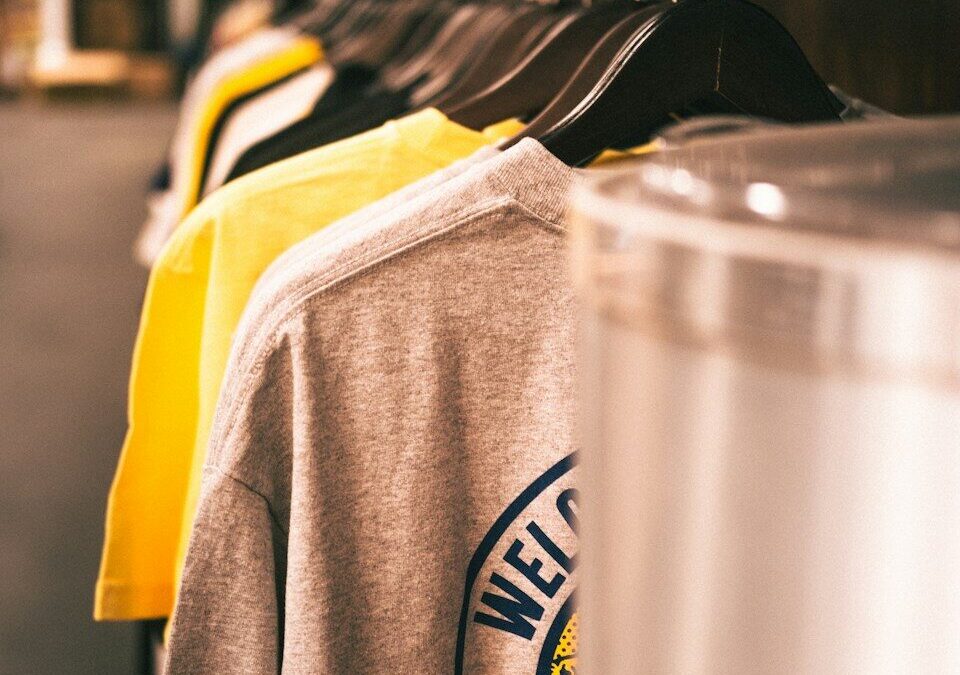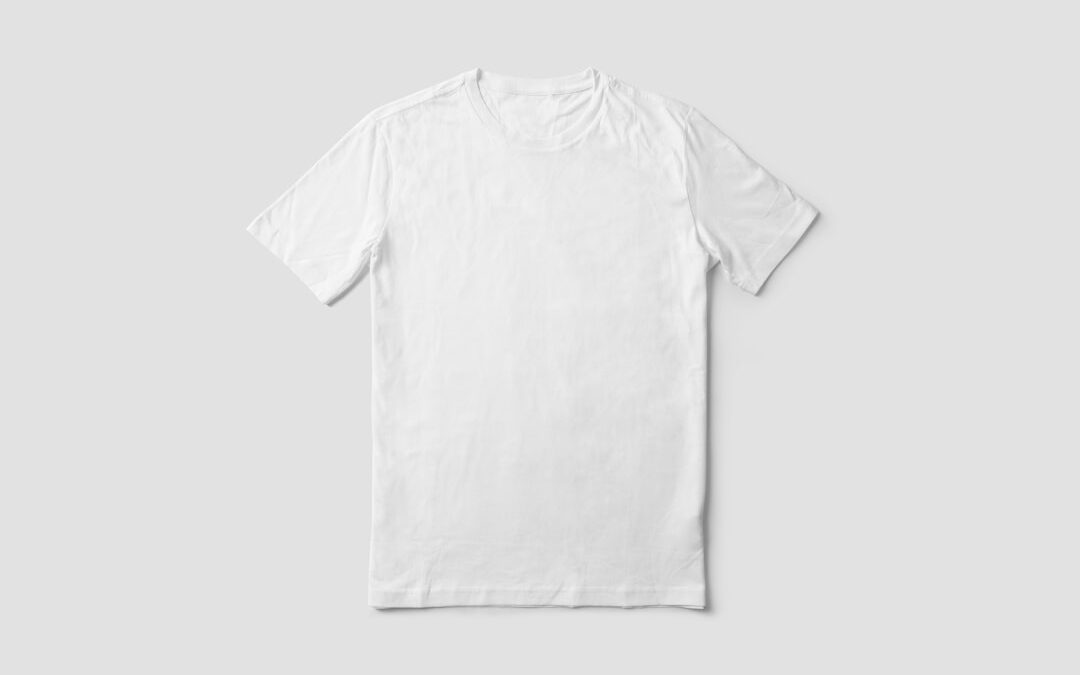

Necklines are crucial in clothing design. They frame the face, influence the balance of an outfit, and highlight features like the neck and shoulders—all of which directly affect where a DTF transfer should be placed, how much chest space is available, and how a finished design looks on a garment. Crew necklines offer the most flexible placement, while V-necks, scoop necks, and specialty styles each require adjusted spacing and sizing. Using tools like Limitless Transfers’ Print Size Visualizer and downloadable mockups helps decorators nail placement before pressing.
Getting a DTF transfer to look great isn’t just about print quality. It’s about placement—and placement starts with understanding the neckline.
The neckline of a garment changes everything: how much chest space is available, where the eye naturally travels, and whether your design will look balanced or awkward once pressed. A transfer that looks stunning on a crew neck tee can look completely off on a V-neck or scoop neck. And yet, many decorators—especially those just starting out—use the same placement for every shirt regardless of cut.
Necklines serve a bigger purpose than most people realize. They frame the face, set the overall style of a garment, and influence how proportions are perceived. A well-chosen neckline can draw attention upward, elongate the torso, accentuate the collarbone, or create visual balance across the body. Common uses of necklines span the full range of apparel—from casual basics and professional wear to formal events and bridal fashion. Understanding neckline types isn’t just useful for fashion designers; it’s essential knowledge for anyone decorating garments with DTF transfers.
This guide breaks down the most common neckline types, explains how each one affects DTF transfer placement, and walks through the key rules that separate amateur results from professional, retail-quality apparel. Whether you’re pressing a basic crew neck or navigating a specialty halter or sweetheart neckline, you’ll find practical, actionable guidance here.
Throughout this post, we’ll also show how Limitless Transfers’ tools—including the Print Size Visualizer, DPI Checker, Gang Sheet Builder, and downloadable mockups—make it easier to get sizing and placement right every single time.
For a foundational overview of neckline terminology used in the fashion industry, Wikipedia’s Neckline article provides a helpful reference.
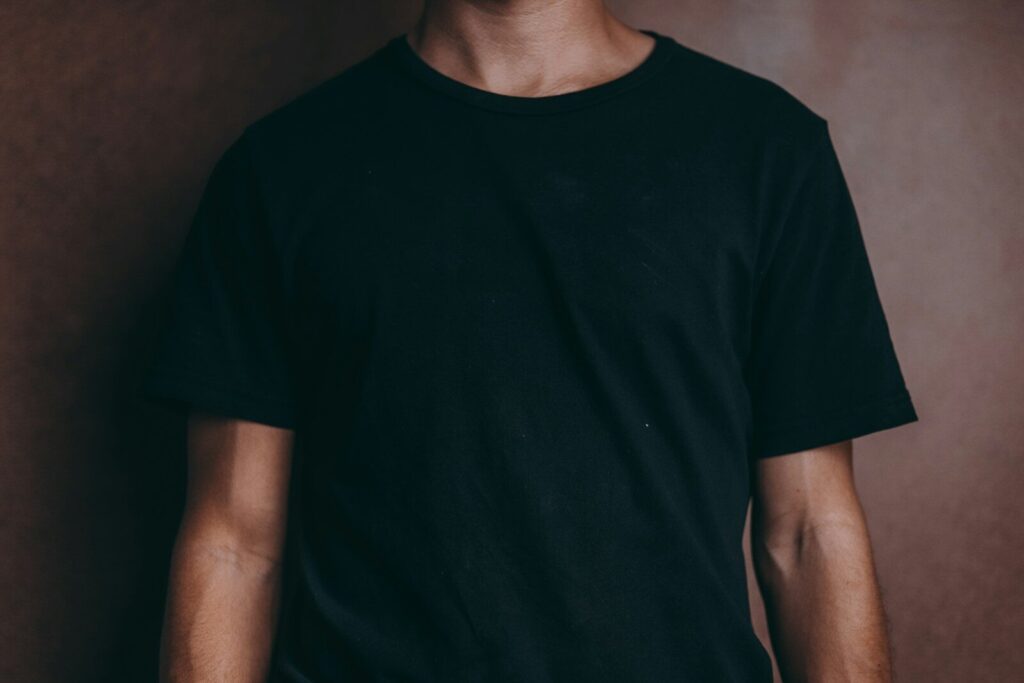
Photo by Luis Quintero on Unsplash
Why Neckline Types Matter When Applying DTF Transfers
Every neckline creates a different canvas. The collar shape, depth, and width all influence where a design should sit—and how much room you actually have to work with.
Place a transfer too high on a V-neck and it floats awkwardly into the neckline opening. Push a graphic too close to the collar on a boat neck and it creeps toward the shoulder seams, throwing off the entire visual balance. These aren’t minor issues. They’re the difference between a shirt that looks custom-made and one that looks like a mistake.
Four things are affected by every neckline choice:
- Visual balance — whether the artwork sits in harmony with the garment’s lines
- Comfort — a transfer placed over a stretched or curved neckline can feel stiff against the skin
- Stretch distortion — some necklines pull the chest fabric in ways that shift your transfer over time
- Professional appearance — consistent, thoughtful placement signals quality to customers
Before you finalize artwork dimensions or order your transfers, identify the neckline type. That single step shapes every other decision.
Understanding the Most Common Neckline Types For Different Body Types
Crew Neckline
The crew neckline is a round, high collar that fits closely to the base of the neck. It’s the most common neckline found on t-shirts and the friendliest for DTF transfer placement—which is why it’s a great starting point for beginners. Types of necklines often discussed together include the boat neck, crew neck, and V-neck, and the crew neck is usually the baseline from which all others are measured.
With a crew neckline, the standard placement for a left chest logo is approximately 3–4 inches down from the collar and 3–4 inches from the center of the chest. For center chest and full front prints, the top of the transfer should sit roughly 3–4 inches below the collar seam on adult shirts.
Because the crew neckline is consistent in shape and relatively high on the chest, it gives you the most predictable print space of any common neckline. Logo sizes ranging from 3″×3″ to 4″×4″ work well for left chest placement, while full front designs can stretch up to 12″×14″ on adult tees depending on shirt size.
For a detailed sizing reference by garment, Printify’s shirt size guide provides measurements across popular blank brands.
Mock Neckline
The mock neck—sometimes called a mock turtleneck—features a shorter collar that stands up around the neck but does not fold over, unlike a full turtleneck. It sits higher than a standard crew neck but leaves more of the neck exposed than a turtleneck does.
Because the collar extends further up the neck, your available chest space begins lower. Leave at least 4–5 inches below the base of the collar before placing the top edge of your transfer. Mock neck styles are common in fashion tops, athletic layering pieces, and casual knitwear. The elevated collar means graphics placed too high can feel visually crowded, so give your design room to breathe.
Turtleneck
The turtleneck is a high, close-fitting collar that covers most of the neck. It’s typically associated with cooler weather apparel—think sweaters, layering tops, and cold-weather athletic gear.
From a DTF transfer standpoint, turtlenecks offer limited chest real estate near the collar. The fabric construction is usually thicker and stretchier than a standard tee, which affects both heat press settings and transfer adhesion. When applying transfers to turtleneck-style garments, allow a minimum of 5 inches below the collar base before placing your design, and test your press settings on a fabric swatch first. Reduced pressure is often necessary to avoid crushing the knit structure.
Deep Or Plunging Neckline (V-neckline)
The V-neckline creates a sharp, plunging shape that elongates the neck and draws the eye downward toward the chest. This changes the visual center of the garment and requires careful attention to placement height.
Placing artwork too high on a V-neckline makes it look like the design is falling into the opening. The general rule: keep at least 4–5 inches between the lowest point of the V and the top of your transfer. This gives the design space to breathe and maintains a clean, intentional appearance.
Graphics on V-necklines should follow the natural vertical center of the shirt—not the center of the neckline opening. Avoid designs with wide top edges that draw the eye up toward the V, as this creates a visually unbalanced result.
Scoop Neckline
The scoop neckline is U-shaped and designed to elongate the neck, curving gently lower than a crew neck and creating a wider, more open collar. Because the neckline itself sits lower on the chest, your transfer placement must drop to compensate.
On a scoop neckline, pushing artwork to the same position used for a crew neck will leave the design looking crammed against the collar. Instead, aim for 4–5 inches below the deepest point of the scoop. This keeps the graphic visually centered and prevents a crowded appearance near the neckline.
Scoop necklines are common on women’s apparel and fashion tees. When working with these garments, measure from the base of the collar rather than using a fixed distance from the shoulder seam.
Square Neckline
The square neckline features a straight horizontal line across the chest with vertical sides dropping down from the shoulders—creating a boxy, geometric collar opening. It’s a bold, structured look commonly found in women’s tops, dresses, and formal wear.
Because of the clean horizontal and vertical lines of the neckline, designs placed too close to the collar will compete visually with the square shape. Give your transfer at least 4–5 inches of clearance below the lowest horizontal edge. Centered designs work best, as they echo the symmetry of the square opening. Asymmetrical placements tend to look unintentional on square necklines.
Boat Neckline (Bateau)
The boat neckline—also called a bateau neckline—extends horizontally across the collarbone, sitting close to both shoulder seams. It’s wide, shallow, and elegant, and it carries a fashion history that dates back to nautical styles of the 1920s, when the look was associated with maritime workwear before crossing into mainstream fashion. The boat neckline’s defining characteristic is the way it balances wider hips by drawing attention upward toward the shoulders.
How To Succeed With Boat Neck Line or High Necklines
Because the neckline extends almost all the way to the shoulders, artwork placed too high risks encroaching on the shoulder seams. Center your design carefully and aim for at least 4–5 inches below the widest point of the neckline. Designs that are too wide or placed too high will compete visually with the dramatic horizontal line of the collar itself.
Centered graphics work best on boat necklines. Avoid asymmetrical placements that draw attention toward one shoulder.
Cowl Neckline
The cowl neckline features soft fabric draping around the neck, creating loose, elegant folds at the front of the garment. This draped construction makes it one of the most flattering necklines for all bust sizes because the fabric falls away from the body rather than pulling tight.
The challenge for DTF transfers: cowl necklines create an uneven, shifting surface. Fabric folds move, stretch, and settle differently depending on how the garment is worn. For this reason, transfers should be placed on the flatter portions of the garment, well below the draped section. Avoid placing designs directly on the cowl drape itself—adhesion will be inconsistent, and the transfer can crack or peel as the fabric moves. If a design must appear near the neckline, opt for a small, simple graphic placed at least 5–6 inches below the deepest point of the drape.
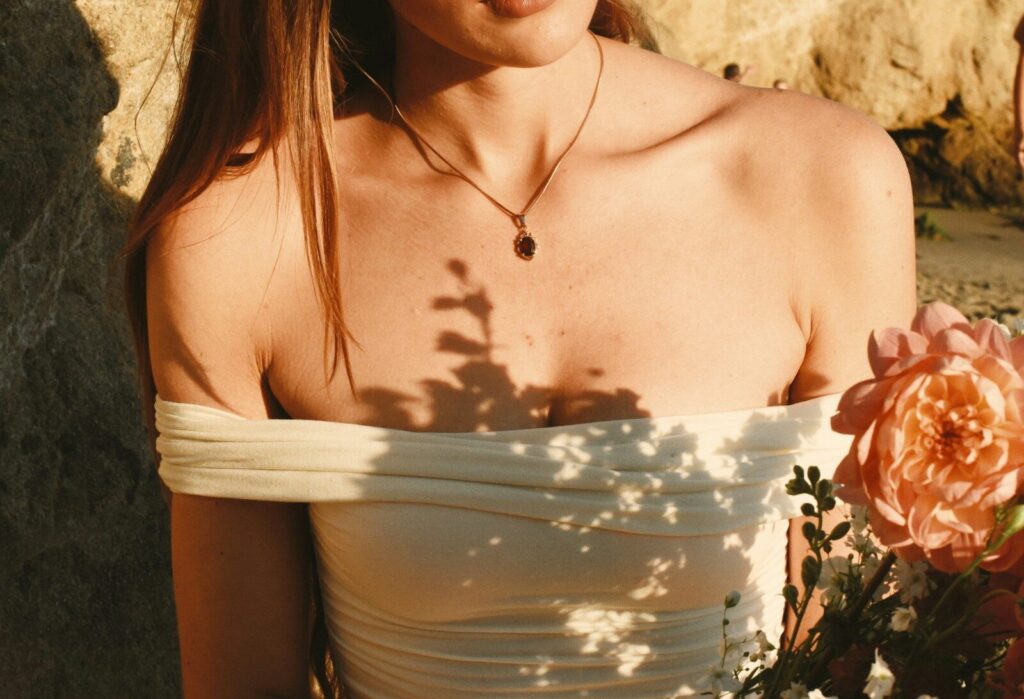
Photo by Katie Mukhina on Unsplash
Specialty and Fashion Neckline Types
Some necklines appear less frequently in everyday apparel decorating but are increasingly common in fashion, women’s clothing, and specialty event apparel. Each requires careful planning before pressing.
Sweetheart Neckline
The sweetheart neckline resembles the top half of a heart, curving inward at the center and outward toward the shoulders in two symmetrical arcs. It’s most commonly used in wedding dresses and evening wear, where it’s valued for the way it accentuates the collarbones and bust.
Given its association with formal and bridal fashion, DTF transfers applied to sweetheart neckline garments should be tasteful and deliberate. Large bold graphics are rarely appropriate. Delicate centered designs—lace-inspired prints, monograms, or fine-line artwork—work best. Allow at least 4–5 inches of clearance below the lowest point of the slightly curved neckline before placing the top edge of your transfer. Because sweetheart necklines are popular for bridal and evening wear, color vibrancy and fine detail matter more than ever—this is exactly where Limitless Transfers’ precision CMYK printing makes a visible difference.
Halter Neckline
The halter neckline ties or fastens behind the neck, leaving the back and shoulders completely bare and exposing the collarbone and neck area. It highlights toned shoulders and back, which is why it became a signature style during the disco era of the 1970s, when the halter look was popularized in clubs and dancewear. Today, halter necklines are still popular for summer events, activewear, and fashion tops.
Halter Neck Line Advantages
This style dramatically reduces the available printable area on the front of the garment. The fabric panels that form a halter top converge toward the neckline fastening point, meaning large full front prints are rarely suitable. Opt for smaller, left chest or centered logo placements that stay well below the neckline ties. Keep designs simple—the halter neckline itself is a style statement, and competing with it often diminishes the finished look.
Off-the-Shoulder Neckline or Strapless Neckline Style
The off-the-shoulder neckline exposes the collarbone, neck area, and shoulders, sitting below the natural shoulder line to reveal bare skin across the upper chest. It reveals and accentuates the shoulders in a way few other necklines do, and it’s particularly well-suited to summer events and warm-weather occasion wear. The trend dates back to the Regency Era, when low, wide necklines were fashionable in formal gowns, and the style has remained a perennial favorite in women’s fashion ever since.
For DTF transfer placement, off-the-shoulder styles present a narrower printable zone. Because the garment’s fabric sits lower on the body, your design must be placed accordingly—too high and the transfer risks sitting on the folded or elasticated band rather than the flat chest area. Center your graphic on the visible front panel and leave appropriate clearance from the top edge of the fabric. Avoid wide designs that extend toward where the fabric meets the skin, as adhesion can fail on heavily stretched elastic bands.
One-Shoulder Neckline
The one-shoulder neckline exposes one shoulder while covering the other, creating an asymmetrical look that draws the eye across the body diagonally. It’s a fashion-forward style often seen in evening wear, formal tops, and contemporary women’s fashion.
Placement on one-shoulder garments requires special attention to visual balance. Because the neckline itself is asymmetrical, a centered transfer can feel at odds with the garment’s design. In most cases, a small left chest or right chest placement works better than a centered graphic. Avoid large prints that compete with the asymmetry of the neckline—they tend to make the overall look feel busy rather than intentional.
Illusion Neckline
The illusion neckline gained popularity in the 19th century with the use of lace—a technique that created the appearance of a lower or more open neckline while keeping the skin covered. The look was achieved by layering sheer or lace fabric over the décolletage, giving a subtle, romantic impression of skin while maintaining modesty. Today, illusion necklines appear in bridal gowns, formal dresses, and high-fashion tops, typically featuring sheer mesh or lace panels.
Applying DTF transfers to illusion neckline garments is technically challenging. Sheer mesh and lace fabrics don’t provide the stable, opaque base that DTF transfers require for strong adhesion and full color output. If a transfer must be applied to a garment with an illusion neckline, place it on the opaque body of the garment well below the sheer panel—never directly on the mesh or lace itself. Test heat settings carefully, as delicate fabrics used in illusion necklines are often heat-sensitive.
Placement Principles That Apply Across All Neckline Types
Regardless of which neckline you’re working with, a few core principles hold true across every style:
- Always measure from the collar seam, not from the shoulder seam or the top of the garment. The collar seam is the true starting point for chest placement.
- Adjust downward for deeper necklines. The deeper the neckline dips, the lower your transfer needs to sit to maintain visual balance.
- Center your design based on the visual center of the garment, not the geometric center of the neckline opening.
- Account for fabric stretch. Necklines that rely on elastic or stretch fabric—off-the-shoulder, halter, athletic—can shift your transfer over time if the design sits over a high-movement zone.
- Use mockups before you press. Limitless Transfers’ Print Size Visualizer lets you upload your PNG design, scale it against a garment template, and see how it looks before you commit to a full run. You can also check the DPI of your design at your chosen size to confirm it’ll print sharp and clean.
For high-fashion or specialty necklines like sweetheart, cowl, or illusion styles, spend extra time in the mockup stage. These garments are often higher-cost blanks where a placement error is expensive to redo.
Working Across Different Garment Types
Necklines don’t only appear on t-shirts. The same neckline principles apply across hoodies, tank tops, dresses, performance shirts, and more—each with its own additional variables.
Hoodies
Hoodies introduce drawstrings, kangaroo pocket seams, and thicker collar construction. The drawstring and collar thickness push the natural chest placement slightly lower than on a regular crewneck tee. A good starting point for hoodie chest placement is 4–5 inches below the collar seam, measured to the top of the transfer. Avoid placing transfers too close to the kangaroo pocket—graphics that extend near the pocket seam can distort as the pocket flexes.
Athletic and Performance Shirts
Jerseys, performance shirts, and compression garments often feature fitted, stretchy necklines designed to move with the body. Place designs on areas with less stretch—typically the center chest rather than close to the underarm or collar. Performance fabrics often require reduced heat press pressure to avoid crushing the fabric texture. Always test on a scrap piece before running a full order.
Women’s and Fashion Apparel
Women’s garments span the widest range of neckline types—scoop, V-neck, square, sweetheart, cowl, halter, off-the-shoulder, one-shoulder, and illusion necklines all appear regularly in women’s fashion. When decorating these garments, take the time to identify the specific neckline before making any placement decisions. Ladieswear blanks also run smaller than men’s equivalents—typically about 10% smaller—so scale your designs accordingly.
Photo by CHUTTERSNAP on Unsplash
Getting It Right Every Time
Neckline awareness is a skill that pays off quickly. Once you understand how each collar shape affects the visual field of a garment, placement decisions become intuitive rather than guesswork.
Here’s a quick reference summary:
|
Neckline Type |
Key Characteristic |
Placement Tip |
|---|---|---|
|
Crew Neck |
Round, high, close-fitting at the base of the neck |
3–4″ below collar seam; most flexible placement |
|
Mock Neck |
Short stand-up collar, doesn’t fold over |
4–5″ below collar base |
|
Turtleneck |
Covers most of the neck; cooler weather styles |
5″+ below collar base; test press settings |
|
V-Neck |
Sharp plunging shape; elongates the neck |
4–5″ below lowest point of the V |
|
Scoop Neck |
U-shaped; designed to elongate the neck |
4–5″ below deepest point of scoop |
|
Square Neck |
A square neckline created a straight horizontal line with vertical sides |
4–5″ below lower horizontal edge; center designs |
|
Boat Neck |
Runs horizontally across the collarbone |
4–5″ below widest point; centered graphics only |
|
Cowl Neck |
Soft draping around the neck; flattering for all bust sizes |
Place below drape on flat fabric; avoid the drape itself |
|
Sweetheart |
Shaped like the top half of a heart; accentuates bust and collarbones |
4–5″ below lowest curve point; fine-detail designs |
|
Halter |
Ties behind the neck; exposes shoulders and back |
Small/left chest placements; stay below tie point |
|
Off-the-Shoulder |
Sits below shoulder line; exposes collarbone and shoulders |
Center on front panel; avoid elastic band areas |
|
One-Shoulder |
Exposes one shoulder; asymmetrical look |
Left or right chest placements; avoid large centered graphics |
|
Illusion |
Sheer or lace panels creating the appearance of skin |
Place only on opaque body fabric; avoid mesh/lace |
The goal isn’t perfection on the first shirt—it’s building a reliable process that produces consistent results across every garment style you work with.
Limitless Transfers’ Print Size Visualizer, Gang Sheet Builder, and downloadable mockups are built to support exactly that process. Upload your PNG, select your garment template, visualize the placement, check your DPI, and download a mockup for client approval—all before a single transfer is pressed. It’s the kind of tool that makes the difference between guessing and knowing.
When you’re ready to order transfers for your next project—whether it’s a run of crew neck tees, a wedding party in sweetheart gowns, or a summer event collection in halter tops—Limitless Transfers delivers vibrant, hot peel DTF transfers with same-day shipping on orders placed by noon EST, and free UPS Ground shipping on orders over $50. Color-perfect every time.
Helpful links and resources:
- Neckline Types Overview – Wikipedia: A foundational reference covering neckline terminology and fashion history.
- Print Size Visualizer – Limitless Transfers: Upload your design, preview sizing on real garment templates, and download mockups before you press.
- Gang Sheet Builder – Limitless Transfers: Build and submit gang sheets online without needing advanced design software.
- T-Shirt Size Guide – Printify: Detailed sizing measurements across popular blank brands to help you scale designs correctly.
- DTF Transfer Application Guide – Limitless Transfers: Step-by-step pressing instructions, heat settings, and tips for getting clean, durable results on any fabric.