Tie dye apparel needs decoration that matches its boldness. Premium DTF transfers from Limitless Transfers use expanded gamut CMYK+RGBO+W printing and a bright white underbase to deliver sharp, full-color designs on colorful garments—with a soft-hand feel, true hot-peel application, and same-day shipping on qualifying orders.
Tie dying apparel has never really gone away. It surges in popularity each summer, floods streetwear collections every few years, and shows up reliably on school spirit shirts, festival gear, and boutique fashion racks. What has changed is the standard buyers expect. Colorful garments are everywhere—the decoration on top needs to be just as good.
That’s where most creators hit a wall. Slapping a low-quality transfer onto a vibrant tie dye shirt doesn’t work. The colors compete, the artwork disappears, and the finished product looks amateurish. Getting it right requires a transfer with enough opacity, color accuracy, and fine detail to hold its own against a busy, multicolored background.
Limitless Transfers was built for exactly this. As a back-to-back 1st Place Award Winner for DTF print quality in 2024 and 2025, Limitless Transfers produces expanded gamut CMYK+RGBO+W transfers that deliver crisp, photographic-quality designs with a soft-hand feel and true hot-peel performance. Whether you’re running a boutique Etsy shop or scaling a full print operation, these transfers give your tie dye pieces the professional edge they deserve.
This guide covers everything—the rich history and cultural roots of tie dye, why it continues to thrive, how the dyeing process works step by step, why DTF is the best decoration method for colorful garments, and how to avoid the most common mistakes. By the end, you’ll have a clear path from blank shirt to finished product.
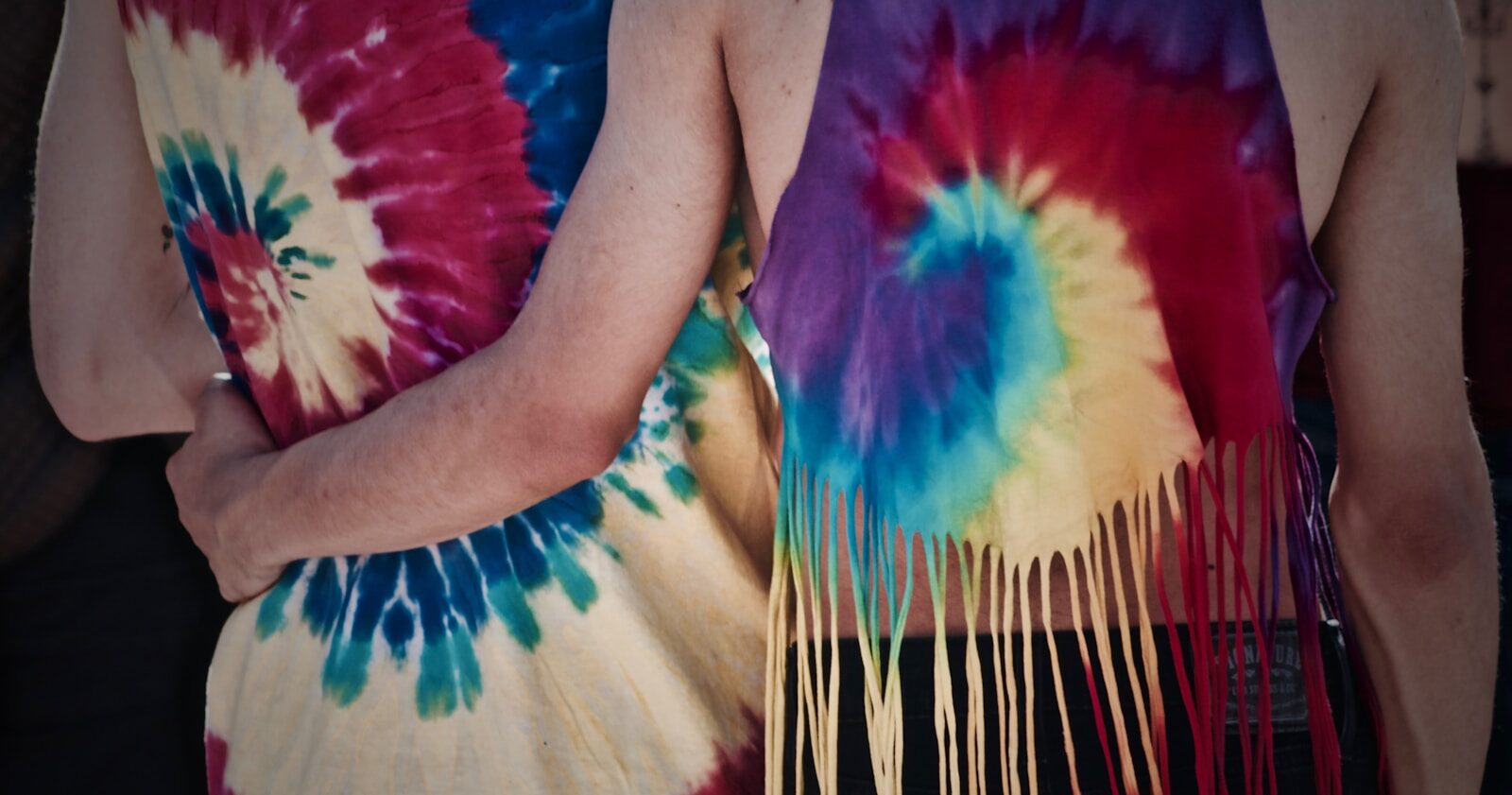
Photo by Joshua Stitt on Unsplash
The History and Cultural Roots of Tie Dye
Tie dye is a resist-dyeing technique. The process involves folding, twisting, or binding fabric before applying dye, so that the bound areas resist color penetration and create distinctive patterns. It sounds simple, but the technique spans thousands of years and has deep cultural significance on multiple continents.
The earliest documented examples of tie dye in China date back to the 5th century AD, where artisans created intricate patterned textiles for ceremonial and everyday use. Across Asia, independent traditions developed with their own regional character, each carrying meaning far beyond aesthetics.
Shibori is a Japanese form of tie dye practiced since at least the 8th century. It encompasses several resist-dyeing methods—folding, twisting, binding, stitching, and compressing fabric—to create patterns ranging from subtle geometric forms to complex abstract designs. Traditional shibori often used natural indigo dye and was woven into the fabric of Japanese daily life and art.
Bandhani originates in western India and is one of the oldest known forms of tie dye still practiced today. Artisans pinch tiny points of fabric and bind them with thread before dyeing, creating intricate dotted patterns. Bandhani textiles carry social and ceremonial significance—they’re traditionally worn at weddings and auspicious occasions across Rajasthan and Gujarat.
Mudmee is a tie dye tradition from Thailand that stands apart for its deliberately subdued color palette. Rather than bold primaries, mudmee produces earth-toned, complex patterns that reflect a restrained aesthetic rooted in Thai textile heritage.
Across traditional communities, tie dyeing isn’t just a craft—it carries social meaning, marks life events, and signals cultural identity. That depth is part of what makes the technique so enduringly resonant.
In the West, tie dye took on a different kind of cultural weight. During the 1960s, it became a symbol of counterculture and individuality, adopted by musicians, activists, and artists as a visual rejection of mass-produced conformity. The spiral, the peace sign, and the sunburst became the visual vocabulary of a movement. That association has never fully faded—tie dye still carries nostalgia for styles from the 1960s through the 1990s, which is part of its consistent commercial appeal.
More recently, tie dye has been adopted by luxury and contemporary fashion brands, appearing in high-end collections and runway presentations. DIY tie dye has also grown alongside the broader handmade crafts and personalization trend—consumers increasingly want products they made themselves or that feel one-of-a-kind. At the same time, the technique aligns naturally with current interests in sustainability and upcycling, since tie dyeing can transform plain or worn garments into something new without buying anything fresh.
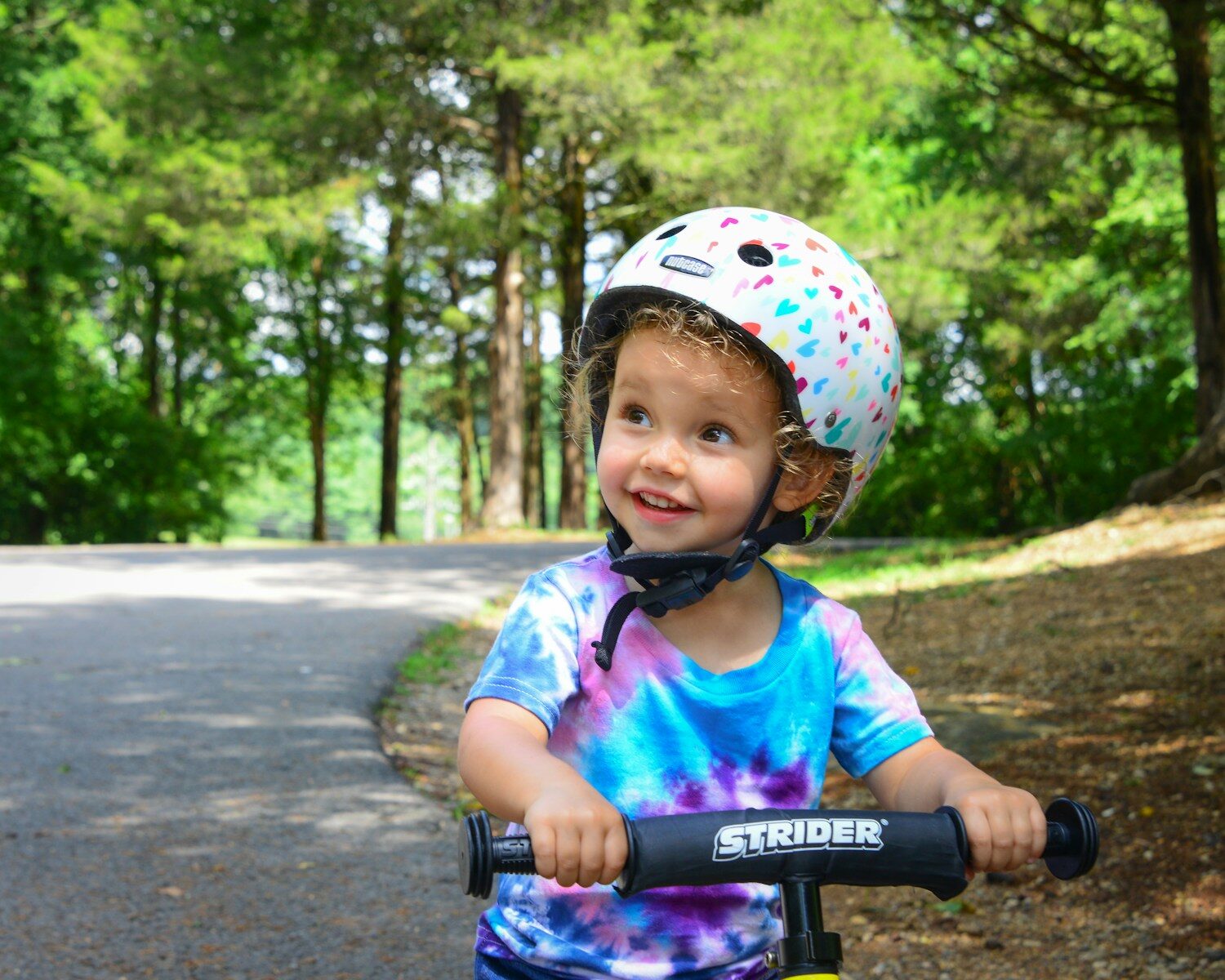
Photo by Barrett Ward on Unsplash
Why Tie Dye Apparel Continues to Grow in Popularity
Tie dye isn’t a passing trend. It’s a format that keeps reinventing itself. Classic spiral patterns from the 1960s gave way to modern techniques like ice dyeing, reverse tie dye, and crumple dyeing. Each new method generates fresh content, fresh demand, and fresh product opportunities.
Consumers respond to color. Bright, personalized garments photograph well on social media, stand out in online storefronts, and feel more unique than a plain blank shirt. That visual distinctiveness is why tie dye performs so consistently across markets—schools ordering spirit wear, sports teams wanting bold game-day apparel, small businesses creating branded summer merchandise, and Shopify sellers building loyal customer bases around limited-edition drops.
Seasonal demand peaks during spring and summer, but the category holds steady year-round in niches like festival clothing, youth camp apparel, and boutique fashion. Etsy sellers and promotional apparel companies have leaned hard into tie dye because customers perceive each piece as one-of-a-kind, which supports premium pricing.
The challenge isn’t selling tie dye. It’s decorating it well enough to justify the price.
How DTF Transfers Elevate Tie Dye Designs
A tie dye shirt already has a story. The decoration on top needs to add to it, not fight against it.
Standard decoration methods often fall short on colorful backgrounds. Screen printing requires high opacity inks and extra passes for white underbases. Sublimation doesn’t work on cotton. Vinyl lacks the detail needed for complex artwork. DTF transfers solve all of these problems at once.
Direct-to-film printing applies a full-color design onto a film that gets heat-pressed directly onto the garment. The white underbase in a DTF transfer acts as a barrier between the ink and the background color of the fabric—so your artwork reads clearly even on the most saturated tie dye pattern.
Limitless Transfers takes this further with expanded gamut CMYK+RGBO+W printing. By adding red, green, blue, and orange channels beyond standard CMYK, the gamut extends into color ranges that standard printers can’t reach. Blues come out truer. Yellows are brighter. Oranges and greens stay vivid. Turquoise doesn’t muddy. On a tie dye background, that expanded range means your design stays punchy and accurate instead of washing out.
The transfers also deliver a soft-hand feel—a lightweight, flexible finish that doesn’t crack or stiffen over time. After repeated wash cycles, the design holds. That durability matters for customers who wear their favorite pieces constantly.
For a deeper look at how DTF printing compares to other decoration methods, Printful’s guide to custom printing is a helpful starting point.
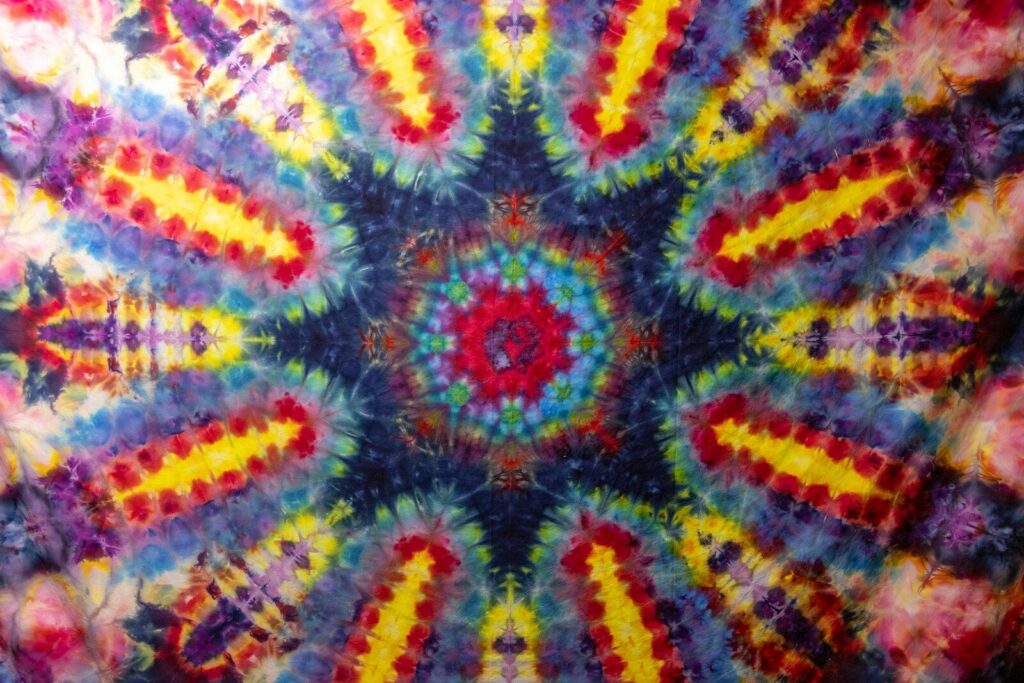
Photo by Mick Haupt on Unsplash
Why Tie Dye Requires Better Printing Than Solid Color Shirts
On a solid white or black shirt, almost any transfer will look passable. Tie dye is less forgiving.
The background is already complex. Multiple colors bleed into each other, creating gradients and unexpected tones beneath the artwork. A low-opacity transfer placed over that will pick up those background colors and distort the design. Fine text becomes illegible. Gradients within the artwork lose their distinction. Full-color logos look muddy.
High-opacity DTF transfers with a strong white underbase prevent this completely. The underbase blocks the background, creates a clean canvas, and allows every color in the design to reproduce accurately. Crisp edges stay crisp. Fine lines stay sharp. Placement becomes more flexible because the transfer doesn’t depend on the shirt color beneath it.
Reduced cracking and fading over time is another factor. A well-made DTF transfer bonds with the fabric at a molecular level during heat pressing, creating a hold that outlasts cheaper alternatives by dozens of wash cycles.
Choosing the Right Fabric for Tie Dye Projects
One of DTF’s biggest advantages is fabric versatility. Tie dye projects span a wide range of materials depending on the project and customer base—and the type of dye you use matters just as much as the fabric itself.
100% cotton is the best fabric for tie dyeing. It absorbs fiber-reactive dye deeply, produces rich, saturated color, and DTF transfers adhere to it extremely well. Fiber-reactive dyes are specifically designed to bond with cellulose fibers—the natural plant-based fibers found in cotton, linen, rayon, and hemp. Of those options, 100% cotton consistently yields the most vibrant and durable tie dye results. Cotton blends and 50/50 blends behave similarly and are widely used for budget-friendly blanks. Polyester requires fiber-reactive dyes specifically formulated for synthetics, but DTF transfers press onto poly fabrics without issue.
Rayon absorbs color beautifully and produces some of the most vivid tie dye results, making it a favorite for boutique fashion. Hemp and linen accept dye unevenly due to their natural texture, creating an organic, intentional look that works well in the sustainability and upcycling space.
Silk and wool are protein-based fibers that require acid dyes rather than fiber-reactive dyes. Acid dyes bond effectively with these materials at lower pH levels and produce excellent color depth, but they won’t bond with cotton the way fiber-reactive dyes do. Finished silk or wool pieces can carry DTF transfers with the right temperature settings, though testing before a production run is always advised.
Limitless Transfers’ DTF products are compatible with cotton, polyester, tri-blends, nylon, leather, canvas, denim, neoprene, non-woven fabrics, and more—making them viable across nearly every garment type.
Dharma Trading Co. maintains an excellent fabric and dye compatibility guide for those working with specialty materials.
How to Tie Dye Before Applying DTF Transfers
Getting the dyeing process right is the foundation. A poorly dyed shirt will undermine even the best transfer.
Gather Your Supplies
Before you start, collect the following:
- Fiber-reactive dye in your chosen colors (Procion dyes are the most widely recommended for vibrant, long-lasting results)
- Soda ash (sodium carbonate) for pre-soaking
- Squeeze bottles for applying dye with precision
- Rubber bands or string for tying
- Rubber gloves to protect your hands from staining
- Plastic bags or plastic wrap for curing
- Warm water for mixing soda ash, hot water as needed for rinsing
- A dedicated dyeing workspace covered with plastic
Wearing rubber gloves throughout the entire process is non-negotiable. Fiber-reactive dyes stain skin quickly and are difficult to remove.
Pre-Soak in Soda Ash
Soda ash (sodium carbonate) raises the pH of the fabric, which is essential for fiber-reactive dyes to bond effectively with cotton and other cellulose fibers. Without this step, the dye won’t fix properly, and colors will be significantly duller and less durable.
Mix 1 cup of soda ash per gallon of warm water and stir until fully dissolved. Submerge your shirt in the solution and soak for 5 to 15 minutes. Once soaked, wring out the shirt thoroughly before folding—removing excess liquid allows the dye to penetrate more evenly and prevents unwanted dilution of your colors.
Fold, Twist, and Bind With Rubber Bands
The folding method determines the pattern. Tie dye can create a wide variety of designs depending on how the fabric is manipulated before dye application. Common techniques include:
- Spiral: Pinch the center of the shirt, twist into a disc, and secure with rubber bands in a pie-slice pattern
- Peace sign: Use rubber bands to create the lines of a peace symbol over a spiral base
- Sunburst: Pinch multiple points across the shirt, gathering fabric downward and banding each at regular intervals
- Crumple: Scrunch the fabric randomly for an organic, abstract look
- Accordion fold: Fold back and forth like a fan, then apply rubber bands at intervals for stripe patterns
String produces softer boundaries between color sections. Rubber bands create more defined lines. Experimenting with both gives you more creative range.
Apply Dye Using Squeeze Bottles
Apply dye directly to the tied fabric using squeeze bottles. Squeeze bottles are essential for applying color precisely to specific sections—they give you control that pouring or brushing simply can’t match. Work section by section, applying each color deliberately to avoid unintended mixing. Flip the garment and repeat on the other side—dye doesn’t always penetrate fully from one direction.
To prevent muddy colors, keep complementary and opposing hues away from each other. Blue and yellow adjacent to each other will blend into green. That may be intentional, but it’s worth planning in advance. The Jacquard Products blog covers color theory for tie dye in useful detail.
Let the Garment Cure
Once dyed, place the wrapped garment in a sealed plastic bag and let it sit for at least 24 hours. Longer curing times generally produce deeper, richer colors. This is the most important step many beginners skip—rushing the cure results in dull, faded results even when the dye application was perfect.
Keep the garment in a warm environment during curing, around 70°F or higher. Cold temperatures slow the chemical reaction between the dye and the fiber, weakening the bond.
Rinse and Wash
After curing, rinse the garment under cold water while it’s still tied. Gradually move to warm water as you untie and open the piece. Continue rinsing until the water runs mostly clear.
Wash separately on a cold cycle with a mild detergent before the first wear or before heat pressing. This removes excess dye and prevents color transfer onto other garments or your heat press. iDye from Jacquard and Synthrapol are two detergents frequently recommended for post-dye washing.
For a step-by-step visual reference, Tulip Color’s official tie dye instructions are beginner-friendly and thorough.
Why DTF Is the Ideal Method After the Tie Dyeing Process
Once your tie dye garment is fully rinsed, washed, and dried, it’s ready for decoration.
The bright white underbase in a Limitless Transfers DTF transfer creates a clean surface above the dyed fabric. Background colors—no matter how vivid—don’t bleed through. Full-color photographic graphics reproduce with the same accuracy on a saturated rainbow swirl as they would on a plain white shirt. Crisp edges stay crisp even on the most complex patterns.
Placement flexibility is another major advantage. Because the transfer creates its own base, you’re not limited to areas of specific background colors. Center-chest placement, sleeve hits, back graphics—all of them work reliably.
High-resolution artwork translates directly. Fine text, detailed illustrations, photographic portraits, intricate logos—all survive the transfer process intact, which is rarely possible with alternatives like screen printing on colorful garments.
Best Products to Customize Beyond the T-Shirt
Tie dye and DTF transfers aren’t limited to t-shirts. The combination works across a broad range of products.
Hoodies and sweatshirts are natural pairings—colorful and cozy, they perform particularly well in fall and winter boutique collections. Tote bags tie dyed with earthy tones and decorated with minimal line art have become a staple of the farmers market and wellness brand aesthetics—and they’re a natural fit for customers interested in sustainability and upcycling. Hats with small tie dye sections and embellished DTF logos are growing in popularity in streetwear.
Denim tie dye pieces—jackets especially—create high-perceived-value items that support premium pricing. Canvas products like backpacks and pouches benefit from the same approach. Shoes can be dip-dyed and decorated with small DTF transfers for highly unique product offerings.
Limitless Transfers’ DTF products also adhere to leather, wood, and promotional items, opening up options for gift shops, corporate merchandise, and novelty products far beyond standard apparel.
Creative Tie Dye Design Ideas
The range of markets for tie dye custom apparel is broader than most creators realize.
Vintage graphics on tie dye backgrounds—distressed band logos, retro sports typography, worn-in illustrated designs—generate strong engagement online because they look authentically aged rather than mass-produced. Band merchandise and festival clothing thrive on exactly this aesthetic, leaning into nostalgia for the 1960s through the 1990s when tie dye was synonymous with music and youth culture.
School spirit apparel remains one of the highest-volume tie dye markets. Schools and universities place bulk orders for game days, spirit weeks, and graduation events, and they respond well to professional print quality. Summer camps follow a similar pattern.
Corporate events have increasingly moved toward colorful, casual branded merchandise over stiff polos. A tie dye shirt with a clean, well-placed company logo creates a memorable giveaway. Family reunions apply the same logic—personalized and visually interesting, with enough consistency across a group to feel cohesive.
Boutique fashion brands that build limited-edition tie dye drops around seasonal launches or collaborations have found that scarcity and bold visuals drive strong sell-through rates on platforms like Shopify and Instagram. This approach mirrors what luxury and contemporary fashion brands have done by incorporating tie dye into high-end collections—proof that the technique has long outgrown its DIY-only reputation.
For design inspiration and color combination references, Canva’s color wheel tool is a practical free resource.
Common Mistakes When Decorating Tie Dye Apparel
Even skilled creators make these errors. Knowing them in advance saves material and money.
Skipping the soda ash soak is the most preventable mistake in the dyeing process. Without raising the fabric’s pH, fiber-reactive dyes won’t bond properly with cotton, and the colors will fade quickly. Always soak in a properly mixed soda ash solution and wring thoroughly before folding.
Using the wrong dye for the fabric causes inconsistent results. Procion fiber-reactive dyes are the standard recommendation for vibrant results on cotton and other cellulose fibers. For silk or wool, use acid dyes instead—fiber-reactive dyes won’t bond with protein-based fibers the same way.
Not curing long enough is the most common beginner error. Letting the dyed shirt sit for at least 24 hours is essential. Pulling it out early produces dull, washed-out results no matter how carefully you applied the dye.
Choosing low-opacity transfers is the most damaging decoration mistake. On a plain white shirt, opacity barely matters. On tie dye, it’s everything. A transfer that doesn’t block the background will produce dull, distorted artwork.
Poor artwork resolution is the second most common decoration issue. Designs that look sharp on screen at small sizes often fall apart when scaled up for print. Always work at 300 DPI at the final print size.
Incorrect placement on a busy tie dye pattern requires more intentionality than solid garments. Sketching placement on a flat lay photo of the dyed shirt before pressing helps prevent placement decisions you’ll regret.
Improper heat pressing is consistently underestimated. Too little pressure or the wrong temperature results in peeling transfers. Always follow the recommended press settings and test on scrap fabric before committing to a production run.
Not testing fabrics before large orders is an expensive shortcut. Different fabric blends respond differently to heat. What presses perfectly on a cotton tee may bubble on a rayon blend.
The Printavo blog covers production workflow best practices that apply well to DTF decoration.

Why Businesses Choose Limitless Transfers
Print shops, Etsy sellers, boutique brands, and promotional product companies all point to the same reasons for choosing Limitless Transfers.
The back-to-back 1st Place Quality Awards for 2024 and 2025 are the clearest signal in a crowded market. Award recognition reflects consistent performance across thousands of orders, not a single strong result.
True hot-peel technology speeds up production significantly. Transfers peel cleanly while still hot, eliminating the cold-peel wait time that slows down high-volume operations. For decorators running dozens or hundreds of pieces, this difference compounds quickly.
Same-day shipping on orders placed before noon EST puts Limitless Transfers ahead of suppliers with multi-day processing times. Combined with free UPS Ground shipping on orders over $50, the cost and timeline advantages add up for repeat customers.
The platform offers no minimum order requirements, which makes it accessible for hobbyists testing new products and for print shops filling single-unit custom orders. Three ordering paths—Gang Sheet Builder, Gang Sheet Upload, and Order by Size—accommodate customers regardless of their design software experience.
Beyond transfers, Limitless Transfers stocks heat presses and supplies, making it possible to source an entire print setup from one supplier.
Helpful Tips for Selling More Tie Dye Apparel
Decoration quality is the foundation, but how you position and sell the product determines the ceiling.
Limited-edition collections create urgency. Tie dye drops with defined quantities and short availability windows consistently outperform always-available listings on platforms like Etsy and Shopify. Customers respond to scarcity when the product looks worth competing for.
Personalization adds perceived value at low operational cost. Offering name customization or custom color requests on top of a base tie dye design gives customers a reason to pay more and return.
Lean into the story. Tie dye carries real cultural history—from ancient resist-dyeing traditions in Asia to 1960s counterculture to the modern handmade crafts movement. Customers who understand that context connect more deeply with the product. Brief, authentic storytelling in your product descriptions and social content builds that connection.
Sustainability messaging resonates. Tie dyeing is a natural fit for the upcycling trend—use it. Customers who care about sustainable fashion are actively looking for brands that align with those values.
Event-specific merchandise—family reunions, corporate retreats, graduation parties—delivers bulk orders with minimal marketing effort. Organizations already have a budget; they just need a supplier they trust.
Social media photography on tie dye pieces requires attention. Flat lays on white backgrounds wash out the color. Natural light photography on textured surfaces or worn by real people showcases the vibrancy that makes tie dye compelling.
Seasonal launches tied to spring and summer trends keep your catalog feeling timely. Teasing new colorways or design collaborations in advance builds anticipation and drives pre-sales.
Premium pricing is sustainable when the decoration quality matches the claim. A well-placed, vibrant DTF transfer on a beautifully dyed garment genuinely justifies a higher price point than a plain printed tee. Lead with that quality in your product photography and copy.
For more on pricing and selling custom apparel online, Etsy’s seller handbook is a reliable resource.
Why DTF Is the Right Choice for Modern Tie Dye Apparel
Tie dye sets a high bar visually. The decoration needs to meet it.
DTF transfers from Limitless Transfers deliver on every dimension that matters for colorful garments: vibrant expanded gamut color, crisp fine detail, durable soft-hand finishes, and a white underbase that works on any background. Production is faster than screen printing. Scaling from one piece to thousands requires no new equipment investment. The results are consistent whether you’re pressing your tenth shirt or your ten-thousandth.
For creators and businesses who want professional-quality custom tie dye apparel without the overhead of in-house printing, Limitless Transfers removes every barrier. No setup fees. No minimums. Award-winning print quality. Same-day shipping.
Upload your artwork, build your gang sheet, and start creating tie dye apparel that stands out—at limitlesstransfers.com.
Frequently Asked Questions
Is it tie dye or tye dye?
The correct spelling is tie dye (or “tie-dye” with a hyphen when used as a modifier, as in “tie-dye shirt”). “Tye dye” is a common misspelling with no standard basis in English. Most major style guides and dictionaries use “tie dye” or “tie-dye.”
What are the steps to tie dye a shirt and then apply a DTF transfer?
The full process follows these steps: (1) Mix 1 cup of soda ash per gallon of warm water and pre-soak the garment for 5 to 15 minutes, then wring out thoroughly. (2) Fold or twist the fabric using your chosen pattern technique. (3) Apply fiber-reactive dye—Procion dyes are recommended for the most vibrant results—using squeeze bottles for precision. (4) Seal in a plastic bag and let sit for at least 24 hours. (5) Rinse thoroughly and wash separately. (6) Dry completely, then (7) heat press your DTF transfer onto the finished garment following the recommended press settings.
What dye works best for tie dyeing cotton?
Fiber-reactive dyes are the standard choice for cotton and other cellulose fibers. Procion dyes in particular are widely recommended for vibrant, wash-fast results. Soda ash is essential as a pre-soak—it raises the pH of the fabric so the dye bonds properly. For protein-based fibers like silk or wool, use acid dyes instead, as fiber-reactive dyes won’t bond with those materials effectively.
What colors should you avoid when tie dyeing?
Avoid placing colors directly opposite each other on the color wheel when you don’t want them to blend—red and green produce brown, blue and orange produce gray-brown, and yellow and purple produce muddy neutral tones. Plan your color palette in advance using a color wheel reference. Complementary adjacent colors—like blue and teal, or yellow and orange—blend cleanly and produce vibrant results.
Is tie dye out of style in 2026?
Tie dye remains active and commercially relevant in 2026. It continues to appear in boutique fashion, luxury brand collections, streetwear collaborations, school spirit apparel, promotional products, and seasonal drops. Consumer demand for colorful, personalized clothing has sustained the market through multiple fashion cycles. The format consistently resurfaces in new iterations—ice dye, reverse tie dye, crumple dye—keeping it fresh for new audiences without losing its appeal to loyal buyers. Its connection to sustainability and the handmade crafts movement continues to bring in new customers as well.
What tie dye patterns can I create?
Common patterns include the spiral, peace sign, sunburst, crumple, bullseye, and accordion stripe. Each is created by a different method of folding, twisting, or binding the fabric before dye is applied. Traditional techniques like shibori (Japan, practiced since the 8th century) and bandhani (western India) offer additional pattern possibilities with deep cultural heritage. Experimenting with rubber bands versus string, and with single versus multiple dye colors, creates a wide range of results from a relatively small set of folding techniques.
Can DTF transfers be applied to all tie dye fabrics?
Limitless Transfers’ DTF products adhere to a wide range of materials including cotton, polyester, cotton blends, tri-blends, nylon, rayon, canvas, denim, leather, and more. For specialty fabrics like silk or wool, testing with the recommended heat press settings before a full production run is advised. The white underbase ensures accurate color reproduction across all compatible fabrics regardless of the dye pattern underneath.
What artwork file format works best for ordering DTF transfers from Limitless Transfers?
PNG files with a transparent background work best for the Gang Sheet Builder tool. For Gang Sheet Uploads, PDF and vector formats are also accepted at 22.5 inches wide. All artwork should be at 300 DPI at the intended print size for sharp, detailed results—especially important on tie dye garments where fine detail needs to stand out against a busy background.