TL;DR: Custom DTF transfers let creators and businesses produce vibrant, durable, full-color designs on nearly any material—without expensive in-house printing equipment. Limitless Transfers, the back-to-back 2024 and 2025 DTF Printing Quality Award Winner, delivers ready-to-press transfers with same-day printing for orders placed by 2 PM CST, no minimum orders, and no setup fees.
Custom apparel production has changed dramatically over the last few years. The rise of Direct-to-Film (DTF) printing means that anyone—from a one-person Etsy shop to a full-scale print operation—can produce professional-grade custom products without owning a commercial printer. No screen setup. No weeding vinyl. No pretreatment chemicals.
According to 360iResearch, the global DTF printer market was valued at USD 2.68 billion in 2025 and is projected to reach USD 4.25 billion by 2032, growing at a CAGR of 6.77%. That growth reflects a simple reality: custom DTF transfers work, and businesses are taking notice.
This guide covers everything you need to know about the benefits of custom DTF transfers—from color quality and material compatibility to cost savings and production speed. Whether you’re launching a new brand or scaling an existing print business, understanding what makes DTF transfers so effective will help you make better decisions for your customers.
What Are Custom DTF Transfers and Why Are They So Popular?
How Does Direct-to-Film Printing Work?
Direct-to-Film printing follows a straightforward five-step process: design preparation, printing, powder application, curing, and heat pressing. In this DTF heat transfer process, your design is printed onto a special PET film using CMYK and white inks, and that special film helps produce premium quality output. While the ink is still wet, a hot-melt adhesive powder is applied to the surface—this is what allows the transfer to bond permanently to fabric. The coated film is then cured with heat to set the powder, and finally pressed onto your garment using a heat press. The film is peeled away, leaving behind a clean, durable, full-color design.
What makes DTF stand out from older methods is its accessibility. Unlike screen printing, there are no screens to prepare. Unlike sublimation, there’s no need to pretreat the fabric or limit yourself to light-colored polyester. DTF transfers work on both light and dark fabrics, across a wide range of materials including cotton polyester and cotton polyester blends, and they arrive ready to press—eliminating the need for manual weeding of excess vinyl. For a detailed breakdown of the DTF process, Printify’s DTF printing guide is a helpful starting point.
Who Benefits Most from Using Custom DTF Transfers?
The short answer: almost anyone producing custom apparel or merchandise. More specifically:
- Small business owners and Etsy sellers who need professional results without large upfront investments
- Established print shops or any growing print shop looking to expand their services without buying additional equipment
- E-commerce brands on Shopify, Amazon, or eBay offering personalized or niche products
- Event and promotional companies producing shirts, hats, and uniforms on tight deadlines
- DIY creators and hobbyists who want high-quality results at home with a basic heat press
- Schools, sports leagues, and nonprofits that need consistent, durable designs across different garments
If you’re currently outsourcing to multiple suppliers or struggling with inconsistent results from an in-house setup, this service works for both one off projects and larger production needs. If you want a single transfer supplier, custom DTF transfers from a trusted provider like Limitless Transfers can also serve as a one stop shop and simplify the entire workflow.
What Makes Premium DTF Transfer Quality So Much Better Than Other Methods?
How Do DTF Transfers Produce Such Vibrant, Accurate Colors?
Limitless Transfers uses expanded gamut CMYK+RGBO+W printing with carefully calibrated ICC profiles. This technology produces a wider color range than standard CMYK alone, allowing for richer saturation, smoother gradients, and more accurate color matching. It also delivers vibrant colors that stay time vibrant instead of looking their best only on day one. Whether your design features bold block colors or fine photorealistic detail, the output is consistent and professional.
One important note: colors printed on fabric may look slightly different from what you see on your screen. Monitors emit light, while fabric reflects it—so the same design can appear differently depending on viewing conditions. Working with calibrated ICC profiles and proofing your designs helps minimize any surprises.
DTF printing achieves approximately 90% Pantone color accuracy—a level of precision that’s simply not possible with screen printing’s halftone limitations or basic vinyl heat transfer. For brand-driven businesses where color consistency matters, this is a significant advantage. The result is a finish that compares favorably to screen printing while delivering screen print quality.
Can DTF Transfers Handle Fine Detail and Complex Artwork?
Yes—and this is one of the biggest reasons designers and print professionals prefer DTF. Thin lines, intricate gradients, and layered artwork all print cleanly. DTF supports detailed designs and complex graphics in a single pass, with no color limitations and no additional setup cost per color, and it also handles high resolution artwork for sharp detail.
A few best practices help maximize that quality. Start by checking file type requirements and using transparent backgrounds when preparing artwork—any solid background behind your design will print as a filled area, including white. Common high-resolution formats may also include PSD or TIFF when available, as long as the artwork is prepared correctly. When working with small text, choose bold fonts to ensure readability at print size; fine strokes can lose definition at smaller dimensions. And keep in mind that large solid blocks of color—while visually striking—can reduce flexibility and comfort in the finished garment, so consider design balance when building large all-over prints.
Screen printing requires a separate screen for each color and struggles with highly detailed multi-color designs. DTF handles all of it seamlessly.
What Does the Soft-Hand Feel Mean for Finished Products?
A common complaint about older heat transfer methods is the stiff, plasticky feel of the finished product. DTF transfers from Limitless Transfers deliver what’s known as a “soft-hand feel”—a lightweight, flexible finish that sits naturally on the fabric. That translates into great quality in everyday wear, with excellent quality comfort and movement that make pieces easier to wear again and again. Customers notice the difference, and it directly affects how long they wear (and talk about) a piece.
Durability backs up that feel. High-quality DTF prints last over 100 washes without fading or cracking, and properly applied transfers withstand 50+ washes without peeling. These durable DTF prints are designed for maximum durability when properly applied, so the colors and flexibility hold up through repeated washing and keep finished products looking sharp well beyond the first season.
Why Does Using Custom DTF Transfers Make Production Faster and More Efficient?
What Is True Hot-Peel Technology and Why Does It Matter?
Hot-peel transfers allow you to remove the film immediately after pressing—while it’s still warm—rather than waiting for the transfer to cool. This speeds up production dramatically, especially on larger orders. Limitless Transfers engineers their transfers specifically for true hot-peel performance, so there’s no guesswork and no waiting between presses.
To apply DTF transfers, the process is straightforward with the right press settings. First, pre-press your garment for a few seconds to remove moisture and wrinkles—this step matters more than most people expect, and skipping it can affect adhesion. Then set your heat press to 310°F, apply medium pressure, and press for 7–10 seconds. Peel the film while still hot for best results. For a more thorough cure, you can also press for 12–15 seconds at 310°F. Cold peel is an option as well—some decorators prefer it for certain fabric types or finishes. For more guidance on heat press setup and technique, ColDesi’s DTF printing tutorials hub provides a useful library of video and written resources. After pressing, avoid high dryer or iron settings and use low heat to help preserve the transfer.
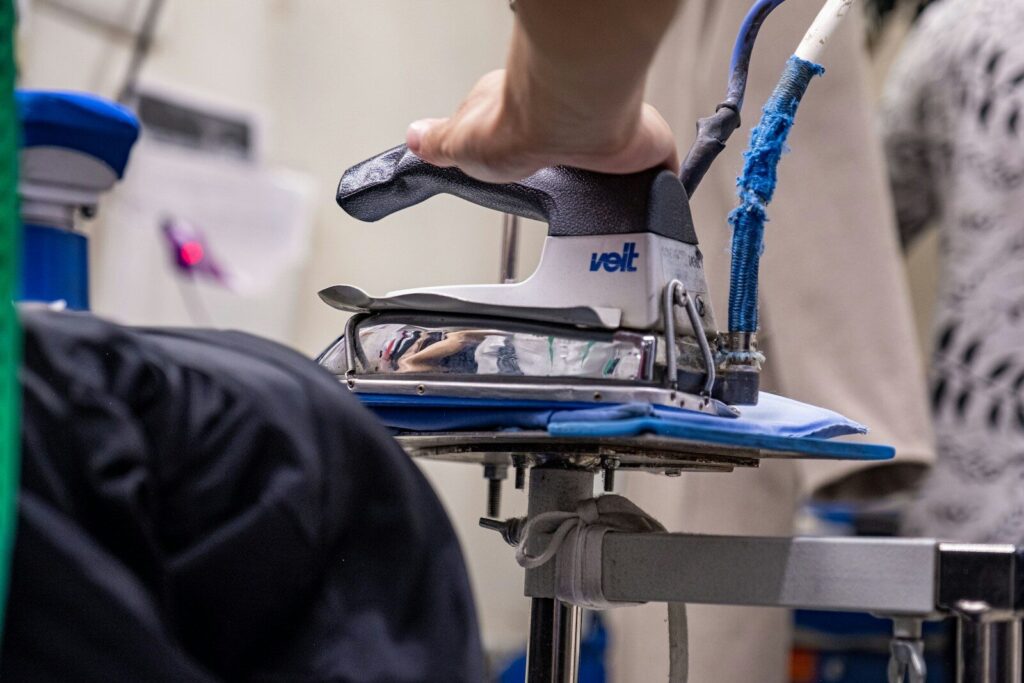
Photo by Anton Savinov on Unsplash
How Does Same-Day Printing and Fast Shipping Help Print Businesses Meet Deadlines?
Time is often the limiting factor for small and medium print operations. Limitless Transfers offers same-day printing with fast turnaround for orders placed by 2 PM CST—making it a reliable option for urgent orders that can’t wait. Most orders ship within 24 hours of placement, which helps shorten overall turnaround time and support fast delivery, and orders over $99 qualify for free shipping. A $10 flat-rate 2nd Day Air option is also available on qualifying orders. For businesses accepting last-minute custom orders—think event tees, school spirit wear, or rushed corporate merch—this kind of speed is a genuine competitive advantage, especially for bulk orders facing tight deadlines.
Which Materials Can You Use DTF Transfers On?
Photo by Jimmy Funkhouser on Unsplash
Do DTF Transfers Work on Both Light and Dark Fabrics?
Yes. One of the most practical advantages of DTF over sublimation printing is that it works equally well on light and dark fabrics. The white ink layer acts as a base, ensuring that colors appear vivid regardless of the garment’s base color. Whether you’re decorating a black hoodie or a white tee, the result is the same full-color output.
What Fabric Types Are Compatible with DTF Transfers?
DTF transfers are compatible with an impressive range of materials—more than 20 fabric types in total. The most common include:
- Cotton (100% and blends)
- Polyester (100% poly and poly blends)
- 50/50 and tri-blends
- Nylon
- Spandex
- Denim
- Leather
- Neoprene
- Canvas
- Non-woven fabrics
- Wood and novelty substrates
That versatility makes DTF a smart choice for businesses that decorate a wide range of products—not just standard t-shirts. From athletic wear and bags to hats and promotional items, a single DTF workflow can handle it all.
How Does Custom DTF Transfer Ordering Work?
What File Formats Can You Upload?
Limitless Transfers accepts designs in several file type options, including PNG, PDF, and SVG. For gang sheet uploads, files should be 22.5″ wide at any desired length, and high-quality artwork is typically prepared at high resolution and may also be submitted as AI, PSD, TIFF, or PDF when supported. PNG is the most commonly used format, especially for designs with transparent backgrounds—which, as noted earlier, is the preferred setup for clean, professional output and makes it easier to upload your design.
What Is a Gang Sheet and How Do You Build One?
A DTF gang sheet is a single print file that contains multiple designs arranged together on one sheet efficiently—maximizing the printable area and reducing cost per transfer. Instead of ordering each design separately, you combine them on one sheet and pay for the total printed area.
Limitless Transfers makes this easy with their online gang sheet builder. If you don’t want to use design software, their free online builder keeps the process simple. You don’t need professional design software—just upload your PNG files, and the builder helps arrange multiple designs based on your chosen sheet size before you submit. It’s especially useful for small businesses, DIY creators, and Etsy sellers who need several different designs in a single order, including bulk jobs that work well with gang sheets. If you prefer to build your own layout in a tool like Adobe Illustrator or Photoshop, you can also upload a ready-to-print file directly in gang sheet format.
Photo by Theme Photos on Unsplash
Is There a Minimum Order Requirement?
No. Limitless Transfers has no minimum order requirement for DTF transfers. You can order a single small transfer or a full gang sheet—whatever fits your current production needs. This flexibility is one of the key reasons DTF has become so popular with small operators: there’s no pressure to overbuy inventory or commit to large runs before you’re ready.
What Are the Cost Benefits of Ordering Custom DTF Transfers?
How Do Bulk Discounts Work?
Pricing scales with volume at budget friendly prices. As your order size grows, your per-unit cost drops, and the pricing works for both bulk orders and small repeat runs without art fees. Bulk discounts of up to 70% off are available for large orders, and automatic discounts of up to 55% apply as quantities increase. These discounts make DTF transfers a cost-effective option not just for small runs, but for high-volume print shops looking to reduce production costs without sacrificing quality.
For businesses scaling from startup to established operation, this pricing structure means you can grow into better rates naturally—without negotiating custom quotes or locking into contracts. The pricing model is art fees free, with no hidden fees beyond the stated order total.
Does Free Shipping Apply to All Orders?
Free UPS Ground shipping is available on orders over $99. For orders that need to arrive faster, a $10 flat-rate 2nd Day Air option is available on qualifying orders. Given that orders can ship within 24 hours of placement, the combination of fast fulfillment and affordable shipping makes it easier to plan production schedules around customer demand rather than supplier lead times.
Is DTF Printing the Right Choice for Your Business?
If you’re looking for a printing method that delivers vibrant, durable results across a wide range of materials—without the overhead of in-house equipment, the rigidity of minimum orders, or the limitations of single-color or fabric-specific techniques—custom DTF transfers are hard to beat.
The workflow is simple: prepare your artwork with a transparent background, upload in PNG, PDF, or SVG format, set up a dtf gang layout with the online builder or submit a ready-to-print file, and place your order. Your transfers arrive ready to press. Pre-press your garment to remove moisture and wrinkles, apply at 310°F with medium pressure for 7–10 seconds, and peel hot. That’s it.
Whether you’re producing a single custom piece or fulfilling a large wholesale order, Limitless Transfers’ combination of award-winning print quality, no minimums, same-day printing, fast shipping, and volume discounts gives you a production partner built for real business demands—at any scale. There are no color limits for complex, full-color output, and blank apparel can be paired with transfers for a simple workflow. There are also options custom shops can use, including ready to press dtf for faster production.
Ready to press designs, including seasonal or prebuilt transfers, can also work well for shops that do not need original artwork every time.
Ready to get started? Place your first order at Limitless Transfers and see why thousands of decorators, designers, and print shops have made the switch.
Helpful Links & Resources
Great DTF transfers start well before the heat press touches fabric. From building print-ready files to caring for finished garments and selling your products online, the right tools make every step smoother. Here are five practical resources to help you create, apply, and sell with confidence.
1. Canva
Canva is a beginner-friendly design platform where you can build eye-catching artwork without expensive software. It’s perfect for creating logos, slogans, and full-color graphics you can export as high-resolution PNG files for your transfers. If you’re new to design, the drag-and-drop editor makes it easy to get professional results fast.
2. Adobe Photoshop
For designers who want full control over their artwork, Adobe Photoshop is the industry standard for editing and preparing print-ready files. You can fine-tune resolution, clean up edges, and export in the exact formats your transfers require. It’s a smart investment if you want crisp detail and reliable color across every design.
3. American Cleaning Institute – Fabric Care Labels
Knowing how to care for printed garments keeps your work looking vibrant wash after wash. This resource breaks down fabric care symbols and washing guidelines so you can pass clear instructions to your customers. Sharing proper care tips reduces complaints and builds trust with repeat buyers.
4. Pantone Color Finder
Color consistency matters, especially when a client expects their brand shade to match every time. The Pantone Color Finder helps you identify and reference specific colors so your designs translate accurately from screen to shirt. Use it to communicate color choices clearly and avoid surprises in your finished prints.
5. Etsy Seller Handbook
If you sell custom apparel or want to start, the Etsy Seller Handbook is packed with practical advice on listings, pricing, photography, and marketing. It’s a valuable guide for turning your DTF creations into a growing online shop. Even seasoned sellers can pick up fresh tips to boost visibility and sales.