A DTF printer is a specialized printer that creates direct-to-film transfers by printing CMYK and white ink onto PET film, which is then coated with hot melt adhesive powder, cured, and heat-pressed onto fabric. DTF works on cotton, polyester, blends, and more, with no pretreatment required. Whether to own one depends on your order volume, budget, and staffing.
Direct to Film printing, better known as DTF, has become one of the fastest-growing methods for producing custom apparel. It fills a gap that screen printing and direct-to-garment (DTG) printing couldn’t quite close: vibrant, durable prints that work on almost any fabric, with no screens and no pretreatment spray.
But as DTF has grown in popularity, so has a common question among apparel businesses, Etsy sellers, and promotional companies: should you buy your own DTF printer, or is it smarter to order ready-to-press transfers from a dedicated provider?
There’s no universal answer. The right choice depends on your production volume, available space, staffing, and how much time you want to spend on equipment maintenance versus running your business. This guide breaks down exactly what a DTF printer is, how the entire DTF process works, what it costs to run one, and when outsourcing to a transfer company makes more financial sense.
If you want a broader primer on the technology before diving in, Printful’s overview of Direct-to-Film printing is a solid starting point.
What Is a DTF Printer ?
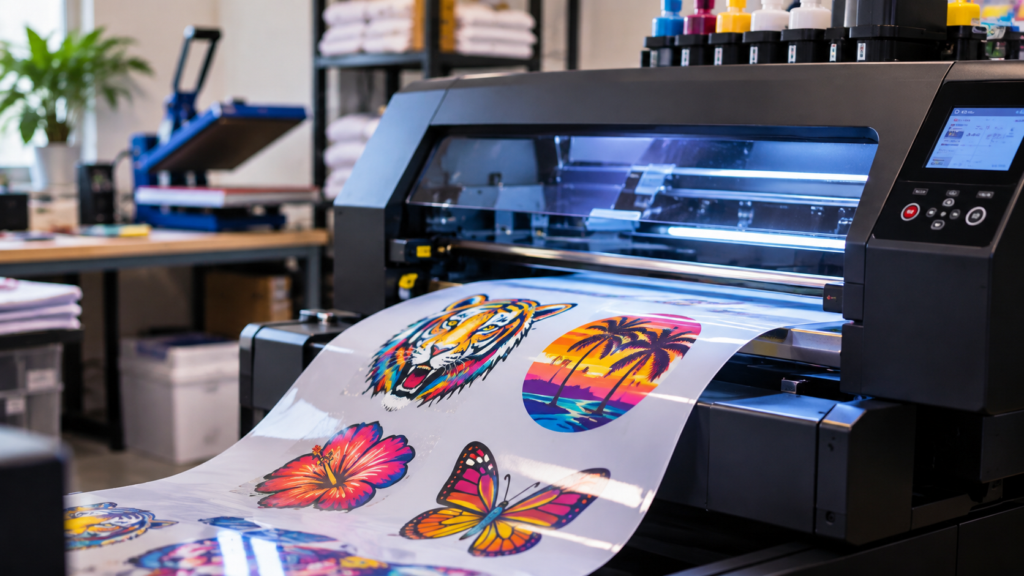
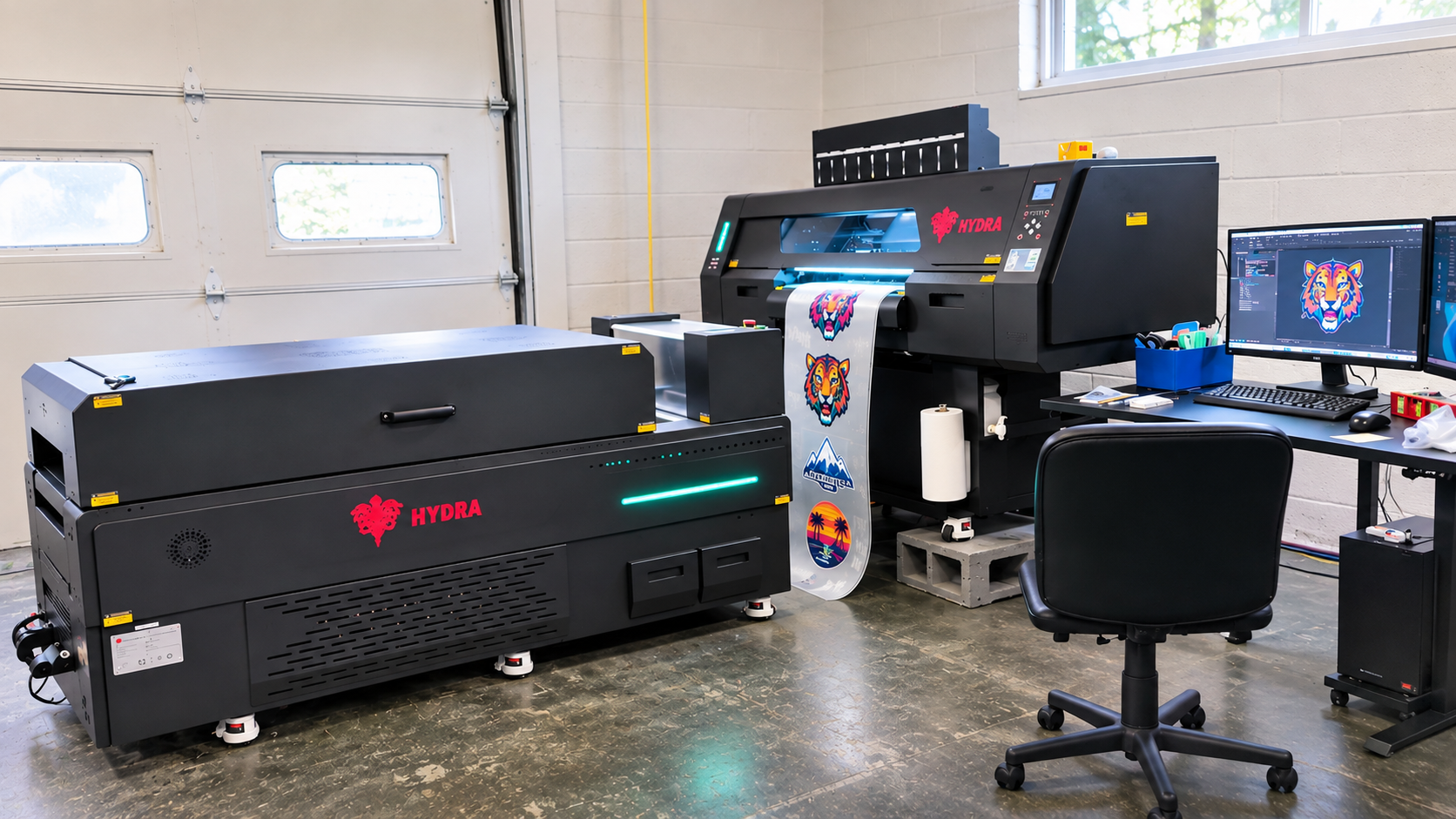
A DTF printer is a dedicated printer built specifically to produce Direct-to-Film transfers. Unlike a standard inkjet printer, a DTF printer prints onto a specialized PET transfer film rather than paper, using CMYK ink alongside a white ink channel that most consumer printers simply don’t have.
That white ink layer is the key difference. It creates the opacity needed for designs to show up clearly on dark fabrics, and it sits beneath the colored inks on the printed film so that once the transfer is pressed and peeled, the white layer ends up against the garment while the color faces outward.
Standard home printers can’t reliably produce professional DTF transfers because they lack white ink capability, the correct print heads for film substrates, and the precision calibration required for mirror printing. Regular inkjet printers are also not designed to handle the PET transfer film itself, which behaves very differently from standard paper during DTF transfer printing.
In short, DTF printing is a purpose-built production process, not something you can improvise with office equipment.
How Does the Direct-to-Film Printing Process Work?
The DTF printing process involves several distinct stages, each requiring specific equipment and attention to detail. Here’s how a design goes from a digital file to a finished, wearable transfer.
Step 1: How Do You Prepare Artwork for DTF Printing?
Before anything gets printed, the design needs to be created or prepared in software like Adobe Photoshop or Illustrator. For businesses printing multiple designs at once, it’s common to arrange several images together on a single sheet, known as a gang sheet, to maximize film usage and reduce waste.
Once the artwork is finalized, it passes through RIP (raster image processor) software. RIP software translates the digital design into instructions the DTF printer can understand, including color profiles and the white ink layer placement.
If you’re new to design software, Adobe’s own Photoshop tutorials cover everything from basic image editing to color correction, which is useful groundwork before attempting DTF-ready artwork.
Step 2: How Is the Design Printed Onto PET Film?
Next, the RIP software sends the design to the DTF printer, which prints it onto PET film, a specialized, coated transfer film typically around 0.75mm thick. The design prints in reverse, or mirrored, so that it reads correctly once pressed onto fabric.
The printer applies CMYK ink for color and a white ink layer for opacity. This white ink is what allows DTF transfers to produce vibrant colors and fine details on both light and dark fabrics. Without it, prints would appear washed out or barely visible on anything other than white garments.
Color accuracy at this stage matters enormously, which is why proper color management is worth understanding. Epson’s resources on printer color management offer useful manufacturer-level context on how color profiles affect print output.
Step 3: How Does Hot Melt Adhesive Powder Work in DTF Printing?
Once the film is printed, it’s coated with hot melt adhesive powder while the ink is still wet. This fine powder is what allows the transfer to bond to the fabric later during pressing.
Powder application can be done manually, shaking powder over the film by hand, or with an automatic powder shaker that evenly distributes the adhesive and removes excess. Automatic shakers tend to produce more consistent results, which matters for operations printing at volume.
Step 4: Why Does the Adhesive Need to Be Cured?
After the thermoplastic adhesive powder is applied, it needs to be cured, meaning melted just enough to bond with the ink without fully liquifying. Larger operations typically use a curing oven or heat tunnel, which moves the film through a controlled heat zone at a consistent pace. Smaller operations sometimes use a heat gun, though this requires more manual attention to avoid uneven curing.
Getting the curing temperature right is critical. Under-cured powder won’t bond properly, while over-curing can damage the print.
Step 5: How Is a DTF Transfer Pressed Onto Fabric?
The final step is pressing the cured film onto the garment using a heat press machine. This requires the right combination of time, pressure, and temperature, which varies depending on the fabric and transfer size.
One advantage DTF has over DTG printing is hot peel technology: most DTF transfers can be peeled immediately after pressing, without waiting for the garment to cool. This speeds up production considerably for print shops handling bulk orders.
Unlike DTG printing, DTF requires no pretreatment of the garment beforehand, which simplifies the workflow and saves time on every order.
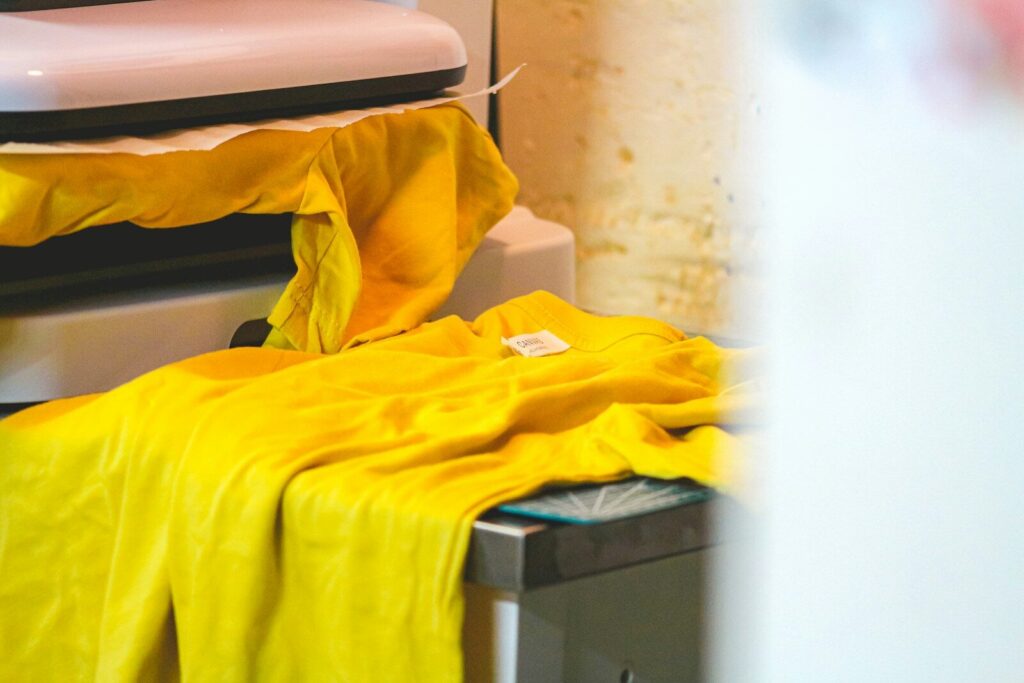
Photo by Compagnons on Unsplash
What Equipment Do You Need for a Complete DTF Setup?
Buying a DTF printer is only one piece of the investment. A complete, functional DTF setup requires several additional pieces of equipment working together.
DTF Printer
The core machine that prints your designs onto PET film using CMYK and white ink.
DTF Ink
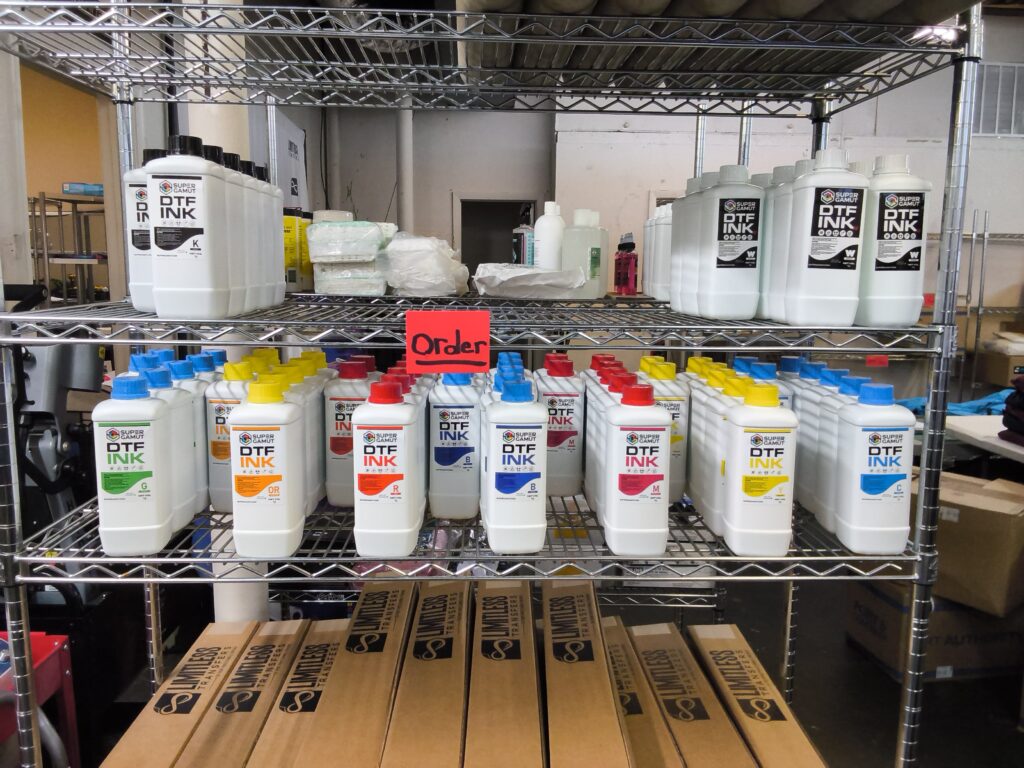
You’ll need both CMYK ink for color and white ink for opacity. White ink requires more frequent attention, since it settles faster than colored ink and needs regular circulation to avoid clogging.
PET Film
The specialized transfer film your design prints onto, typically around 0.75mm thick, often sold in rolls or sheets depending on your printer.
Hot Melt Adhesive Powder
The fine powder that bonds the printed design to your printed fabric during pressing.
Powder Shaker
Equipment used to evenly apply adhesive powder and remove excess before curing, available in manual and automatic versions.
Curing Equipment
A curing oven, heat tunnel, or heat gun used to set the adhesive powder after it’s applied to the film.
RIP Software
Software that processes your artwork into print-ready files, manages color profiles, and controls white ink placement.
Color Management Tools
Tools and calibration profiles that help ensure consistent, accurate color reproduction across print runs.
Heat Press
Required for the final pressing stage, applying the time, pressure, and temperature needed to transfer the design onto fabric.
What Workspace Do You Need for DTF Printing?
A dedicated DTF setup needs proper ventilation, since curing and pressing release heat and some fumes. Humidity control also matters, as both ink and PET film can be affected by excess moisture. You’ll also need adequate storage space for film, ink, and powder, plus a clean area free from dust that could contaminate prints.
What Maintenance Does a DTF Printer Require?
White ink needs regular circulation to prevent settling and clogging, since it has a higher pigment load than standard CMYK inks. Daily nozzle checks help catch print head issues early, and periodic head cleanings keep print quality consistent. Beyond the printer itself, ongoing consumable costs for ink, film, and powder add up and should be factored into your overall budget, along with time for preventative maintenance.
What Materials Can DTF Print On?
One of DTF’s biggest strengths is its versatility across fabric types. DTF transfers work on:
- Cotton
- Polyester
- Cotton blends
- Nylon
- Leather
- Denim
- Canvas
- Wood
- Tote bags
- T-shirts
- Hoodies
DTF printing works on almost any material, is compatible with both light and dark fabrics, and requires no pretreatment, giving it excellent versatility compared to other printing methods that are often limited to specific fabric types or colors.
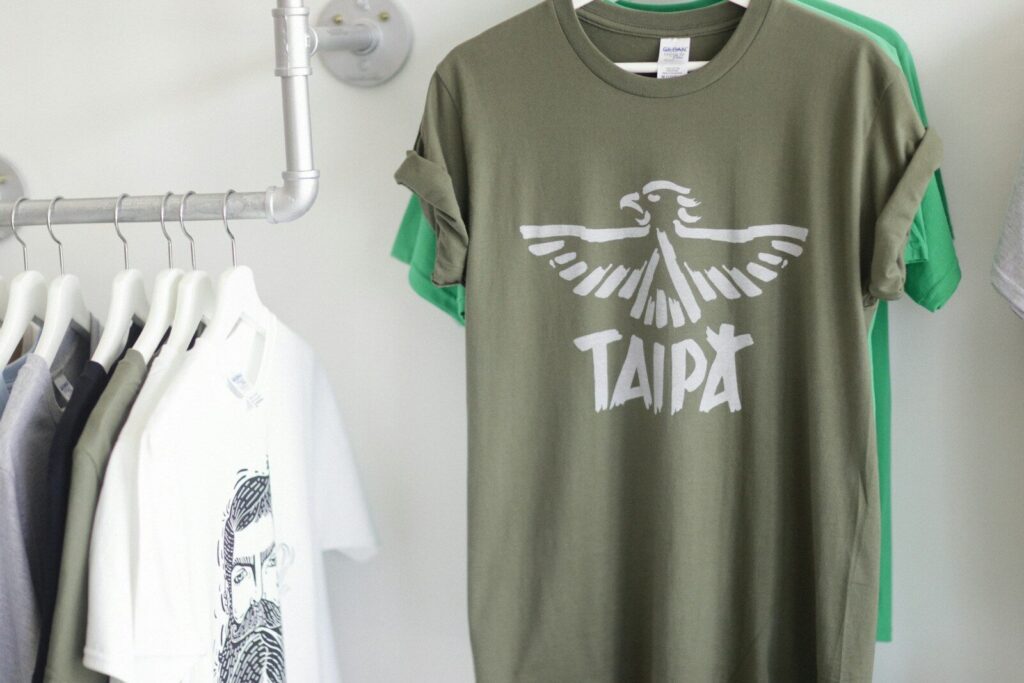
Photo by Alexey Demidov on Unsplash
Advantages of DTF Printing
DTF Works on Nearly Any Fabric
From cotton and polyester to nylon, blends, and even leather, DTF transfers adhere to a much wider range of materials than methods like sublimation, which is largely limited to polyester.
DTF Produces Excellent Print Quality
Vibrant CMYK colors combined with a true white ink layer allow DTF to reproduce fine details, intricate artwork, and soft gradients with impressive clarity.
DTF Handles Small and Large Orders Equally Well
Whether you need a single personalized shirt or a bulk order of several hundred, DTF scales without the setup costs that make small runs expensive with other methods.
DTF Requires No Screen Creation
Compared to screen printing, where multi-color jobs require separate screens for each color, DTF transfers print the full design in one pass, making it far easier to handle multi-color or highly detailed designs.
DTF Offers Durable Wash Resistance
Properly cured and pressed DTF transfers hold up well across multiple washes, resisting cracking and fading better than some older transfer methods.
Are There Any Downsides to DTF Printing?
DTF printing isn’t without tradeoffs. Equipment investment is significant upfront, and ongoing maintenance, particularly keeping white ink circulating properly, requires consistent attention. There’s a learning curve involved in dialing in your curing temperatures, powder application, and heat press settings.
Consumable costs for ink, film, and powder add up over time, and you’ll need dedicated workspace with proper ventilation, especially given the heat generated by curing ovens and heat presses. OSHA’s guidance on heat stress and workplace safety is worth reviewing if you’re setting up equipment that generates consistent heat in an enclosed space.
Large solid-color prints can also have a slightly heavier feel on fabric compared to smaller, more detailed designs, and troubleshooting print quality issues sometimes requires technical knowledge that takes time to build.
DTF vs Other Printing Methods
DTF vs Screen Printing
Screen printing requires creating separate screens for each color, which adds setup time and cost, especially for small orders. DTF skips this step entirely, making it much easier to handle short runs and highly customized designs without the upfront screen costs.
DTF vs DTG Printing
DTG (direct-to-garment) printing requires pretreating the fabric before printing, while DTF does not. DTF also tends to offer broader fabric compatibility, since DTG works best on cotton, while DTF performs well across cotton, polyester, blends, and more. White ink handling differs between the two methods as well, with DTF transfers generally offering more flexibility for dark garments.
DTF vs Heat Transfer Vinyl (HTV)
Heat transfer vinyl often requires layering multiple colors or cut pieces for complex designs, which slows production. DTF prints complex, multi-color artwork in a single pass, making it faster for detailed designs and typically better suited to higher-volume production.
DTF vs Sublimation Printing
Sublimation printing is largely limited to polyester and works best on light-colored garments, since the dye embeds into the fabric rather than sitting on top of it. DTF, by contrast, works on dark garments and cotton fabrics where sublimation simply isn’t an option.
For a broader industry perspective on how these methods compare, the Printing United Alliance publishes general information on different printing technologies used across the apparel and printing industry.
Do You Actually Need to Own a DTF Printer?
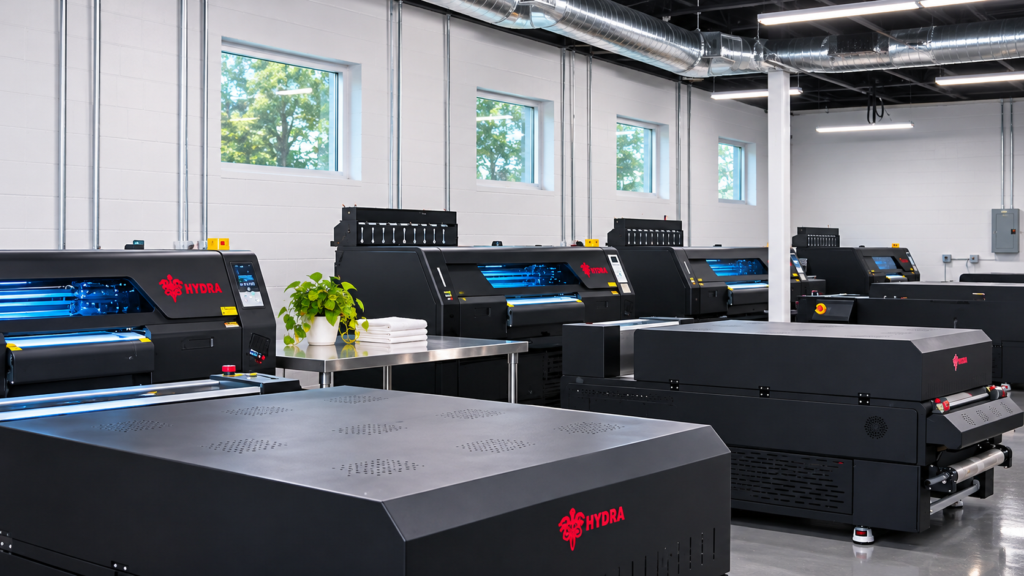
There isn’t a one-size-fits-all answer here. Whether owning a DTF printer makes sense depends heavily on your production volume, budget, and how much operational complexity you’re prepared to manage.
When Does Buying Your Own DTF Printer Make Sense?
Owning a DTF printer tends to make the most sense for high-volume shops running daily production, businesses with dedicated print staff, and larger commercial operations that want complete control over their workflow.
Pros of owning a DTF printer:
- Faster internal production without waiting on outside orders
- Greater scheduling flexibility
- Complete control over the entire production workflow
Cons of owning a DTF printer:
- High startup costs across printer, ink, film, and supporting equipment
- Ongoing maintenance and occasional repairs
- Continuous consumable costs
- A real learning curve before production runs smoothly
To get a realistic sense of what startup costs might look like for your specific business, the U.S. Small Business Administration offers general guidance on budgeting and evaluating equipment investments, which applies well to weighing a DTF printer purchase against outsourcing.
When Does Ordering Ready-to-Press Transfers Make More Sense?
Outsourcing to a dedicated DTF transfer provider tends to be the better fit for small businesses, Etsy shops, Shopify stores, startups, promotional companies, and anyone handling overflow production or simply testing DTF before committing to equipment.
The benefits of ordering ready-to-press transfers include avoiding printer investment entirely, skipping maintenance and RIP software management, sidestepping white ink upkeep, and getting professional print quality without the learning curve. It also means a faster startup and considerably lower financial risk if you’re still figuring out whether DTF fits your product line.
This is exactly where a trusted production partner like Limitless Transfers fits in, handling the printing, curing, and quality control so businesses can focus on creating designs, pressing orders, and growing their customer base.
How We Help Businesses Succeed Without Owning a Printer
At Limitless Transfers, we built our process around removing the guesswork and overhead that comes with owning DTF equipment. Our transfers have earned back-to-back recognition for DTF quality, and we ship same-day on orders placed before noon EST, with free UPS Ground shipping on orders over $50.
We don’t require minimums, so whether you need one transfer or several hundred, you can order what you actually need. Our transfers use true hot peel technology, meaning you’re not stuck waiting around during production, and our gang sheet builder makes it simple to arrange multiple designs onto a single sheet before ordering. We also support multiple ordering methods, so you can work the way that fits your business best.
Color accuracy and a soft-hand feel matter just as much to us as turnaround time, and our transfers are compatible with almost any material, from cotton and polyester to leather and canvas. If you’re also looking to build out your setup, we carry heat presses and supplies as well, so you have a single, reliable partner for both transfers and equipment.
Our goal isn’t to replace the value of owning equipment for businesses that need it. It’s to give everyone else a dependable way to get professional DTF results without the overhead.
Final Thoughts: Should You Buy a DTF Printer or Outsource?
A DTF printer is a specialized machine that prints designs onto PET film using CMYK and white ink, which is then powdered, cured, and heat-pressed onto fabric, producing vibrant, durable results across nearly any material without pretreatment. A complete setup requires more than just the printer itself, including ink, film, powder, curing equipment, RIP software, and a heat press, along with ongoing maintenance and consumable costs.
Whether you should own one depends on your production volume, available budget, staffing, and how much time you want to dedicate to equipment upkeep versus running your business. High-volume operations with dedicated staff often benefit from owning their equipment outright, while small businesses, startups, and anyone testing the waters typically find more value in ordering ready-to-press transfers from a reliable provider.
Whichever path fits your business today, the right choice ultimately comes down to matching your production needs with your available resources, and that can always change as your business grows.
Frequently Asked Questions
Which is better, DTF or sublimation?
DTF works on a much wider range of fabrics, including cotton and dark garments, while sublimation is largely limited to polyester and light-colored materials. Choose DTF if you need fabric versatility; choose sublimation if you’re printing exclusively on light-colored polyester items.
Can you print DTF on a regular printer?
No. Regular inkjet printers lack the white ink channel, specialized print heads, and film-handling capability required for DTF printing. A dedicated DTF printer is necessary to produce usable transfers.
What is the purpose of a DTF printer?
A DTF printer creates Direct to Film transfers by printing designs onto PET film using CMYK and white ink, which are then powdered, cured, and heat-pressed onto fabric. Its purpose is to produce durable, vibrant, full-color prints that work across a wide range of materials without pretreatment.
What is the typical cost of a DTF printer?
Entry-level DTF printers generally run from around $1,000 to $3,000, with mid-range models typically falling between $3,000 and $10,000, and high-end commercial printers reaching $10,000 to $20,000 or more. These figures are approximate industry ranges and don’t include ongoing costs for ink, film, powder, and other supporting equipment.