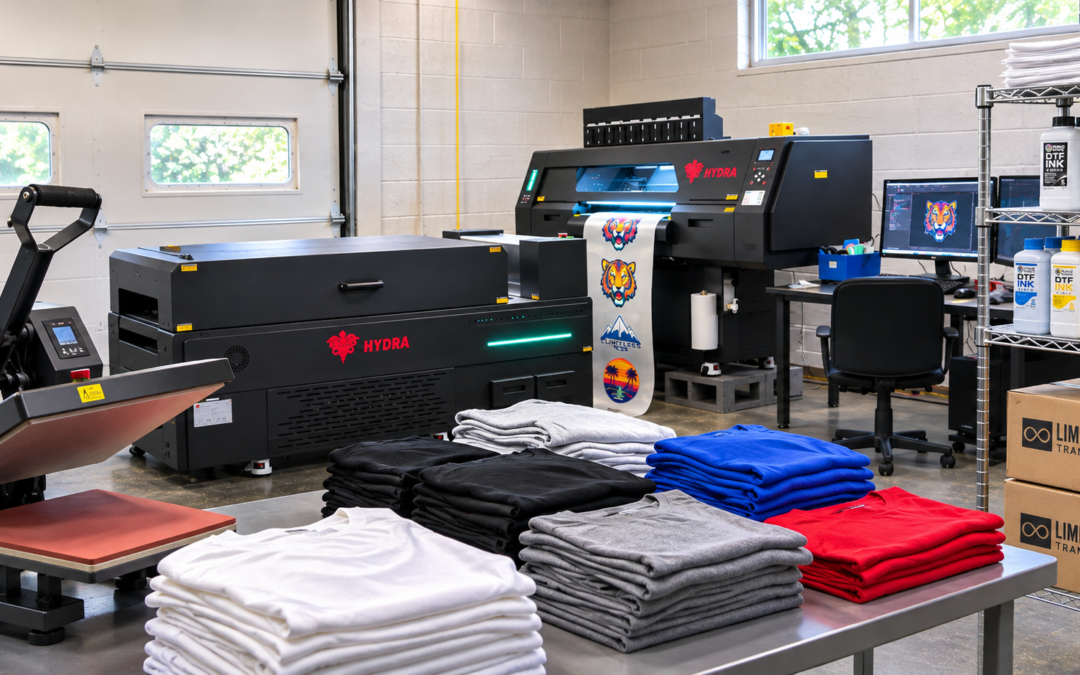
I save the most money on wholesale DTF transfers by maximizing gang sheets, grouping orders, buying the right quantity, double-checking artwork, calculating true cost per print, building repeatable systems, choosing a reliable supplier, and investing in premium transfers that actually last. Smarter ordering beats bigger ordering every time.
Growing an apparel business usually starts with one-off prints. A customer wants a shirt, you place an order, you repeat the process the next day. But somewhere between your tenth order and your hundredth, the math starts to shift. Shipping costs stack up. Per-print pricing stays stubbornly high. And you begin wondering if there’s a smarter way to scale.
That’s usually when print shops, Etsy sellers, and clothing brands start looking at wholesale DTF transfers. But here’s the part that surprises a lot of first-time bulk buyers: saving money isn’t just about ordering more. It’s about ordering smarter.
I’ve worked with print shops, custom apparel decorators, promotional product companies, and solo Etsy sellers who all hit the same wall — rising costs eating into margins. The businesses that break through that wall aren’t necessarily the ones placing the biggest orders. They’re the ones using a handful of practical strategies to get more value out of every gang sheet, every shipment, and every supplier relationship.
Below are eight ways to cut costs on bulk DTF transfers without sacrificing quality. I’ll also show you how I help businesses of every size order smarter, without requiring an expensive printer or a warehouse full of inventory.
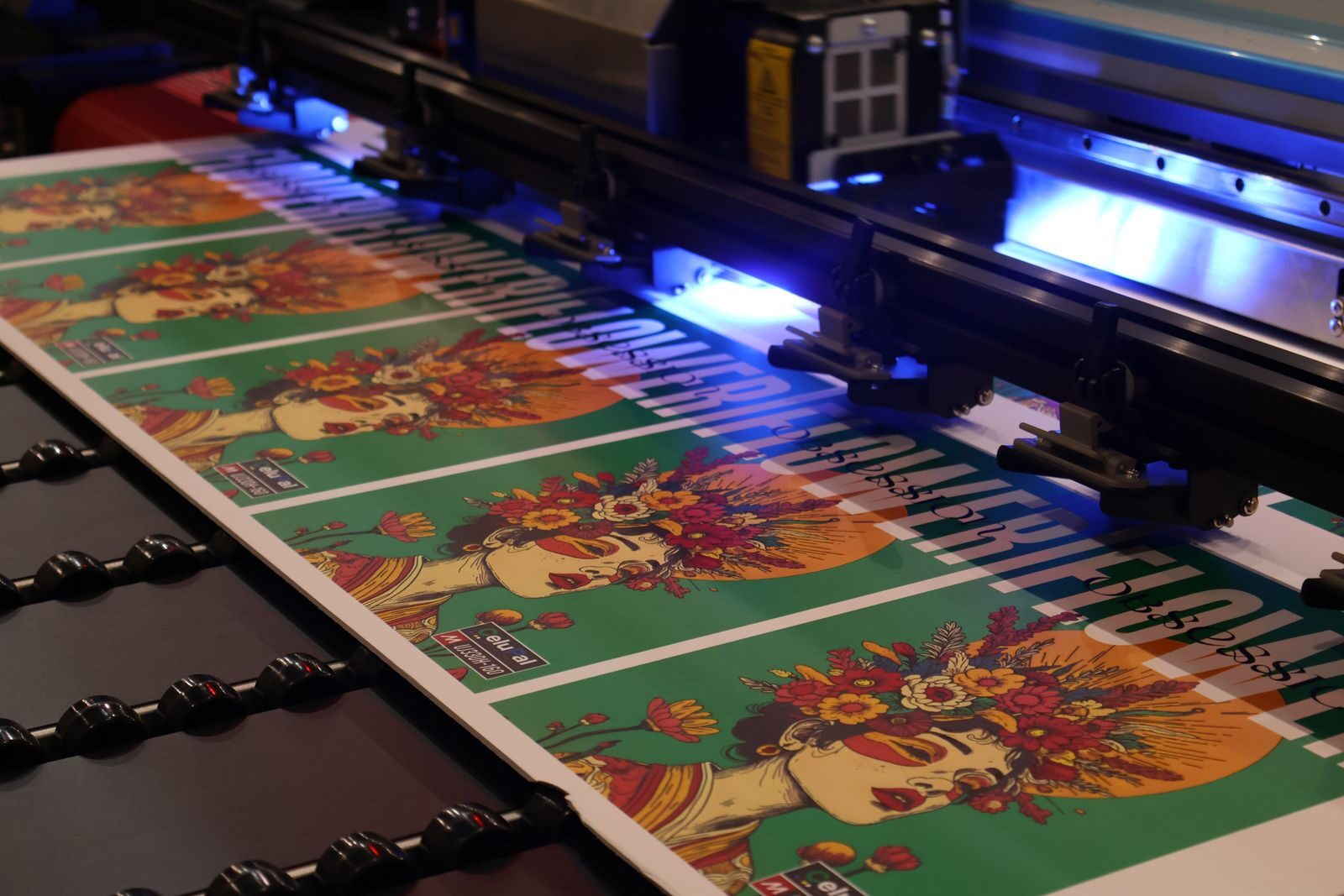
Photo by Yara Solis Fuentes on Pexels
Why do wholesale DTF transfers make sense for growing businesses?
Wholesale DTF (direct-to-film) transfers are pre-printed, full-color designs produced in bulk and shipped ready to press onto apparel using a standard heat press. Instead of investing in a DTF printer, powder unit, and curing oven, you outsource the printing step to a supplier and focus on design, marketing, and sales.
This model benefits a wide range of businesses:
- Print shops that want to add DTF without new equipment
- Clothing brands launching seasonal collections
- Etsy and Shopify sellers fulfilling custom orders
- Promotional product companies handling event and corporate apparel
- Schools and fundraisers running one-time campaigns
- DIY creators testing small product lines
Outsourcing transfers typically lowers production costs because you avoid the capital expense of DTF printing equipment, along with the maintenance, ink, and film costs that come with it. That translates directly into better profit margins. It also speeds up fulfillment: transfers arrive ready to press, which means faster turnaround for your customers.
If you’re still weighing whether in-house printing or outsourcing makes more sense for your business size, the Shopify Blog’s apparel business guides offer a useful framework for thinking through production costs as you scale.
1. Maximize every gang sheet
A gang sheet is a single large sheet packed with multiple designs, arranged edge to edge to reduce wasted film. This is one of the biggest money-saving tools in wholesale DTF printing, and it’s often underused by businesses that are used to ordering one print at a time.
Instead of printing a logo, a left-chest design, and a sleeve print separately, you can combine them onto one custom gang sheet. The more efficiently designs are arranged, the lower your cost per print becomes, since you’re paying for sheet space rather than per-item.
Custom gang sheets work especially well for:
- Small logos and left-chest prints
- Sleeve designs
- Hat transfers
- Multiple customer orders combined into one layout
A Gang Sheet Builder makes this process simple. You upload your designs, arrange them to fit the available space, and send the finished layout to print. If you prefer working in your own design software, you can also upload a completed gang sheet layout directly.
2. Group similar orders together
It’s tempting to place orders as soon as a customer pays. But combining jobs into larger, less frequent print runs often saves more money than ordering piecemeal throughout the week.
Consider grouping:
- Multiple customer jobs placed in the same week
- Seasonal apparel runs
- Event merchandise
- School shirt orders
- Company uniform batches
Larger, consolidated production runs reduce your overall shipping costs since you’re paying for fewer shipments. They also simplify inventory planning, since you know exactly what’s coming and when. This approach mirrors the batching principle outlined in the U.S. Small Business Administration’s guidance on managing inventory, which emphasizes planning around demand cycles rather than reacting order by order.
3. Order the right quantity (without overbuying)
More isn’t automatically cheaper. Overbuying transfers you don’t yet have demand for ties up cash and shelf space, which eats into the savings you were trying to capture in the first place.
Balancing inventory with actual demand matters more than chasing the lowest possible per-unit price. Because wholesale DTF suppliers commonly offer no minimum order requirements, you don’t have to commit to large print runs just to get started. You can scale gradually as demand grows.
When deciding between individual transfers and gang sheets, think about:
- Individual transfers make sense for a single design, a small order, or a one-off job.
- Gang sheets make sense when you have multiple designs, a bulk order, or a recurring production schedule.
There isn’t a single “right” quantity. There’s a right quantity for your current order volume.
4. Double-check artwork before ordering
Artwork mistakes are one of the most avoidable ways to lose money on a bulk order. A misspelled word, a low-resolution file, or an incorrect background can turn an entire gang sheet into a wasted print.
Before submitting an order, check:
- File type (PNG files with transparent backgrounds are standard for DTF printing)
- Correct sizing for the intended garment placement
- Resolution high enough to avoid pixelation
- Color accuracy against your intended design
- Spelling and text accuracy
If you need help preparing print-ready files, Adobe Express’s guidance on preparing images for print walks through resolution and file prep basics. And if you’re unfamiliar with why PNG is the preferred format for transfers, the Wikipedia overview of the PNG file format explains the transparency support that makes it ideal for DTF artwork.
Using online ordering tools built specifically for gang sheet setup also reduces the risk of errors, since you can preview your layout before it goes to print.
5. Calculate your true cost per print
Most businesses only look at the sticker price of a transfer. But the real cost of a finished product includes more than the print itself.
Your true production cost looks like this:
Transfer cost + blank garment + shipping + labor = true cost per print
Here’s a simplified, illustrative example (using hypothetical numbers, not actual pricing):
Suppose a single transfer costs $2.50, the blank t-shirt costs $4, shipping averages $0.50 per unit when spread across a bulk order, and labor to press and package the shirt costs $1.50. That puts your true cost per shirt at $8.50, before markup.
Now compare that to a gang sheet of 20 similar designs, where the per-print cost drops because you’re splitting film and production costs across more units. Even a modest reduction in per-print cost compounds quickly across a 50- or 100-unit order.
This kind of true-cost thinking is exactly why gang sheets tend to outperform individual transfer orders at scale: they reduce the first number in that equation, which pulls down your total cost per finished piece.
6. Create repeatable ordering systems
Every time you rebuild a layout from scratch, you’re spending time you could be using to sell. Repeatable systems fix that.
Save time by:
- Storing finalized artwork files for reuse
- Reusing gang sheet layouts for repeat designs
- Keeping a record of your most-ordered sizes
- Reordering popular designs without starting over
Ordering tools that support Gang Sheet Builder, Upload Gang Sheets, and Order By Size options make it easier to standardize your process. Once you’ve built a layout that works, you shouldn’t have to reinvent it every time demand picks up.
7. Choose a supplier that helps you scale
Price matters, but it’s rarely the full picture. A supplier that’s cheap today but unreliable next month will cost you more in reprints, delays, and frustrated customers.
When evaluating a wholesale DTF transfer supplier, look for:
- Proven, award-winning print quality
- Fast turnaround, including same-day shipping on qualifying orders placed by noon EST
- Consistent, reliable color matching order to order
- Easy-to-use ordering tools
- Responsive customer support
- No minimum order requirements
Be cautious of suppliers advertising steep “wholesale pricing” tiers that seem too good to be true. The better long-term value usually comes from consistent quality and dependable turnaround, not rock-bottom introductory pricing. For a broader look at what separates reliable printing partners from the rest, Printing United Alliance’s industry resources cover standards and best practices across the printing industry.
8. Invest in premium transfers that last
Cheaper transfers often cost more in the long run. If a transfer cracks, peels, or fades after a handful of washes, you’re paying for a reprint, a replacement garment, and a disappointed customer, sometimes all three.
Premium DTF transfers typically offer:
- A soft-hand feel that doesn’t sit stiff on the garment
- Vibrant, full-color printing with fine detail
- Strong stretch without cracking
- Durability that holds up over time, often 50-plus washes when properly applied
- Smooth bonding to the fabric without peeling at the edges
Durability translates directly into customer satisfaction. Fewer replacements mean better reviews, fewer refunds, and more repeat customers, which matters just as much to your bottom line as the upfront cost of the transfer.
Gang sheets vs. individual transfers: which saves more?
| Individual Transfers | Gang Sheets |
|---|---|
| Great for one design | Great for multiple designs |
| Suited to small orders | Suited to bulk production |
| Higher cost per print | Lower cost per print |
| Easier for one-off jobs | Ideal for ongoing business needs |
| More wasted sheet space | Maximizes every inch of film |
There isn’t one universal “best” option here. The right choice depends on your order size, how many different designs you’re printing, and your production schedule. A single custom order for a birthday gift doesn’t need a gang sheet. A weekly batch of 30 shirts for three different clients almost always will.
How I make wholesale DTF ordering simple at Limitless Transfers
I built my ordering process around the same priorities print shops and apparel brands have told me matter most: flexibility, speed, and consistent quality.
Through my Gang Sheet Builder, you can design and arrange your own layout online, or upload a gang sheet you’ve already built. I also offer an Order By Size option for businesses that want a faster path to a standard layout. There are no minimum order requirements, so you can start small and scale as your orders grow.
Qualifying orders placed by noon EST ship same day, and I offer free UPS Ground shipping on orders over $50. My transfers have earned back-to-back recognition for DTF print quality, and I run a one-stop shop that covers transfers, heat presses, and supplies, so you’re not managing multiple vendors as your business grows.
Order smarter, not just bigger
Saving money on wholesale affordable DTF transfers was never really about buying in bulk for the sake of it. It comes down to better planning, better gang sheet layouts, cleaner artwork, and a supplier that grows with you instead of against you.
If you’re ready to put these strategies to work, I’d encourage you to try building your first custom gang sheet, explore the Order By Size option, and compare how individual transfers stack up against bulk runs for your specific order volume. Start building a workflow now that can scale with your business later, and you’ll spend a lot less time reordering and a lot more time selling.
I’m here to help with that process from your first sample pack to your hundredth bulk order. Explore my Gang Sheet Builder and ordering tools, and see what a true hot peel, vibrant color, and a reliable turnaround can do for your margins.
Frequently Asked Questions About Wholesale DTF Transfers
What are wholesale DTF transfers?
Wholesale DTF transfers are pre-printed, full-color direct-to-film designs produced in bulk quantities and shipped ready to apply with a standard heat press, allowing businesses to skip the cost of in-house DTF printing equipment.
Are gang sheets cheaper than ordering individual transfers?
Yes, in most cases. Gang sheets combine multiple designs onto one sheet, which reduces wasted film and lowers the cost per print compared to ordering individual transfers one at a time.
Do I need large minimum orders?
No. Wholesale DTF ordering typically doesn’t require minimum order quantities, which allows businesses to start with smaller runs and scale up as demand increases.
How long do Custom DTF transfers last?
Premium DTF transfers typically withstand 50 or more washes when applied correctly, maintaining color vibrancy and bonding to the fabric without cracking or peeling.
Can DTF transfers be used on cotton and polyester?
Yes. DTF transfers work across a wide range of fabrics, including 100% cotton, polyester, blends, and other materials like canvas and denim, making them versatile for different garment types.
What file type should I upload?
PNG files with a transparent background are the standard format for DTF artwork, since they preserve image quality and allow clean placement on the garment without a visible background box.
Are wholesale DTF transfers good for DTF Printing or Other Etsy businesses?
Yes. Etsy sellers benefit from the flexibility of ordering custom designs in small or bulk quantities without needing their own printing equipment. The Etsy Seller Handbook’s guidance on growing a shop also offers useful context on scaling production as order volume increases.
How quickly can wholesale DTF transfers ship?
Turnaround time varies by supplier, but qualifying orders placed by noon EST can ship the same day. For more on proper application techniques that affect final turnaround and quality, STAHLS’ Heat Printing Learning Center is a helpful reference.