Finished shirt inventory ties up cash in dozens of sizes and colors that may never sell. DTF transfers let businesses stock blank garments and ready-to-press designs separately, pressing only after an order comes in. Most growing apparel businesses benefit from a hybrid approach: finished inventory for proven best sellers, DTF transfers for everything else.
One of the biggest decisions any custom apparel business faces isn’t about design — it’s about inventory. How many shirts do you keep on hand? In which sizes? In which colors? For how many designs?
Stocking finished shirts means committing cash, shelf space, and guesswork to every size and color combination before a single order comes in. Guess wrong, and you’re left with boxes of mediums in a color nobody wants.
DTF transfers (Direct-to-Film transfers) offer a different path. Instead of decorating garments ahead of time, businesses print and cure the design onto a transfer film, then apply it to a blank garment only after a customer places an order. The decoration step happens on demand, not in advance.
Finished inventory still has its place, particularly for high-volume events and proven best sellers. But for most growing apparel businesses, pairing ready-to-press DTF transfers with a smaller blank garment inventory improves cash flow and flexibility. This post walks through the real cost of finished inventory, how DTF transfers change the math, and why a hybrid inventory strategy tends to work best.
What Are Custom Apparel DTF Transfers?
Photo by Anton Savinov on Unsplash
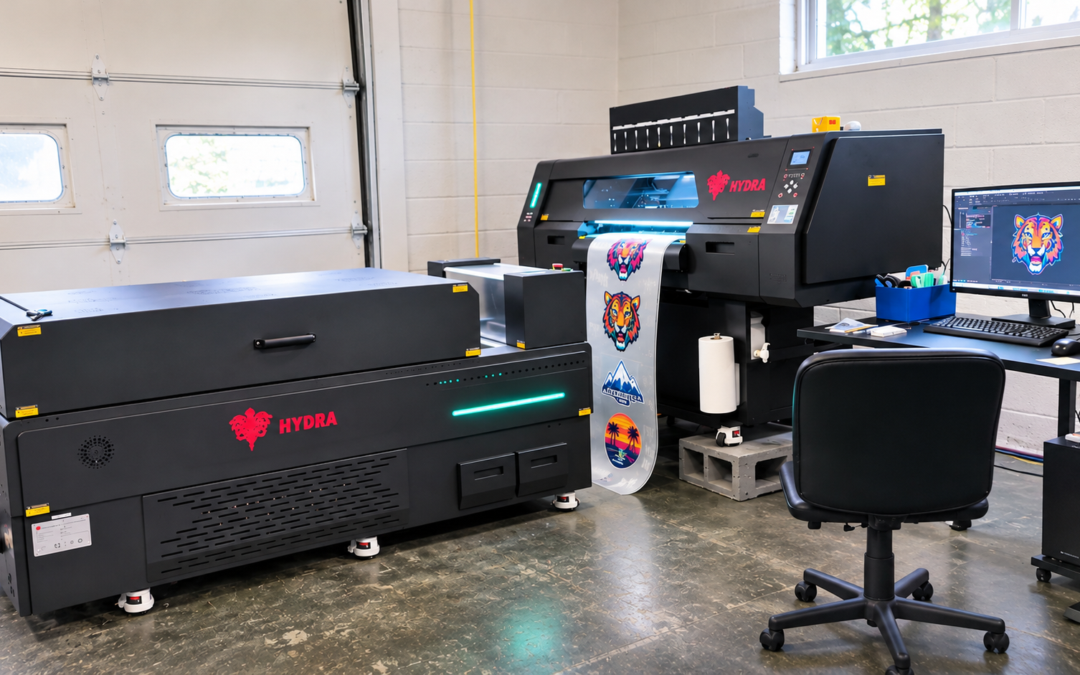
DTF stands for Direct-to-Film. The process starts with a design printed in reverse onto a special PET carrier film using water-based CMYK+White inks. While the ink is still tacky, a fine adhesive powder is applied across the printed image. The transfer is then cured, which locks the powder and ink together into a durable, flexible print.
Once cured, the finished transfer can be stored until it’s needed. When an order comes in, the transfer is applied to a garment using a heat press (or a household iron, when appropriate for smaller jobs). This separation between printing and application is one of the defining features of DTF — as Wikipedia’s entry on Direct-to-Film printing explains, the process “decouples printing from garment finishing,” which is exactly what makes on-demand decoration possible.
DTF transfers offer several practical advantages for print shops and apparel businesses:
- No cutting or weeding required (unlike heat transfer vinyl or custom stickers)
- No chemical fabric pre-treatment needed (unlike direct-to-garment printing)
- Unlimited colors in a single design
- Extremely fine detail, even for intricate artwork
- A soft-hand feel that doesn’t sit stiff on the fabric
- Vibrant, accurate color reproduction
- Compatibility with 50+ fabric types, including cotton, polyester, poly blends, canvas, leather, denim, and nylon
- Works equally well on light fabrics and dark colored fabrics
Why Finished Shirt Inventory Gets Expensive Fast
Here’s where the math starts to work against finished inventory. Imagine a single t-shirt design available in seven sizes — small, medium, large, XL, 2XL, 3XL, and 4XL — across five shirt colors.
That’s 7 sizes × 5 colors = 35 individual SKUs for one design.
Now multiply that by 10 designs, and a business is suddenly managing 350 distinct finished products. Add seasonal color variations, hoodies, and youth sizes, and the SKU count climbs even further.
Every one of those SKUs represents cash tied up in physical inventory sitting on a shelf. According to Shopify’s inventory management guide, the core challenge of inventory management is minimizing holding costs while still maintaining enough stock to meet demand — too much inventory ties up cash and raises carrying costs, while too little leads to back orders and lost sales.
Finished inventory introduces several specific risks for apparel businesses:
- Cash tied up in products that haven’t sold yet
- Shelf space consumed by slow-moving SKUs
- Unsold inventory that becomes dead stock, particularly in uncommon sizes
- Wrong size breakdowns that don’t match actual customer demand
- Slow-moving colors that go out of season or style
Shopify defines dead stock as inventory that won’t sell because it’s out of season, out of style, or simply irrelevant to current demand. For apparel businesses juggling dozens of designs, that risk multiplies fast.
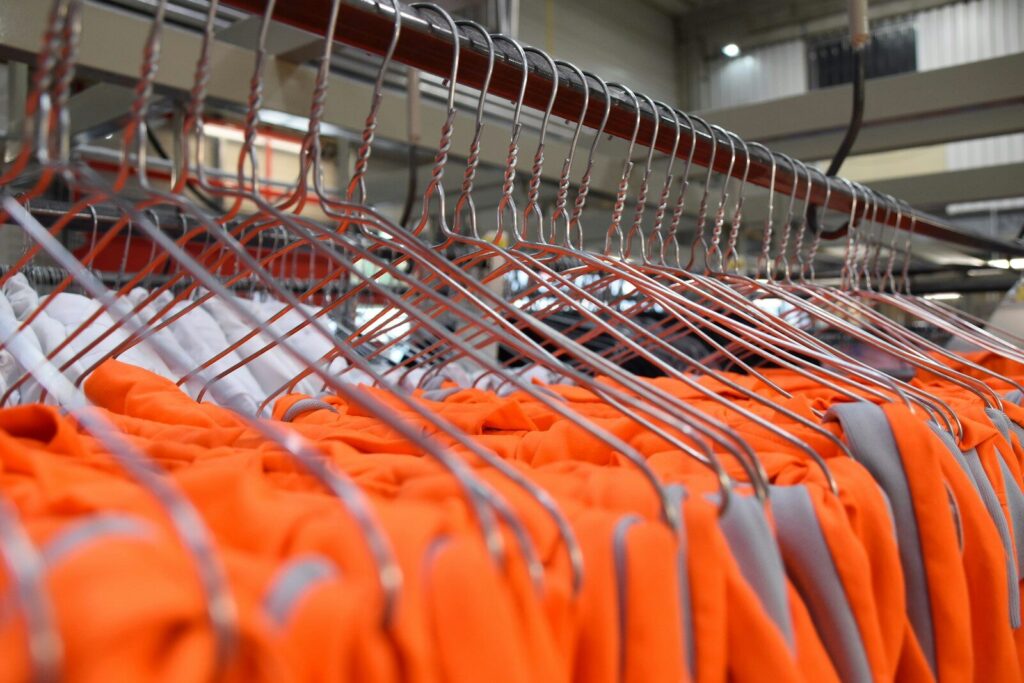
Photo by Waldemar Brandt on Unsplash
How Keeping DTF Transfers Changes Inventory Management
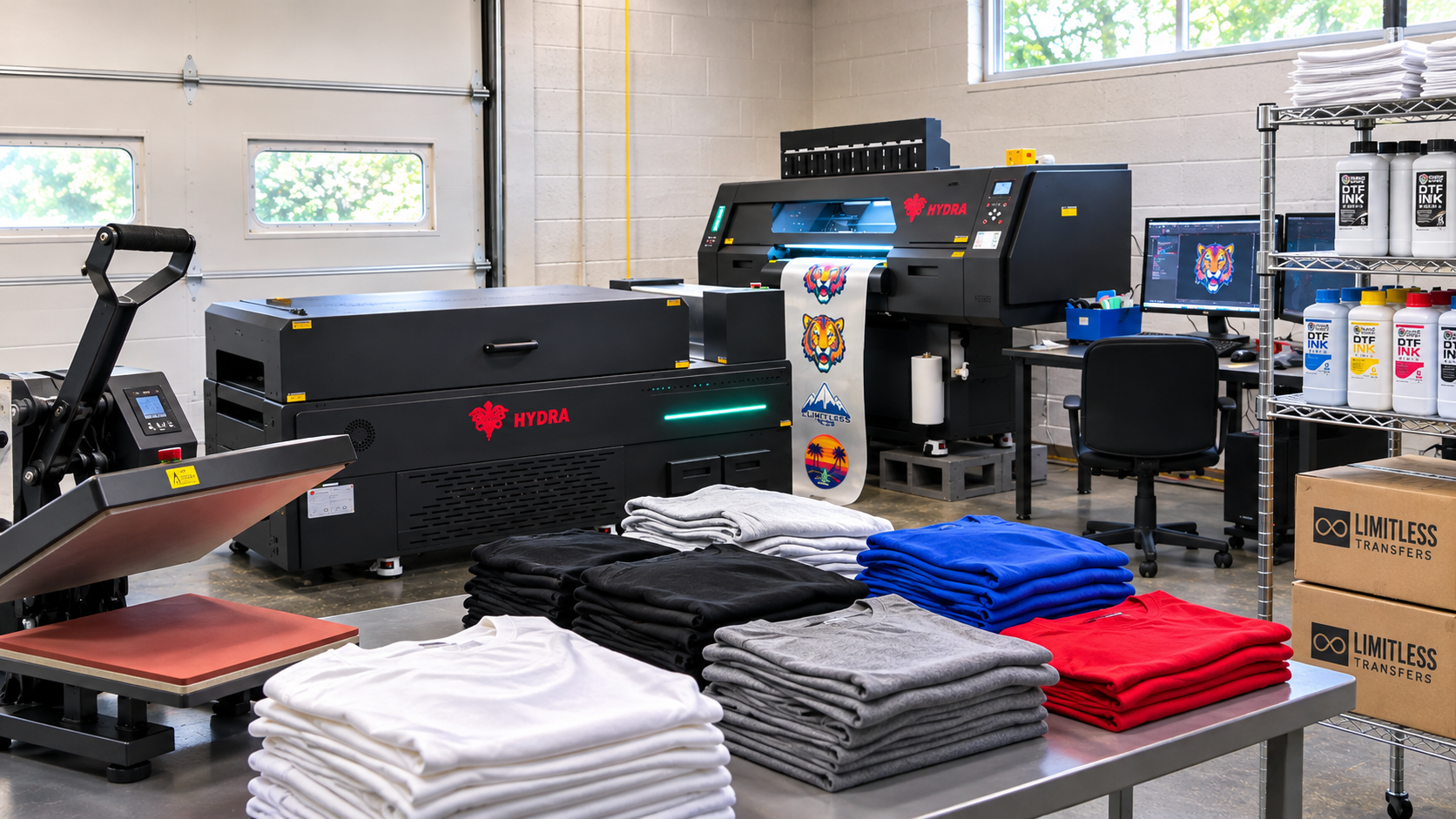
Instead of stocking hundreds of finished combinations, businesses using DTF transfers keep two simpler categories of inventory: blank garments and ready-to-press DTF transfers.
When an order comes in, the process looks like this:
- Grab a blank shirt in the requested size and color
- Grab the corresponding DTF transfer
- Heat press the transfer onto the garment
- Ship the finished product
This approach dramatically reduces inventory complexity. Blank garment inventory and transfer inventory are managed separately, which makes forecasting easier on both fronts. Blank shirts can be reordered based on general demand across all designs, while transfers can be reordered based on which specific designs are selling.
The U.S. Small Business Administration offers general guidance on inventory and operational planning that’s worth a look for businesses formalizing this kind of split-inventory system for the first time.
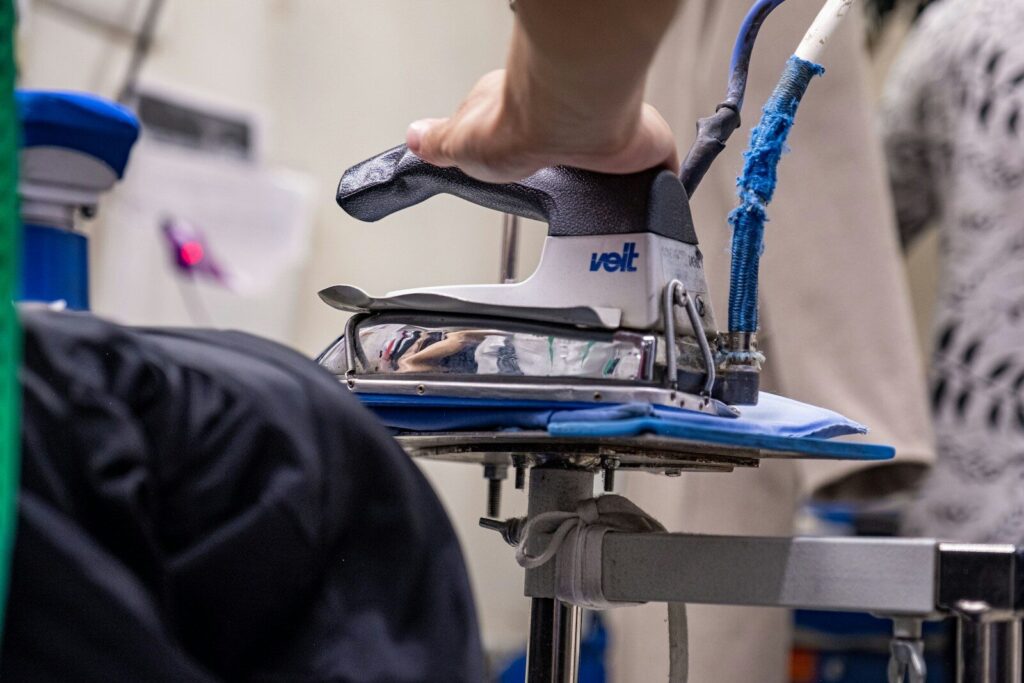
Photo by Anton Savinov on Unsplash
Benefits of Stocking DTF Transfers Instead of Finished Shirts
Less Finished Inventory to Carry
Because garments are only decorated after an order is placed, businesses avoid the upfront cost of producing and storing hundreds of finished combinations. Cash stays available for other parts of the business instead of sitting on a shelf.
Fewer Unsold Sizes
Uncommon sizes — 4XL, XS, tall sizes, youth sizes — are notoriously hard to forecast. With DTF transfers, a business can order a handful of blank garments in an extended size only when needed, rather than guessing how many to stock months in advance.
Easier Testing of New Designs
Launching new artwork no longer means committing to hundreds of finished shirts. A business can order a small batch of transfers, test the design’s popularity, and scale up only if it sells. This lowers the financial risk of experimenting with new artwork.
More Garment Color Flexibility
A single DTF transfer design can be pressed onto many different garment colors. That means customers get more choice without the business having to pre-produce a finished product in every possible combination.
Easier Seasonal Launches
Holiday designs, school spirit gear, sports merchandise, event apparel, and limited editions all benefit from the on-demand model. A business can print quality transfers for a seasonal design without worrying about leftover finished stock once the season ends.
Less Risk With New Artwork
Since transfers are printed and applied only after sales occur, businesses avoid pre-committing to new artwork that might not resonate with customers.
Restocking Blank Apparel Independently
Blank garment inventory and transfer inventory don’t have to move together. If black shirts sell out, the business hasn’t lost its transfers — it just needs to reorder blanks. The two inventory streams stay independent, which simplifies restocking decisions.
Offering Extended Sizes Without the Risk
Blank garments in extended sizes can be ordered as needed, rather than committing to expensive, slow-moving finished inventory in sizes that may only sell occasionally.
Easier Custom Orders
DTF transfers are especially useful for custom and one-off orders: small businesses, fundraisers, schools, corporate apparel, employee uniforms, family reunions, and sports teams. Each of these groups often needs a design applied to a specific, sometimes unpredictable, mix of sizes and colors — exactly the scenario where finished inventory falls short.
SCORE, which offers free mentoring for small businesses, is a solid resource for apparel business owners looking for guidance on managing this kind of custom-order inventory flow.
Practical Example: Comparing the Numbers
Consider a business selling 10 designs across 6 shirt colors and 7 sizes.
Without DTF transfers: 10 designs × 6 colors × 7 sizes = 420 finished products to produce, store, and manage.
With DTF transfers: 10 transfer designs, plus a blank garment inventory of 6 colors × 7 sizes = 42 blank SKUs that can be used across every design.
The difference in inventory complexity and upfront cash commitment is substantial. The same 10 designs that would require 420 finished combinations can instead be supported by just 42 blank SKUs and 10 transfer designs, with the actual combination decided at the moment of sale.
When Finished Inventory Still Makes Sense
DTF transfers don’t eliminate the need for finished inventory entirely. There are specific situations where having shirts ready to grab and go is the better choice:
- Proven best sellers with consistent, predictable demand
- Retail stores where customers expect to buy off the rack
- Pop-up shops and trade shows where speed of sale matters
- Festivals and high-volume events with heavy foot traffic
- Frequently ordered company uniforms with stable sizing needs
- Fast walk-in sales where customers won’t wait for a press
In these cases, immediate availability outweighs the inventory savings of an on-demand model. A customer at a festival booth isn’t going to wait while a shirt is pressed — they want to grab a shirt and go.
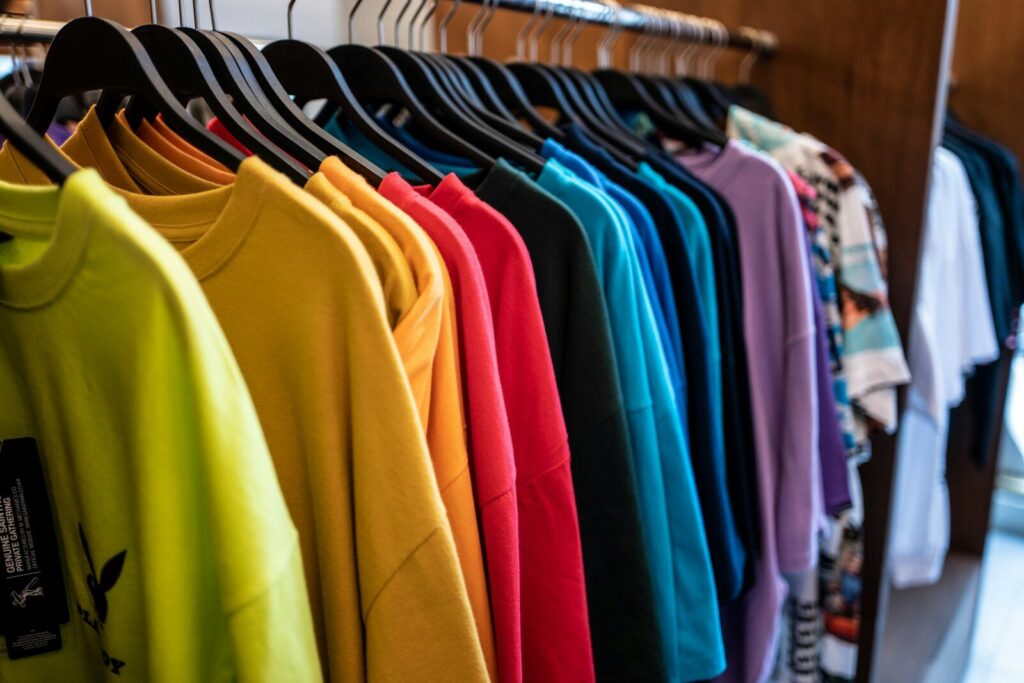
Photo by Choi sungwoo on Unsplash
Why a Hybrid Inventory Strategy Often Works Best
For most growing apparel businesses, the answer isn’t choosing one method exclusively — it’s combining both.
Keep finished inventory for:
- Top sellers with reliable, repeat demand
- Predictable designs that don’t change seasonally
- Event merchandise needed in bulk, on short notice
Keep DTF transfers for:
- Seasonal artwork tied to a specific time of year
- Custom orders for schools, teams, and businesses
- Slow sellers that don’t justify a full finished inventory
- Large and small sizes that are harder to forecast
- New releases and limited editions
This hybrid approach gives businesses the best of both worlds: immediate availability where it matters most, and lean, flexible inventory everywhere else. The Printful blog covers additional perspectives on balancing held inventory against on-demand fulfillment models, which is worth exploring for businesses building out this kind of hybrid system.
Why We Recommend Direct To Film Transfers for Growing Businesses
At Limitless Transfers, we work with apparel businesses every day who are trying to solve exactly this problem — too much cash tied up in finished inventory that isn’t moving. That’s why we focus on making premium DTF transfers as accessible and dependable as possible.
Our transfers have earned back-to-back first-place recognition for DTF quality in 2024 and 2025, and every order is printed using true hot-peel technology with vibrant CMYK+White inks for accurate, durable color. The result is a soft-hand feel that holds up wash after wash.
We also know that growing a print business means moving fast with fast turnaround. That’s why we offer same-day shipping (same business day) on orders placed by 2:30 PM CT, free UPS Ground shipping on orders over $50, and no minimum order quantities — so businesses of any size can order exactly what they need, when they need it. Our Gang Sheet Builder makes it simple to create gang sheets by uploading your design, whether you’re building a custom gang sheet from scratch or uploading artwork by size.
We work with Etsy sellers, Shopify stores, print shops, promotional companies, schools, small businesses, and DIY creators — and we built our platform to be a one-stop shop for custom DTF transfers, heat presses, and supplies, so businesses don’t have to juggle multiple designs and vendors and start selling today.
Best Practices for Applying DTF Transfers
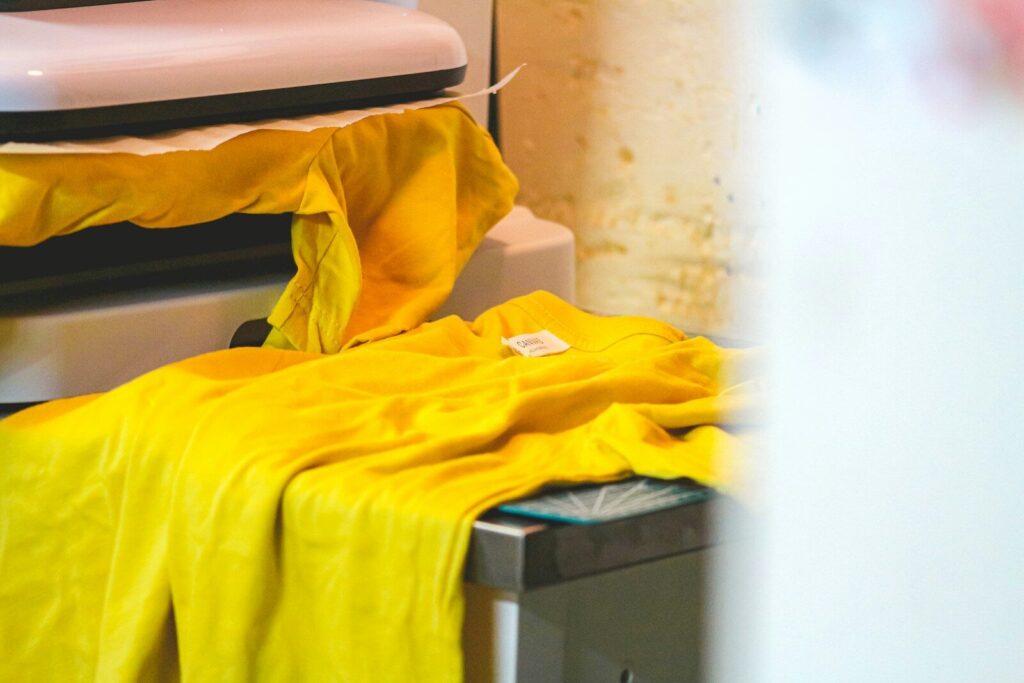
Photo by Compagnons on Unsplash
Getting a clean, durable press starts with the right settings. We recommend:
- Using a heat press (a household iron can work for small, occasional jobs)
- Setting the press to 310°F
- Pressing for 12–15 seconds
- Applying medium, even pressure
- Allowing the transfer to cool completely before peeling the carrier film
- Applying an optional finishing press, face down, for extra durability
These settings reflect our brand’s recommendation based on testing with our transfers specifically. Heat press requirements can vary slightly between manufacturers — Wikipedia’s overview of Direct-to-Film printing notes a general industry range closer to 320–338°F for 10–15 seconds — so always follow the specific transfer manufacturer’s instructions for best results.
Even heat distribution, consistent pressure, and proper curing time all matter. Rushing the cooling step before peeling is one of the most common mistakes that leads to a cracked or incomplete transfer.
For businesses setting up a heat press station, OSHA provides general equipment and workplace safety guidance worth reviewing, particularly around ventilation and heat equipment handling.
Durability and Wash Performance
A high quality DTF transfer should hold up well beyond the first few washes. Most transfers are rated for 50+ washes, and many premium transfers exceed 100 washes without significant degradation.
Properly applied transfers resist cracking, peeling, and fading, staying flexible and vibrant through repeated washing. To get the most life out of a pressed design, we recommend:
- Washing cold
- Tumbling dry on low heat
- Avoiding bleach
When marketing durability or wash-count claims to customers, it’s worth reviewing the Federal Trade Commission’s general guidance on advertising and product claims to make sure any statements made about performance are accurate and substantiated.
Why Custom DTF Transfers Continue Growing in Popularity
DTF transfers have become increasingly popular among small and mid-size print providers for good reason. They offer faster production than many traditional decoration methods, and they simplify inventory management by separating blank garment stock from design stock.
Other advantages driving adoption include:
- Unlimited colors in a single print
- High levels of fine detail
- No setup fees for screen creation, unlike traditional screen printing
- Strong suitability for short production runs
- Bulk pricing available for larger orders
- Excellent scalability as order volume grows
Building an Inventory Strategy That Scales With You
Businesses don’t have to choose one inventory method and stick with it forever. The most successful apparel businesses tend to combine finished inventory for their proven best sellers with ready-to-press DTF transfers for everything else — seasonal designs, custom orders, new releases, and hard-to-forecast sizes.
This hybrid approach reduces the cash tied up in unsold stock, cuts down on wasted shelf space, and gives a business the flexibility to say yes to more custom orders without the financial risk of guessing wrong.
Ready to reduce your inventory risk without sacrificing quality? Order professional-quality DTF transfers from Limitless Transfers today and build an inventory strategy that scales with your business.

Photo by Clark Street Mercantile on Unsplash
Frequently Asked Questions
How can I make my own DTF transfers?
Making DTF transfers involves printing a design in reverse onto PET film using water-based CMYK+White inks, applying an adhesive powder while the ink is still tacky, and curing the transfer to fuse everything together. The finished transfer is then applied to a garment with a heat press. Businesses without a DTF printer can skip the equipment investment entirely by uploading their artwork and ordering custom, ready-to-press transfers online.
How much does a single DTF transfer cost?
Pricing for a DTF transfer varies based on the size of the design, the quantity ordered, and the supplier. Many providers, including Limitless Transfers, offer no minimum order requirements, which makes it accessible for businesses of any size to order exactly what they need. Bulk discounts are typically available for larger quantities, with savings increasing as order volume grows.
What exactly is a DTF transfer?
A DTF (Direct-to-Film) transfer is a design printed onto a PET carrier film using water-based inks, coated with an adhesive powder, and cured so it can be stored until needed. When an order comes in, the transfer is applied to a garment using a heat press. DTF transfers work on a wide range of materials, including cotton polyester blends, canvas, leather, denim, nylon, and both light and dark fabrics.
Is DTF better quality than sublimation?
DTF and sublimation each have strengths. DTF transfers work on both light and dark fabrics, and on cotton, poly cotton blends, while sublimation is generally limited to white or light-colored polyester fabric. DTF prints sit on top of the fabric, offering vibrant color, fine detail, and durability across a wider range of materials, while sublimation dye blends directly into the fibers of compatible polyester fabric. For businesses needing flexibility across fabric types and colors, DTF is typically the more versatile choice.