DTF (Direct to Film) designs have transformed custom apparel by making full-color, high-detail printing accessible to everyone—from hobbyists to large print shops. DTF transfers work on nearly any material, require no minimum orders, and can be applied quickly with a heat press or home iron, making them one of the most versatile decoration methods available today.
The demand for personalized products has never been stronger. Consumers want apparel that feels unique, brands want merchandise that stands out, and creators want a decoration method that keeps up with their ideas. DTF designs have answered that call—quietly reshaping an entire industry in the process.
Direct to Film (DTF) technology has made it possible for small business owners, Etsy sellers, corporate buyers, and professional print shops to produce vibrant, detailed custom apparel without investing in screen printing equipment or navigating the steep learning curve of other decoration methods. The results speak for themselves: sharp detail, rich color, and a soft-hand feel that customers actually notice.
At Limitless Transfers, we’ve seen firsthand how DTF technology empowers creators at every level. Whether you’re launching a clothing brand from your spare bedroom or running a high-volume print shop, premium DTF transfers give you the quality and flexibility to grow. With same-day shipping on qualifying orders, no minimums, and award-winning print quality recognized back-to-back in 2024 and 2025, Limitless Transfers has built its reputation on helping customers get professional results—fast.
This guide covers everything you need to know: why DTF designs have become the go-to choice for custom apparel, how the DTF process works, what makes a strong DTF design, creative ways to use them, common mistakes to avoid, and pro tips for getting the best results every time.
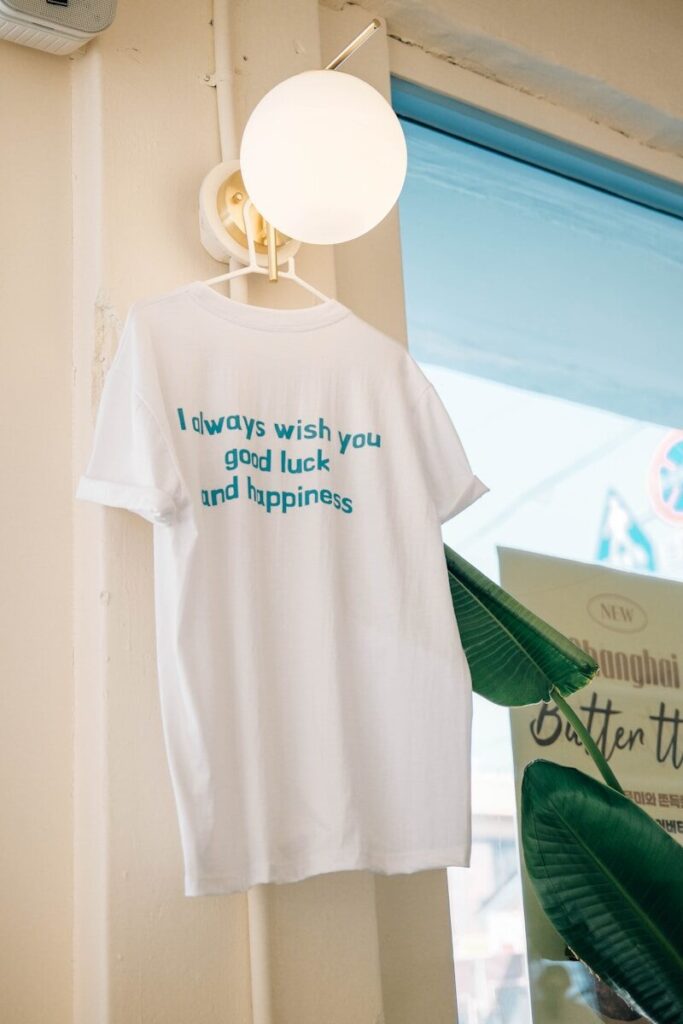
Photo by insung yoon on Unsplash
How DTF Printing Actually Works
Before diving into design strategy, it helps to understand what makes DTF printing different from other decoration methods—and why those differences matter.
DTF stands for Direct to Film, a modern apparel printing technique that uses PET film and adhesive powder to produce durable, vibrant transfers. Rather than printing directly onto fabric, the process works like this:
- Print on film: Water-based pigment inks are printed onto a specialized PET transfer film, building up a full-color design with a white underbase.
- Apply adhesive powder: A hot-melt adhesive powder is applied evenly over the wet ink while it’s still fresh, ensuring the powder bonds to the ink layer.
- Cure the transfer: The film passes through a curing oven or is processed with a heat source to melt and set the adhesive powder, creating a ready-to-press transfer.
- Heat transfer: The cured film is placed ink-side down onto the garment and pressed using a heat press at 300–320°F for 10–15 seconds, bonding the ink and adhesive layer to the fabric.
- Peel the film: Once pressed, the PET film is peeled away—either hot or cold depending on the transfer type—leaving the design adhered to the fabric.
What you’re left with is a design where a powdered adhesive and ink layer sit bonded on top of the fabric surface. This is fundamentally different from sublimation, which dyes the fiber itself, or screen printing, which pushes ink through a stencil. Because DTF prints onto specialized transfer film first—using water-based pigment inks rather than printing directly onto fabric—it can reproduce exceptionally fine detail and vibrant color regardless of the fabric type underneath.
Why DTF Designs Are So Popular
How DTF Printing Makes Custom Apparel More Accessible
Traditional decoration methods—screen printing, embroidery, sublimation—all come with meaningful barriers to entry. Screen printing requires film positives, screens, and emulsion. Sublimation only works on polyester-heavy fabrics. Embroidery demands specialized equipment and digitizing fees.
DTF printing removes most of those hurdles. There are no screens, no color separation fees, and no minimum order requirements—you can order a single transfer or a full batch without hitting a quantity threshold. DTF is often more affordable for small orders than screen printing, and with low setup costs, it’s especially well-suited for complex multi-color graphics where screen printing would charge per color. A single t-shirt, a batch of tote bags, or a full gang sheet of mixed designs—all are equally achievable. For Etsy sellers testing new product ideas or small business owners building their first apparel line, this accessibility is a game-changer.
Resources like the Small Business Administration’s guide to starting a business highlight how lowering startup costs is critical for early-stage success—and DTF printing aligns perfectly with that principle.
How Premium DTF Transfers Deliver Vibrant Colors and Sharp Detail
DTF printing uses water-based pigment inks combined with CMYK+W technology—and in advanced systems like Limitless Transfers, an expanded gamut CMYK+RGBO+W ink set—to achieve full-color output with a white underbase. Because ink is printed onto film rather than directly onto fabric, the process produces highly detailed designs with vibrant, accurate colors. The white layer ensures those colors pop even on dark garments, while the color layers above reproduce fine gradients, photographic elements, and intricate artwork with precision.
Compare that to traditional screen printing, where each color requires a separate screen and setup fee, making complex gradients cost-prohibitive. With DTF, a design with 20 colors costs the same to print as one with two. That’s a fundamental shift in what’s possible.
Why DTF Transfers Work on Nearly Any Material
One of DTF’s strongest advantages is material compatibility. DTF transfers work on 100% cotton, polyester, poly-cotton blends, tri-blends, nylon, spandex, neoprene, leather, canvas, denim, wood, non-woven fabrics, and more. That versatility makes DTF suitable for a wide range of products—not just t-shirts.
Think hats, hoodies, aprons, tote bags, phone cases, jackets, and promotional products. For businesses looking to diversify their product catalog, one decoration method that handles virtually every substrate is a significant operational advantage.
How True Hot-Peel DTF Transfers Speed Up Production
Speed matters, especially when you’re running a print business. True hot-peel DTF transfers—like those produced by Limitless Transfers—allow you to peel the film immediately after pressing, without waiting for the transfer to cool. This cuts production time dramatically and enables high-throughput workflows for larger orders.
Pair that with same-day shipping on orders placed by noon EST, and the turnaround from artwork to finished garment becomes remarkably fast. For time-sensitive orders—events, fundraisers, pop-up shops—that speed can make the difference between landing a client or losing one. Same-day DTF transfer printing is also available through local print shops in cities like Houston, TX, for customers who prefer to work with nearby providers.
What Makes a Strong DTF Design
Why High-Quality Artwork Is the Foundation of Every Good DTF Print
The quality of your print starts with the quality of your file. Custom DTF transfers reproduce what you give them—if the artwork is pixelated or low-resolution, the print will reflect that.
For best results, use vector files (AI, EPS, SVG) whenever possible, as they scale without losing quality. If you’re working with raster images (PNG, JPG), aim for a minimum of 300 DPI at print size. PNG files with transparent backgrounds are the preferred format for DTF printing because they eliminate the need for manual background removal.
The Adobe guide to image resolution is a helpful starting point for understanding how resolution affects print quality.
How to Design with Full-Color DTF Printing in Mind
DTF printing thrives on complexity. Rich gradients, photographic detail, textured elements, and multi-color graphics are all well within reach—and unlike screen printing, there’s no additional cost for adding colors or tonal variations.
Use this to your advantage. Design with depth. Layer textures. Incorporate realistic shading. DTF’s water-based pigment inks are optimized for vibrancy, so the colors you see on screen will translate accurately to the final garment, especially when paired with refined ICC profiles that ensure color consistency across print runs.
How Size and Placement Affect the Visual Impact of a DTF Design
Even the best artwork can fall flat if it’s poorly placed or incorrectly sized. Standard placement locations include the left chest (typically 3″–4″ wide), full front (10″–12″ wide), back center, sleeves, and collar area.
Full-front graphics make a bold statement and work well for event apparel, streetwear brands, and promotional pieces. Chest prints feel more classic and professional. Sleeve prints add a subtle, fashion-forward touch. The key is matching the placement to the intended use—a corporate polo requires different design thinking than a music festival hoodie.
The Printful placement guide offers detailed sizing recommendations for common garment types.
What Is a Gang Sheet and How Does It Save Money?
A gang sheet is a single print file that contains multiple individual designs arranged together on one sheet. Instead of printing each design separately, you maximize the printable area and reduce cost per transfer significantly.
For example, if you’re running a small apparel brand with five different logo variations, arranging all five on a single 22.5″ gang sheet reduces your per-unit cost compared to ordering them individually. Less material waste, lower price, same quality.
Limitless Transfers offers an easy-to-use gang sheet builder directly on their website, allowing customers to arrange designs without needing professional design software. Upload your PNGs, arrange them on the sheet, and place your order—it’s that straightforward.
How the Final Garment and Audience Should Influence Your Design Choices
A design for a youth soccer team looks very different from one for a corporate event or a fashion brand launch. Material, garment color, and intended audience all affect design decisions.
Dark garments require a strong white underbase to make colors read correctly. Light or pastel garments allow more color subtlety. Athletic polyester fabrics respond differently to heat than heavyweight cotton. Designing without considering these variables often leads to results that look great on screen but disappoint on the garment.
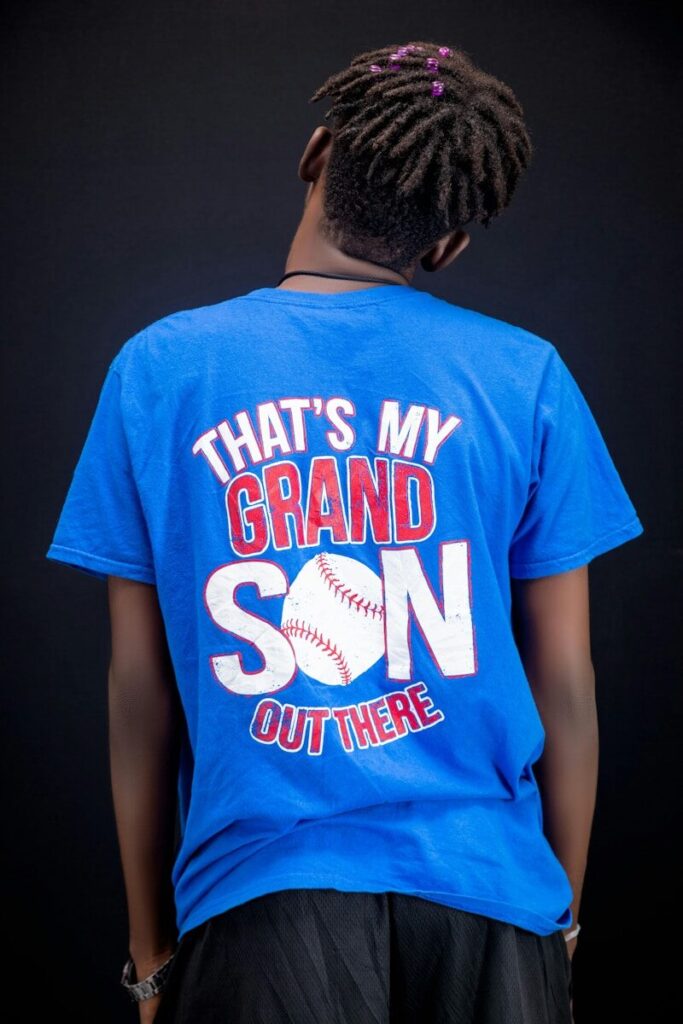
Photo by PON Official on Unsplash
Creative Ways to Use DTF Designs
How DTF Designs Help Entrepreneurs Launch a Custom T-Shirt Brand
Print-on-demand and e-commerce have opened the apparel market to virtually anyone with a creative idea and an internet connection. DTF transfers make it possible to test products with zero inventory risk—order a few transfers with no minimum order quantity, press them onto blank garments, photograph the results, and list them for sale.
If a design sells well, scale up. If it doesn’t, you’ve lost almost nothing. This low-risk testing model has become a proven strategy for new apparel brands, particularly on platforms like Etsy, Shopify, and Amazon Handmade.
Shopify’s guide to starting a clothing brand covers the broader business strategy, while DTF printing handles the production side affordably.
Why DTF Transfers Are Ideal for Limited-Edition Event Apparel
School spirit days, fundraisers, corporate retreats, 5K races, sports tournaments—all of these events need custom apparel, often on tight timelines. DTF transfers are well-suited for these scenarios because they require no setup fees, no minimum quantities, and can ship the same day for orders placed by noon EST.
A school that needs 50 custom t-shirts by Friday doesn’t have the luxury of a two-week screen printing timeline. DTF bridges that gap without sacrificing quality. It works just as effectively for on-demand single orders as it does for bulk printed transfers—making it flexible enough to handle whatever volume you need.
The Value of Personalized Gifts Made with DTF Transfers
Personalized products command premium prices—and they’re consistently among the top gift categories online. Birthdays, holidays, Easter baskets, family reunion shirts, wedding party gifts—all of these lend themselves to custom apparel that DTF handles beautifully.
The ability to print one-off designs with no setup fees makes personalization economically viable at small quantities, something traditional decoration methods struggle to match.
Etsy’s seller handbook is a useful resource for anyone looking to monetize personalized product offerings.
How DTF Transfers Work Beyond T-Shirts
T-shirts are the obvious entry point, but DTF’s material compatibility opens up a much broader product range. Hoodies, sweatshirts, tote bags, canvas aprons, nylon and spandex jackets, leather patches, denim accessories—all are viable canvases for DTF transfers.
Expanding beyond t-shirts lets you serve more customer needs, build a more diverse product catalog, and differentiate your brand from competitors who offer only basic apparel options.
How Seasonal Product Collections Can Boost Revenue with DTF Designs
Seasonal product drops—Halloween, Christmas, summer themes—create natural buying urgency and give customers a reason to return regularly. DTF makes seasonal collections easy to execute because there are no minimum orders and no setup costs. Test a handful of seasonal designs, gauge demand, and reorder only what sells.
Some suppliers maintain large libraries of ready-to-press designs to make this even easier. Ninja Transfers, for example, offers a catalog of ready-to-press DTF designs backed by lab-tested 100+ wash durability. Browsing an existing design library can be a fast way to launch seasonal offerings without starting from scratch every time.
How Ready-to-Press Designs Streamline Fulfillment for Print Shops
Maintaining a library of ready-to-press DTF designs reduces production time significantly. Rather than placing a new order every time a customer requests a popular design, print shops can keep frequently requested transfers on hand and press them immediately.
This model works particularly well for stock designs—sports graphics, holiday motifs, popular slogans—where predictable demand justifies pre-ordering. Some suppliers offer catalogs of over 15,000 ready-to-press designs, giving print shops immediate access to a broad selection without any design overhead. Transfer Kingdom, for instance, carries more than 15,000 ready-to-press DTF designs that shops can order and press right away. This kind of inventory reduces turnaround times for rush orders and keeps customers coming back.
Common Design Mistakes to Avoid
Why Low-Resolution Images Hurt DTF Print Quality
Uploading a low-resolution image to a DTF printer won’t magically sharpen it—it will print exactly as provided, including any pixelation or blurriness. This is one of the most common mistakes first-time DTF customers make.
Always verify your file’s DPI before submitting. A 72 DPI image pulled from a website may look fine on a screen but will print poorly. The resolution requirements page on Creative Bloq provides a clear breakdown of resolution standards for print applications.
Why Ignoring Transparent Background Requirements Creates Problems
DTF transfers require a transparent background to ensure only the intended design elements transfer to the garment. A white background that isn’t truly transparent will print as a white rectangle around your design—a common and frustrating error.
Always save files as PNGs with a transparent background (not JPG, which doesn’t support transparency). Use the “remove background” tool in Photoshop, Canva, or Remove.bg to clean up edges before uploading.
How Overcomplicating Small Designs Reduces Readability
Fine details that look crisp at large sizes can become muddy and illegible when printed small. Thin lines, tiny text, and closely spaced elements all suffer when compressed into a small transfer area.
A good rule of thumb: if a design element isn’t clearly readable at the intended print size on your screen, it won’t be readable on the garment either. Simplify small designs by increasing font size, thickening line weights, and reducing clutter.
How Garment Color Affects DTF Design Choices
A design with white elements on a white shirt is invisible. A design built entirely on dark tones printed on a black garment will disappear. Garment color must be factored into every design decision.
When working on dark garments, ensure your design has sufficient contrast and a solid white underbase. For light garments, pastel and muted tones can work beautifully. Always preview your design against the actual garment color before ordering.
Why Proper Heat Press Application Settings Matter for Durability
Applying a DTF transfer with incorrect heat, pressure, or time settings compromises the bond between the transfer and the fabric. The result is peeling, cracking, or color degradation after washing—problems that damage your reputation and your customers’ experience.
Always follow the application instructions provided with your transfers. The recommended settings are 300–320°F with firm, even pressure for 10–15 seconds, followed by a hot peel. A quality heat press delivers the most consistent results, but DTF transfers can also be applied using a home iron—set it to its highest heat setting and apply firm, steady pressure for the same duration. A heat press is strongly recommended for reliable, repeatable output in any production setting. Stahls’ heat application guide offers a comprehensive reference for different transfer types and materials.
Pro Tips for Better Custom Apparel Designs
How Premium DTF Transfers Ensure Consistent Results
Transfer quality directly determines how your finished products look and how long they last. Higher-quality transfers use better inks, refined ICC color profiles, premium adhesive powder, and superior PET film—all of which contribute to sharper detail, more accurate colors, and better wash durability.
When correctly applied, premium DTF transfers can withstand 100+ washes without fading, cracking, or peeling. Some suppliers lab-test their transfers specifically for this level of durability, and back the claim with documented wash testing—Ninja Transfers is one example that publishes 100+ wash durability results. For everyday care, washing garments inside out in cold water is one of the most effective ways to extend the life. With that routine, properly applied transfers should hold up through 50+ washes even under regular use. That kind of longevity depends on both transfer quality and correct application.
Limitless Transfers has earned back-to-back first-place quality awards in 2024 and 2025 precisely because these production variables are taken seriously. A soft-hand feel, accurate color reproduction, and long-lasting adhesion aren’t accidents—they’re the result of deliberate investment in materials and process.
Why Testing New Ideas with Small Runs Reduces Risk
No-minimum ordering isn’t just convenient—it changes how you can approach product development. Rather than committing to 50 units of a new design, order a single transfer, press a sample garment, and evaluate the result before scaling.
This test-and-learn approach reduces inventory risk, helps you identify quality issues before they become customer complaints, and gives you the freedom to experiment with new ideas without financial pressure.
How a Reliable Heat Press Improves Transfer Quality
A good design applied with a poor heat press produces inconsistent results. Consumer-grade irons and cheap presses often deliver uneven heat and pressure, leading to partial adhesion, color inconsistency, and premature peeling.
Investing in a quality heat press—whether a clamshell, swing-away, or auto-open model—pays dividends in consistency and efficiency. A home iron can work for occasional use, but for production environments, a proper heat press operating at 300–320°F is the clear choice. Limitless Transfers offers a full range of heat presses and supplies, making it possible to source both your transfers and your application equipment from one trusted supplier.
How Gang Sheets Improve Workflow and Profitability
Beyond cost savings, DTF transfer sheets improve production workflow. Batching multiple designs or multiple copies of the same design onto a single sheet allows you to process more orders per press cycle, reducing the time spent handling individual transfers.
For print shops managing high-volume work, this efficiency compounds quickly. Organize your gang sheets by garment type, color, or customer order to keep pressing sessions streamlined.
Why User-Friendly Design Tools Reduce Errors and Save Time
Complex design software has a learning curve that not every apparel decorator wants to climb. Limitless Transfers’ online gang sheet builder allows customers to upload PNG files and arrange them into a print-ready sheet directly in the browser—no Illustrator or Photoshop required.
This accessibility reduces file submission errors, speeds up the ordering process, and makes professional-quality DTF printing achievable for customers at every experience level.
What to Look for in a Trusted Direct To Film Transfer Supplier
Not all DTF transfer suppliers deliver the same results. When evaluating a supplier, consider these factors:
- Print quality: Are colors accurate? Are the fine details sharp? Is the white underbase consistent?
- Transfer feel: Does the finished transfer have a soft-hand feel, or does it feel stiff and plastic?
- Wash durability: Does the supplier test for 100+ wash performance? Do transfers maintain vibrant colors without cracking or peeling over time?
- Turnaround time: Can the supplier meet your production deadlines reliably?
- Shipping reliability: Are orders consistently shipped on time and packaged to prevent damage?
- Customer support: Is there a responsive team available to help resolve issues?
- Industry recognition: Has the supplier earned independent quality awards or verified customer reviews?
Limitless Transfers checks every one of these boxes—backed by hundreds of verified five-star reviews and consecutive industry quality awards that reflect consistent production excellence.
Frequently Asked Questions About DTF Designs
Where can I get designs for DTF printing?
You can create original artwork using design tools like Adobe Illustrator, Canva, or Procreate. Freelance designers are available through platforms like Fiverr and 99designs. Design marketplaces like Creative Fabrica and Creative Market offer ready-made files. Some DTF suppliers also maintain large libraries of ready-to-press designs—Transfer Kingdom, for example, stocks over 15,000 ready-to-press DTF designs you can order without any design work at all. Customers can also upload their own PNG artwork directly through Limitless Transfers’ online ordering tools for a quick, straightforward experience.
Can I use a Cricut machine to make DTF transfers?
Cricut machines cannot produce DTF transfers—they cut vinyl and other materials, but do not print DTF film. However, Cricut users can still benefit from DTF by purchasing ready-to-press DTF transfers from a supplier like Limitless Transfers and applying them with a Cricut EasyPress or a standalone heat press. It’s a practical combination that extends what a Cricut setup can produce.
What lasts longer: vinyl or DTF?
High-quality DTF transfers generally outperform standard heat transfer vinyl (HTV) in several areas. DTF transfers conform better to fabric texture, producing a softer feel and more flexible finish. They also handle complex, multi-color artwork without the layering and weeding process that vinyl requires. With proper application and care—including washing inside out in cold water—premium DTF transfers can maintain vibrant colors without cracking or peeling through 100+ wash cycles, often outperforming vinyl in long-term durability.
Who produces the best quality DTF prints?
Transfer quality depends on several interconnected factors: printing technology, ink formulation, adhesive powder quality, PET film selection, ICC color profiles, and production consistency. Limitless Transfers has been recognized as the first-place quality leader in both 2024 and 2025 by industry evaluators, with hundreds of customer reviews confirming consistent color accuracy, sharp detail, and reliable wash performance. These are the benchmarks to hold any DTF supplier to.
Can DTF transfers be applied with a home iron?
Yes—DTF transfers can be applied using a home iron, making them accessible even without professional equipment. Set your iron to its highest heat setting, apply firm and even pressure, and hold for 10–15 seconds. That said, irons can deliver uneven heat distribution, which may affect adhesion quality and long-term durability. For the most consistent results—especially in a production environment—a heat press operating at 300–320°F is strongly recommended.

Turn Your Ideas Into Professional Custom Apparel
DTF designs have earned their place as one of the most practical, versatile, and cost-effective decoration methods available—and the reasons are clear. Water-based pigment inks printed onto specialized PET transfer film produce full-color designs with exceptional detail and vibrant dtf prints and color. No setup fees. No minimum order quantity. Compatibility with virtually every fabric—100% cotton, polyester, poly-cotton blends, nylon, spandex, leather, canvas, denim, and more. Fast production with true hot-peel technology. And when applied correctly and cared for properly—including washing inside out in cold water—transfers that hold up through 100+ washes without fading, cracking, or peeling.
For creators, entrepreneurs, print shops, and brands, DTF technology removes the traditional barriers between an idea and a finished product. Whether you source transfers online or work with a local print shop that offers same-day services, the process is faster and more accessible than ever.
Limitless Transfers makes that execution as seamless as possible. Upload your artwork, build your gang sheet using the intuitive online tool, place your order by noon EST, and receive your transfers the same day. Whether you’re starting with a single design or scaling to hundreds of orders a week, the quality, speed, and support are there every step of the way.
Ready to get started? Upload your artwork at limitlesstransfers.com and see why thousands of creators and print professionals choose Limitless Transfers as their go-to DTF partners.