A heat press machine applies controlled heat and pressure to produce professional custom apparel with DTF transfers. Limitless Transfers supplies ready-to-press hot peel DTF transfers with no minimums, same-day shipping on qualifying orders, and compatibility with virtually any fabric—so you can skip the printer and start pressing immediately.
Custom apparel used to require a serious investment: printers, inks, curing equipment, and hours of technical troubleshooting. Many creators assumed that professional-looking garments were out of reach unless they owned expensive machinery. That assumption no longer holds.
With ready-to-press DTF (Direct-to-Film) transfers from Limitless Transfers, a quality heat press machine is genuinely all you need. Upload your artwork, receive your transfers, and press—no printer, no powder, no complicated setup. Whether you’re pressing your first shirt at home or running a growing print shop, the process is the same.
Limitless Transfers has earned back-to-back first-place awards for DTF print quality in 2024 and 2025. Their true hot peel transfers are built for fast, reliable production, delivering vibrant CMYK+W color accuracy and a soft-hand finish that customers notice immediately. Add same-day shipping on qualifying orders, free UPS Ground shipping on orders over $50, and no minimums, and you have a production-ready solution that scales with you.
This guide covers everything from choosing the right heat press machine to dialing in your settings, understanding hot peel technology, and exploring the wide range of materials and projects you can take on.

Photo by Rafael Cerqueira on Pexels
Why Your Heat Press Machine Matters More Than You Think
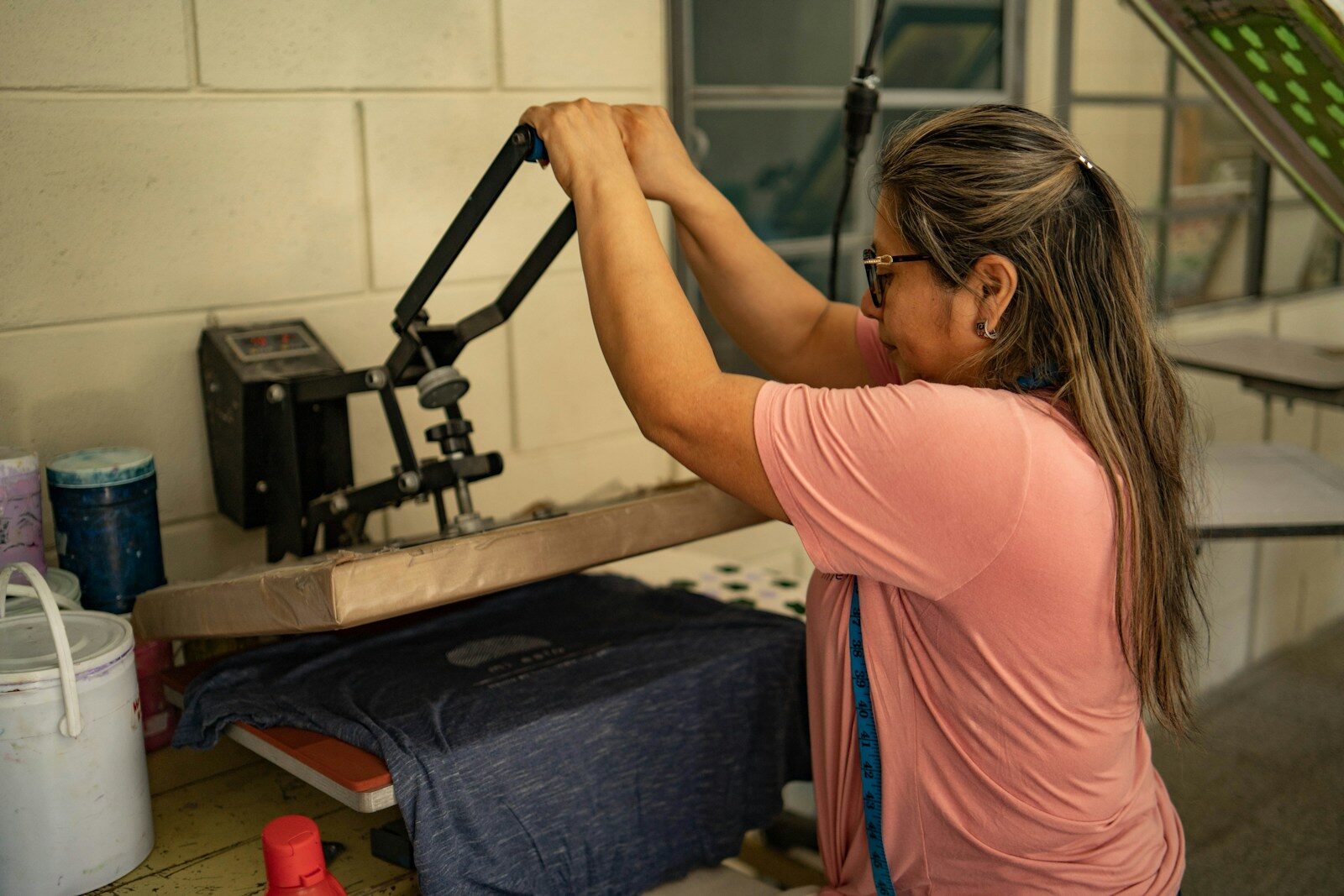
Heat press machines are a cornerstone of the garment and printing industries, used daily by apparel decorators, print shops, and creative entrepreneurs to customize everything from t-shirts and hoodies to hats and mugs. At its core, a heat press machine consists of a heated upper platen that applies controlled heat and pressure to transfer designs onto a wide variety of substrates—not just fabric.
The quality of your finished product depends on two things: the transfer and the equipment applying it. Even the best DTF transfer will underperform if your heat press delivers inconsistent temperature, uneven pressure, or unreliable timing. Uneven heating is one of the most common causes of poor transfer quality and durability—if one side of your platen runs hotter than the other, you’ll see it in your results.
A household iron simply cannot replicate what a dedicated heat press provides. Irons create hot spots, lose pressure mid-application, and require constant manual adjustment. A quality heat press machine maintains consistent temperature across the entire platen, applies even pressure simultaneously, and holds for a precise duration—every single time.
Digital timers and precise temperature controls are critical for consistent press results. When your press delivers the same conditions on every garment, your adhesion is reliable, your colors stay vibrant, and your wash durability improves. For small businesses and print shops running production runs, that repeatability is non-negotiable.
Helpful resource: The Craft Education site offers a solid beginner’s overview of how heat press machines work.
Do You Need a DTF Printer? Not at All
One of the most common misconceptions in custom apparel is that you need to own a DTF printer to produce DTF transfers. You don’t—and for most creators, purchasing one doesn’t make sense.
DTF printers require significant upfront investment, ongoing ink and powder costs, regular maintenance, and calibration. Limitless Transfers handles all of that on your behalf. You simply upload your artwork using the Gang Sheet Builder or file upload tool, place your order, and receive ready-to-press transfers at your door.
The ordering process is straightforward:
- Upload individual PNG designs and order by size
- Build a custom gang sheet using the web-based Gang Sheet Builder
- Submit a ready-to-print gang sheet file directly
There are no minimum order quantities, so you can order a single transfer or fill an entire gang sheet. Same-day shipping is available on qualifying orders placed by noon EST, and free UPS Ground shipping applies to all orders over $50. For hobbyists just getting started and growing businesses scaling production, this model removes the most common barriers to entry.
How to Choose the Right Heat Press Machine For Your Heat Transfer Projects
Not all heat press machines are the same, and the right choice depends on your production volume, available workspace, and budget. Understanding the different types helps you make a smarter investment.
Manual Heat Presses
Manual heat presses are the most common starting point for hobbyists and small businesses. They come in two main configurations:
Clamshell Presses open and close vertically on a hinge, making them compact and well-suited for smaller workspaces. They’re a popular entry point for hobbyists and small-volume operators. The trade-off is limited clearance when positioning garments, which can make precise placement more difficult on thicker items or with larger designs.
Swing-Away Presses move the upper platen completely to the side, giving you full access to the lower platen for accurate placement. This design allows for better pressure distribution across larger designs and reduces the risk of burns during loading and unloading. For anyone pressing regularly or working with bigger graphics, a swing-away press is worth the investment.
Automatic Heat Presses
Automatic heat presses use air pressure to deliver consistent pressing force—removing the variability that comes with manually squeezing down a handle. Auto-open machines lift the upper platen automatically after the timer completes, reducing operator fatigue during longer production runs and ensuring you don’t accidentally over-press a garment. For mid-to-high-volume shops, automatic presses are a major efficiency upgrade.
Specialty Heat Presses
Beyond flat garment presses, specialty heat presses let you expand your product range significantly:
- Mug presses use a curved heating element to wrap around mugs and tumblers, making them ideal for personalized drinkware
- Cap presses use a curved lower platen shaped to fit hats, allowing even pressure across the curved surface of a cap
Heat presses can be used for t-shirts, mugs, hats, and far more—making them one of the most versatile tools in a custom print business.
Platen Size
Platen size directly affects your versatility. Basic heat presses often include a 12″x10″ or 15″x15″ platen—both suitable for standard t-shirt applications. A 16″x20″ platen offers more flexibility for oversized designs and larger substrates. The size of the platen you choose will determine what products you can press and how efficiently you can work through larger pieces.
Heat Press Pricing
Budget is a real factor when choosing a press:
- Entry-level heat press machines typically cost between $100 and $500. These are suitable for hobbyists and low-volume operators getting started with custom apparel.
- Professional-grade heat presses range from $500 to $2,000+, offering larger platens, more precise controls, and greater durability for high-volume production.
- Dedicated sublimation heat presses are designed specifically for sublimation work and may cost slightly more than comparable standard presses due to specialized heating elements and construction.
Helpful resource: Stahls has published a detailed heat press buying guide worth reviewing before you purchase.
What Are the Best Heat Press Settings for DTF Transfers?
Getting your settings right is critical. DTF transfers are sensitive to temperature, pressure, and timing—and small variations can affect adhesion, color vibrancy, and durability.
Before you start: Always preheat your heat press for 5–10 minutes before use. This ensures the platen has reached a stable, even temperature and reduces the chance of inconsistent results on your first press.
Recommended general settings for DTF transfers:
- Temperature: 275°F–300°F (135°C–150°C)
- Pressure: Medium-firm (around 40–60 PSI depending on fabric thickness)
- Time: 10–15 seconds
Keep in mind that the standard heat pressing range across most transfer types spans 300°F to 400°F, but DTF transfers typically perform best toward the lower end of that range. Always follow the specific instructions included with your Limitless Transfers order, as recommendations may vary by fabric type.
Fabric-Specific Settings
Different materials respond differently to heat, so dialing in your settings by fabric type is essential:
- Polyester fabrics should be pressed at 270°F–300°F for 10–15 seconds. Polyester is heat-sensitive and can scorch or shrink if pressed too hot—stay toward the lower end of your temperature range.
- Cotton and blends generally press well at the standard DTF settings listed above.
Heat Transfer Vinyl (HTV) Settings
If you also work with heat transfer vinyl, note that HTV requires its own specific settings for heat, pressure, and duration. Standard HTV is typically pressed for 10–15 seconds at 305°F with firm pressure. Always check the manufacturer’s recommended settings for the specific vinyl you’re using, as different materials vary.
Protect Your Equipment
Use a Teflon sheet to protect the upper platen during pressing. Placing a Teflon sheet between the transfer and your platen prevents residue buildup, protects garments from direct heat contact, and keeps your pressing surface in good condition over time.
Common Heat Press Mistakes to Avoid
|
Mistake |
Result |
|---|---|
|
Skipping the warm-up period |
Uneven platen temperature, inconsistent adhesion |
|
Guessing temperature |
Inconsistent adhesion or scorching |
|
Using uneven pressure |
Peeling edges or lifted corners |
|
Peeling too early |
Incomplete transfer, color loss |
|
Overheating polyester |
Scorch marks, fabric damage |
|
Skipping the Teflon sheet |
Residue buildup, platen damage |
|
Ignoring manufacturer instructions |
Unpredictable results |
Too much heat burns the transfer and damages the fabric. Too little pressure results in edges that lift after the first wash. Incorrect timing—even by a few seconds—can affect how cleanly the transfer adheres. Invest in a quality infrared thermometer to verify your platen temperature regularly.
Helpful resource: The Impressions Magazine blog covers heat press calibration and pressure testing in practical detail.
Why Hot Peel Transfers Make Production Faster
Hot peel simply means you can remove the transfer film immediately after pressing—while the garment is still hot—rather than waiting for it to cool. This one feature dramatically changes production speed.
With cold peel transfers, you press, wait, peel, then move to the next garment. Hot peel eliminates the waiting. You press, peel, and go. For print shops handling large orders, that efficiency compounds quickly.
Limitless Transfers uses true hot peel technology across their transfer lineup. There’s no guessing, no peeling and re-pressing—just clean, consistent release right off the heat. The result is a soft-hand finish with vivid color retention that holds up through repeated washing.
For beginners, hot peel is also more forgiving. The process is faster and more intuitive, which reduces the chance of user error during that critical post-press stage.
Helpful resource: Transfer Express explains the difference between hot peel and cold peel in plain language.
What Materials Can You Apply DTF Transfers To Beyond T-Shirts?
One of DTF’s biggest advantages over traditional decorating methods is its material versatility. A heat press machine is capable of applying designs to various substrates well beyond standard fabric, and DTF transfers take full advantage of that range. While t-shirts are the most common application, they’re far from the only option.
Apparel:
- T-shirts (cotton, polyester, blends)
- Hoodies and sweatshirts
- Jackets and outerwear
- Hats and caps
Accessories and goods:
- Tote bags
- Canvas items
- Denim
- Leather goods
- Neoprene products
- Wood surfaces
- Non-woven and polypropylene materials
DTF transfers bond to both light and dark garments, work across cotton and polyester without special pretreatment, and hold detail even on textured surfaces. That range of compatibility makes DTF one of the most flexible decorating methods available today.
What Heat Press Projects Can Help Grow Your Business?
Ready-made transfers from Limitless Transfers make it easy to take on a wide variety of revenue-generating projects without investing in printing equipment.
Business opportunities include:
- School spirit wear and sports team uniforms
- Family reunion and event merchandise
- Etsy or Shopify custom apparel stores
- Promotional items and company uniforms
- Small business branded gear
- Personalized gifts and one-off custom orders
- Nonprofit and fundraiser apparel
- Custom mugs and drinkware (with a mug press)
- Branded hats and caps (with a cap press)
Because there are no minimums, you can take on single-item orders profitably—something that’s difficult with screen printing or embroidery setups that require setup fees. As your order volume grows, Limitless Transfers scales with you, keeping lead times short and quality consistent.
Helpful resource: Printful’s guide to starting a custom apparel business covers pricing, platforms, and order management.
Heat Press vs. Sublimation : Which Is Better for Custom Apparel?
Both DTF and sublimation are heat-applied decorating methods, but they serve different use cases—and understanding the distinction helps you choose the right approach for each project.
Sublimation works by heating a special dye until it converts into gas, which then bonds permanently with polyester fibers at a molecular level. The result is a soft, embedded print that won’t crack or peel. However, because the dye bonds specifically with polyester, sublimation is largely limited to 100% polyester fabrics and performs poorly on dark garments—the dye relies on the fabric’s base color, and there’s no white ink to block it.
Dedicated sublimation heat presses are purpose-built for this process and may cost slightly more than standard flat presses due to their specialized construction.
DTF Transfers
- Work on cotton, polyester, blends, and beyond
- Compatible with dark and light garments
- Full-color designs with white underbase included
- No fabric pretreatment required
Sublimation
- Best suited to 100% polyester fabrics
- Limited performance on dark garments
- No white ink—colors rely on the fabric base
- Permanent dye-based process that embeds into fibers
DTF wins on versatility. If you’re pressing onto a mix of cotton tees, polyester hoodies, tote bags, and hats, sublimation simply can’t cover all of those substrates reliably. DTF handles the full range with consistent results across every material.
For creators who work across multiple product types—or who press onto dark garments regularly—DTF is the more practical and flexible choice.
Helpful resource: ColDesi has published a straightforward comparison of DTF vs. sublimation for apparel decorators.
Tips for Consistent, Professional Results Every Time
Even with quality transfers and a reliable press, a few production habits make a noticeable difference in your final output.
- Preheat your heat press for 5–10 minutes before starting to ensure stable, even platen temperature
- Pre-press your garments for 3–5 seconds to remove moisture and wrinkles before applying the transfer
- Use a Teflon sheet to protect the upper platen and prevent residue buildup during every press
- Use a lint roller to clear debris from the fabric surface before pressing
- Keep your platen clean to prevent residue from affecting adhesion or leaving marks
- Verify temperature regularly with an infrared thermometer—don’t rely solely on the machine’s built-in gauge
- Test pressure on a scrap garment before starting a production run
- Dial in fabric-specific settings—polyester at 270°F–300°F, standard HTV at 305°F, and DTF transfers per Limitless Transfers’ instructions
- Store transfers flat in a cool, dry place away from direct sunlight
- Perform a quality check on the first garment of every production run before continuing
These steps add very little time to your workflow and significantly reduce the chance of ruined garments or wasted transfers.
Helpful resource: Ricoma’s blog covers garment preparation and heat press best practices in practical detail.
Why Limitless Transfers Is the Right Partner for Every Heat Press Machine
Limitless Transfers isn’t just a supplier—it’s a complete production partner. Here’s what sets their transfers apart:
- Back-to-back first-place award winner for DTF print quality (2024 and 2025)
- Expanded Gamut CMYK+RGBO+W printing for exceptional color accuracy and fine detail
- True hot peel technology for fast, clean release right off the press
- Soft-hand finish that feels premium on any fabric
- Reliable adhesion across cotton, polyester, blends, leather, canvas, wood, and more
- Same-day shipping on qualifying orders placed by noon EST
- Free UPS Ground shipping on orders over $50
- No minimum orders—press one item or a thousand
- Gang Sheet Builder for easy design preparation without advanced software
- Full equipment and supply store for heat presses, accessories, and tools
From your first single transfer to high-volume production runs, Limitless Transfers delivers the consistency and quality your business depends on.
Start Creating Professional Custom Apparel Today
A reliable heat press machine paired with premium DTF transfers from Limitless Transfers is all it takes to produce professional custom apparel—no printer, no powder, no guesswork.
Explore Limitless Transfers’ full range of DTF transfers, try the Gang Sheet Builder, and shop heat press equipment and supplies at limitlesstransfers.com. Whether you’re pressing your first shirt or fulfilling your hundredth order, every tool you need is in one place.
Frequently Asked Questions
Is it worth buying a heat press machine?
Yes—for anyone producing custom apparel regularly, a heat press machine is worth the investment. A dedicated heat press delivers consistent temperature and even pressure across the entire platen, producing far more reliable and professional results than a household iron. Entry-level machines start between $100 and $500, making them accessible for hobbyists and new businesses. The machine typically pays for itself quickly through custom apparel projects or small business sales, especially when paired with ready-to-press DTF transfers that require no printer or setup fees.
What do I need to heat press shirts at home?
The essentials are straightforward: a heat press machine, DTF transfers (ordered ready-to-press from Limitless Transfers), blank shirts, and a heat-resistant work surface. Always use a Teflon sheet to protect your upper platen during pressing—it prevents residue buildup and keeps your equipment in good shape. A lint roller and infrared thermometer are also worth having on hand for consistent results. Preheat your press for 5–10 minutes before you start to ensure an even platen temperature.
Is a heat press machine profitable?
A heat press machine can be highly profitable, particularly when combined with ready-to-press DTF transfers. Entrepreneurs can create and sell custom apparel—t-shirts, hoodies, tote bags, hats, and even mugs with the right specialty press—without owning a DTF printer. By ordering transfers from Limitless Transfers as needed, startup costs stay low while product quality remains professional. With no minimum order requirements, even small custom orders become economically viable.
What is the best kind of heat press machine?
The best heat press depends on your production needs. Clamshell presses are compact and affordable—a practical starting point that opens vertically and fits well in smaller workspaces. Swing-away presses provide better platen access, more even pressure for larger designs, and are the preferred choice for most small businesses. Automatic presses use air pressure for consistent force and are better suited to high-volume shops where repeatability and speed matter most. Specialty presses—like mug and cap presses—let you expand into drinkware and headwear. Consider your production volume, available workspace, budget, and the types of products you plan to decorate before making a decision.
What temperature should I use for heat pressing?
The standard heat pressing range is typically 300°F to 400°F, but the right setting depends on the material and transfer type. DTF transfers generally press well at 275°F–300°F for 10–15 seconds. Polyester should be pressed at 270°F–300°F to avoid scorching. Standard heat transfer vinyl is often pressed at 305°F for 10–15 seconds. Always follow the specific instructions from Limitless Transfers included with your order, and use an infrared thermometer to verify your platen temperature rather than relying solely on your machine’s built-in display.