Getting great DTF transfer results comes down to five core factors: transfer quality, proper heat press settings, pre-pressing your garment, correct peeling technique, and high-resolution artwork. Follow the 10 best practices in this guide to achieve vibrant, durable results on every order—regardless of fabric type or design complexity.
At Limitless Transfers, we’ve helped thousands of creators, apparel businesses, print shops, and hobbyists achieve professional results with DTF transfers. As a back-to-back award-winning supplier recognized for 1st Place Quality in DTF Printing in both 2024 and 2025, we know that even the highest quality DTF transfers perform best when applied correctly.
Custom t-shirts, promotional products, full-scale apparel runs—whatever you’re producing, following proven best practices will improve durability, color vibrancy, and customer satisfaction. The difference between a transfer that lasts 50 washes and one that peels after five often comes down to technique, not product.
This guide covers everything you need to know: from heat press settings and pre-pressing to artwork file formats and gang sheet organization. Read through to the end, and you’ll have a clear, repeatable process for getting professional results every time.
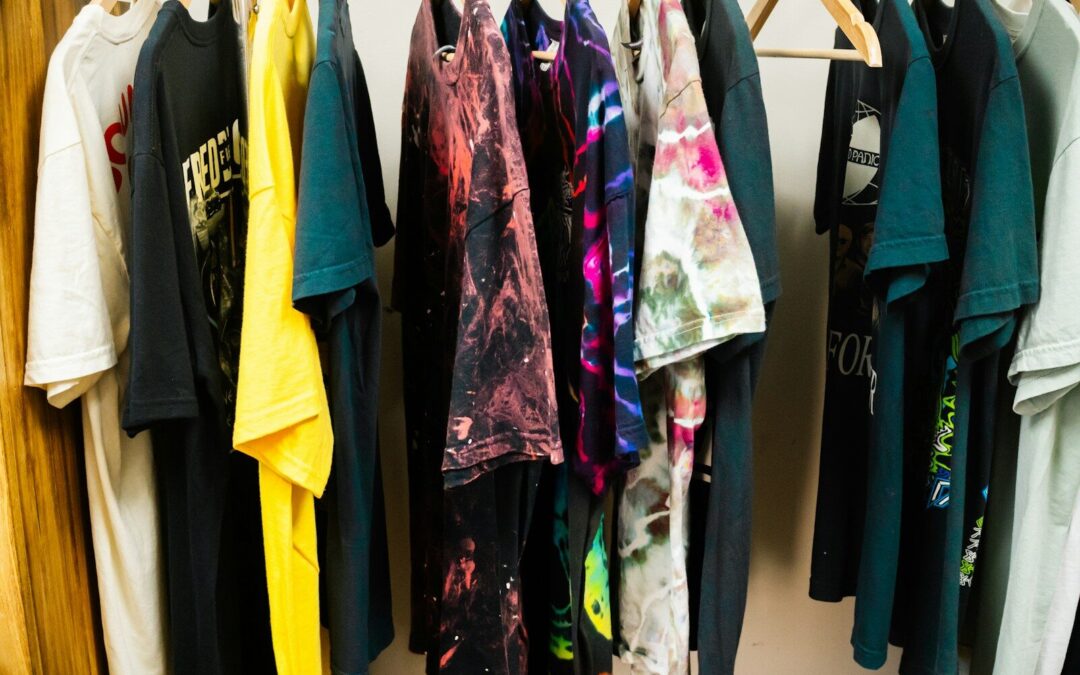
Photo by ap hakeisolai on Unsplash
Why Best Practices Matter for DTF Transfers
Consistency creates professional results
Repeatable processes are the foundation of any successful apparel business. When you follow recommended application techniques, the results speak for themselves—vibrant colors, soft flexible designs, photorealistic graphics, and crisp fine details that look just as good on the hundredth shirt as they did on the first.
This matters most at scale. A print shop handling hundreds of orders a week can’t afford inconsistency. Standardized techniques eliminate guesswork and reduce waste, keeping production efficient and quality high.
Maximize durability and customer satisfaction
Properly applied DTF transfers resist cracking, peeling, and fading through 100+ wash cycles. Our transfers are tested to withstand over 100 washings without losing color vibrancy or adhesion—making them one of the most durable decoration methods available. The key variables—temperature, pressure, and timing—each play a critical role. Get one wrong, and you’ll see adhesion failures that lead to customer complaints, returns, and damage to your reputation.
Getting it right, consistently, is what turns first-time buyers into loyal repeat customers.
Get the most from high-quality DTF transfers
Premium transfers are engineered to perform—but they still depend on correct application. At Limitless Transfers, our Expanded Gamut CMYK+RGBO+W transfers are rigorously tested across dozens of fabric types and conditions. Pair that product quality with proper technique, and the results are significantly better than either factor alone.
10 Best Practices for DTF Transfers
1. Start with high-quality DTF transfers
Transfer quality sets the ceiling for your final product. No amount of technique will compensate for poor ink coverage, weak adhesive, or inconsistent white underbase.
Direct-to-Film transfers are produced by printing designs in reverse onto specialized PET film—white ink included—then applying a special hot-melt adhesive powder directly to the wet ink. The result is a ready-to-press transfer that bonds to fabric using heat and pressure, with no pre-treatment of the garment required and no cutting or weeding like vinyl demands.
High-quality transfers feature vibrant CMYK+W printing, strong white ink coverage that makes designs pop on dark garments, photorealistic graphic reproduction, and fine detail that holds up under close inspection. Limitless Transfers uses an Expanded Gamut CMYK+RGBO+W printing process with heavily researched ICC profiles, delivering exceptional color accuracy, a soft-hand feel, and a stretch-resistant finish across all order sizes.
- Helpful resource: For a technical breakdown of how DTF ink systems work, the Specialty Graphic Imaging Association (SGIA) offers in-depth articles on digital decorating technologies at https://www.printing.org.
2. Use the right heat press
A commercial-grade heat press is essential for consistent results. That said, DTF transfers can also be applied with a household iron—making them accessible even without professional equipment. For production use, however, an iron cannot maintain uniform temperature and pressure across the transfer, which can lead to uneven adhesion, dull colors, and premature peeling.
Look for a press with digital temperature control, a pressure adjustment knob, and a flat, even platen. Clamshell and swing-away presses are both effective—swing-away presses are generally preferred for thicker materials because they allow for more precise pressure application.
Most DTF transfers perform best under medium-to-firm pressure. Too light, and the adhesive won’t bond properly. Too heavy on delicate fabrics, and you risk distortion. Calibrate your press regularly to confirm accuracy.
3. Verify temperature and pressure settings
Always follow the manufacturer’s recommended settings before pressing. For most DTF transfers, the standard range is 285–305°F (140–150°C) for 10–15 seconds under medium-to-firm pressure—but these values can vary by film type and fabric.
Common mistakes include pressing at too low a temperature (poor adhesion) or too high (scorching, discoloration, or transfer damage). Using a non-contact infrared thermometer to verify your press temperature independently is a simple step that prevents a lot of avoidable errors.
- Helpful resource: Impressions Magazine covers heat press calibration and settings in detail at https://www.impressionsmag.com– a valuable reference for apparel decorators.
4. Pre-press every garment
Pre-pressing is a step many beginners skip—and it’s one of the most common causes of adhesion failure. Moisture trapped in the fabric interferes with the adhesive bond, especially on freshly washed or stored garments.
Pre-press for 3–5 seconds to remove moisture and smooth out wrinkles before applying the transfer. This is particularly important for 100% cotton (which holds moisture readily), polyester (which can have a slight surface sheen), and blended fabrics (which may behave unpredictably). Note that while DTF requires no pre-treatment of the garment itself, this quick pre-press step is still essential for optimal adhesion.
A clean, flat surface also ensures your transfer sits flush against the garment, which improves both adhesion and color consistency.
5. Learn how to apply DTF transfers properly
The application process itself requires attention to detail. Here’s a reliable step-by-step approach:
- Pre-press your garment (see above).
- Position the transfer film, side up, on the garment. Use a ruler or alignment tool for precision placement.
- Cover with a Teflon sheet or parchment paper.
- Apply heat and pressure for the manufacturer’s recommended time.
- Peel the film while the transfer is still hot (for hot-peel transfers).
- Perform a finishing press (covered in Step 7).
Timing matters. Pressing for too short a time leaves the adhesive under-activated. Pressing too long risks scorching. Use a timer every time—don’t rely on guesswork.
6. Master the hot peel process
Hot-peel transfers, like those from Limitless Transfers, are designed to be peeled immediately while the transfer is still hot. This is a meaningful advantage for high-volume production because it eliminates the wait time associated with cold-peel transfers.
To peel cleanly, grip the film at one corner and pull back at a low angle (roughly 45 degrees or less) in a smooth, steady motion. Avoid pulling straight up, which can lift design edges. If any portion of the design lifts with the film, press it down immediately and re-press for a few seconds before peeling again.
Rushing the peel or peeling unevenly are the two most common mistakes at this stage. Take an extra second to do it right.
- Helpful resource: Printful’s blog offers useful visual guides on heat transfer application at https://www.printful.com/blog—helpful for beginners who want step-by-step visual support.
7. Use parchment paper for a finishing press
After peeling, a finishing press significantly improves the final result. Place a sheet of parchment paper (not a Teflon sheet, which can be too slick) over the applied transfer and press again for 5–10 seconds at the same temperature.
This step does three things: it bonds any edges that may have lifted slightly during peeling, it smooths the surface of the transfer for a clean, professional appearance, and it reinforces the soft, flexible finish and stretch-resistant quality that set high-quality DTF transfers apart from stiff, plastic-looking ones.
8. Choose the right fabric and material
One of DTF’s biggest advantages is its versatility across both fabric types and fabric colors. Unlike some decoration methods, DTF works equally well on light and dark garments—no pre-treatment required. Limitless Transfers’ products adhere to a broad range of substrates, including 100% cotton, polyester, 50/50 blends, tri-blends, spandex, nylon, neoprene, non-woven fabrics, leather, canvas, denim, and even wood.
That said, surface preparation matters. Smooth surfaces transfer most reliably. Heavily textured fabrics (like thick canvas or open-weave knits) may require slightly longer press times or additional pressure to ensure full contact. On heat-sensitive materials like thin nylon, reduce the temperature slightly and test on a sample before committing to a full run.
- Helpful resource: The Association of Sewing and Design Professionals (ASDP) provides fabric knowledge resources at https://asdp.org that are useful for decorators working across diverse material types.
9. Submit proper artwork and file format requirements
Artwork quality directly affects print quality. No amount of printing technology can recover detail lost in a low-resolution or improperly formatted file.
Preferred file formats:
- PNG with a transparent background — preferred for individual designs and gang sheet uploads
- PDF and vector files — accepted for ready-to-print gang sheet submissions
- Avoid JPGs, which compress image data and can introduce artifacts, especially around fine edges
Resolution recommendations: - Minimum 150 DPI at print size; 300 DPI is strongly preferred for fine detail and small text
- Designs with gradients or photographic elements benefit most from higher resolution files
When uploading logos or artwork, ensure your background is fully transparent (not white). A white background in your file will print as white, which is rarely the intended result. - Helpful resource: Adobe’s resource hub at https://helpx.adobe.com includes guides on exporting high-resolution PNGs and preparing files for print—useful if you use Photoshop or Illustrator.
10. Organize large orders with gang sheets
Gang sheets allow you to combine multiple designs onto a single transfer sheet to maximize material usage and reduce per-print costs. Instead of ordering each design separately, you group them—cutting material waste and lowering your cost per transfer.
Limitless Transfers’ gang sheet builder makes this process straightforward. Upload your PNG files, arrange your designs on a 22.5″-wide sheet, and submit directly through the tool—no design software required. For those who prefer to build their own layouts externally, ready-to-print gang sheet files (PDF, PNG) can be uploaded directly.
This is especially valuable for businesses running varied small-batch designs, seasonal collections, or test runs where variety matters more than volume on a single design.
- Helpful resource: Canva’s design help center at https://www.canva.com/help offers guidance on arranging and exporting multi-design layouts that can be adapted for gang sheet preparation.
Common Mistakes to Avoid
Using incorrect heat press settings
Temperature, pressure, and timing form a triangle—adjust one without compensating for the others, and results suffer. The most common errors are pressing at too low a temperature (poor adhesion), too high a temperature (scorching or color distortion), or for too short a time (under-activated adhesive). Always start with the manufacturer’s recommended settings and adjust incrementally from there.
Skipping the pre-press step
Moisture is the enemy of adhesion. Garments stored in humid conditions, or washed and not fully dried, contain enough moisture to interfere with the transfer bond. Skipping the pre-press step is a shortcut that frequently causes peeling within the first few washes, cutting short what should be 100+ wash durability.
Uploading low-resolution artwork
Blurry prints, jagged edges, and missing fine detail are almost always caused by low-resolution source files. A design that looks fine on screen at 72 DPI will look significantly different when printed at size. Always check your file resolution before uploading.
Choosing the wrong file format
PNG files with transparent backgrounds are the standard for a reason—they preserve image quality and eliminate unwanted background color. Submitting JPG files introduces compression artifacts, while PSD or layered files may not render as expected. When in doubt, export as a flattened PNG at 300 DPI.
Peeling too early or too late
Hot-peel transfers should be peeled immediately after pressing. Waiting too long allows the adhesive to cool and re-set, making the film harder to remove cleanly and increasing the risk of lifting design edges. Peeling too fast—before the press is complete—can pull the transfer before it has fully bonded.
Improper garment care after application
Even a perfectly applied transfer can fail prematurely with the wrong wash cycle. Recommend the following care instructions to your customers:
- Machine wash cold, inside out
- Tumble dry on low heat
- Do not bleach or dry clean
- Avoid high-heat ironing directly on the transfer
Followed correctly, these care steps help your transfers maintain vibrant colors and resist cracking or peeling through 100+ wash cycles. - Helpful resource: The American Apparel & Footwear Association (AAFA) at https://www.aafaglobal.org provides apparel care standards and labeling guidance for businesses selling decorated garments.
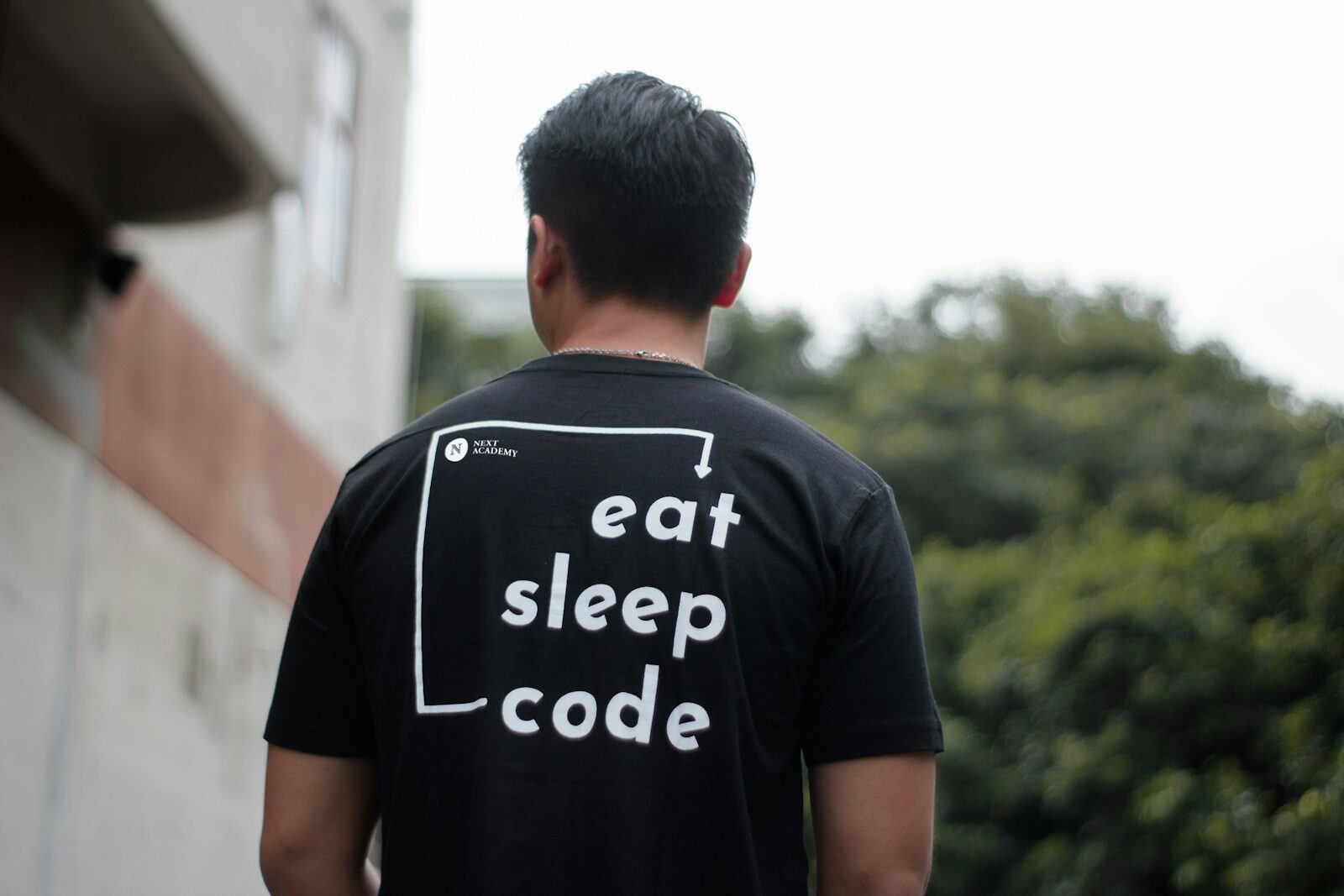
Photo by David Wimmer on Unsplash
Pro Tips for Better DTF Transfer Results
Use custom DTF transfers designed for your project
Match transfer dimensions to the garment being decorated. An oversized design on a youth shirt, or a small transfer centered on a wide back panel, both look off.
Limitless Transfers offers DTF transfers by size, making it easy to choose the right dimensions for each application—whether that’s a 4″ chest logo or a full 12″ back print. And with no minimum order quantity required, you can order exactly what you need—whether it’s a single transfer or thousands.
Build efficient production workflows
Organize your transfers in application order before you begin pressing. Group by garment type so you’re not adjusting press settings mid-run. For mixed orders, batch similar fabrics together to maintain consistent settings throughout the session. Small organizational habits like these compound significantly across high-volume production days.
Keep your heat press maintained
A heat press that reads 300°F but only delivers 280°F at the platen edges will produce inconsistent results. Calibrate your press regularly using an independent thermometer, check the pressure mechanism for wear, and replace the silicone pad when it shows signs of compression. Consistent equipment equals consistent results.
Leverage professional tools instead of investing in DTF printers
Purchasing a DTF printer requires a significant upfront investment—equipment costs, specially formulated DTF inks, maintenance supplies, and the learning curve of managing ICC profiles and film handling. For most businesses, especially those scaling up, outsourcing transfers to a reliable supplier is the smarter financial decision.
By partnering with Limitless Transfers instead of investing in DTF printers, print shops, and apparel businesses can eliminate equipment overhead and redirect that capital toward marketing, inventory, and customer acquisition. You focus on pressing profit—we handle the printing.
Take advantage of fast shipping and same-day processing
Limitless Transfers offers same-day shipping on orders placed before 2 PM, with free shipping on orders over $100. That speed means you can operate leaner on inventory, respond faster to rush orders, and avoid the storage costs that come with over-ordering transfers in advance.
Frequently Asked Questions About DTF Transfers
What are DTF transfers?
DTF (Direct to Film) transfers are printed designs produced by printing full-color ink in reverse onto specialized PET film—white ink included—then coating the wet ink with a special hot-melt adhesive powder.
The finished transfer is applied to a garment or substrate using heat and pressure, bonding the design to the fabric. DTF transfers work on virtually any fabric type or color—light or dark—and produce vibrant, durable results without requiring pre-treatment of the garment, or cutting and weeding like vinyl.
How can I make my own DTF transfers?
Making DTF transfers in-house requires a DTF printer, special PET transfer film, specially formulated DTF inks (including white ink), hot-melt adhesive powder, and a curing oven or heat gun. The process involves printing in reverse, powder coating, and curing—each step requiring calibrated equipment.
The learning curve is significant, and startup costs typically run several thousand dollars. Many businesses choose to order from professional DTF suppliers instead, avoiding equipment overhead while still offering full-color custom transfers.
Which lasts longer, DTF or sublimation?
Both methods produce durable results, but they serve different purposes. Sublimation produces incredibly soft, breathable prints that become part of the fabric—but it only works on polyester and light-colored garments.
DTF transfers work on virtually any fabric type and color, including cotton, spandex, denim, nylon, leather, and dark garments, and are tested to withstand over 100 wash cycles when applied correctly and cared for properly. For versatility across garment types, DTF has a clear advantage.
Does DTF peel or crack?
High-quality DTF transfers applied correctly do not peel or crack under normal wear and washing conditions. Our transfers are tested to last through 100+ washings while maintaining vibrant colors and a soft, flexible finish.
Peeling and cracking are almost always the result of incorrect heat press settings, skipping the pre-press step, or improper garment care. Limitless Transfers’ hot-peel transfers are engineered for long-lasting durability and are tested across multiple fabric types before reaching customers.
What file format should I use for DTF transfers?
PNG files with a transparent background are the preferred format for individual designs. For ready-to-print gang sheets, PDF and vector formats are also accepted. Avoid JPG files, which compress image data and can reduce print quality. All files should be at least 150 DPI at print size, with 300 DPI recommended for fine detail and small text.
What fabrics work with DTF transfers?
DTF transfers adhere to a wide range of materials, including 100% cotton, 100% polyester, 50/50 blends, tri-blends, spandex, nylon, neoprene, non-woven fabrics, polypropylene, leather, canvas, denim, and wood. DTF works on both light and dark fabrics with no pre-treatment required. Surface smoothness and heat sensitivity vary by material, so testing settings on a sample before running a full batch is always recommended for less common substrates.
Are there minimums when ordering DTF transfers from Limitless Transfers?
Limitless Transfers requires no minimum order quantity, making the service accessible to hobbyists, small businesses, and high-volume shops alike. Orders over $100 qualify for free shipping, and orders placed before 2 PM ship the same day.

Get Professional Results on Every Order
Following these DTF transfer best practices is the single most effective way to improve quality, reduce waste, and build a reputation your customers trust. The process doesn’t have to be complicated—it just has to be consistent.
At Limitless Transfers, our goal is to make professional-quality apparel decoration accessible to everyone, from first-time creators to high-volume print shops. With award-winning CMYK+RGBO+W transfers that withstand 100+ washes, same-day shipping on orders placed before 2 PM, no minimums, free shipping on orders over $100, and an easy-to-use gang sheet builder, we’ve designed our service around your success.
Ready to put these best practices into action? Order your custom DTF transfers from Limitless Transfers today—and start pressing with confidence.