Quick answer: The best DTF printer for most small businesses and startups may not be a printer at all. Owning DTF equipment requires significant upfront investment ($800–$7,000+ for the printer alone, plus accessories), daily maintenance, consumable costs ranging from $200 to $500 per month, and a steep learning curve. For many entrepreneurs, ordering professional transfers from a supplier like Limitless Transfers delivers better print quality, faster turnaround, and lower overhead—without a single piece of equipment.
The custom apparel industry is booming. According to Proficient Market Insights, the global custom apparel market was valued at $54.97 billion in 2025 and is projected to reach $108.06 billion by 2034. Entrepreneurs everywhere are racing to claim their slice—and most begin their journey with the same Google search: “best DTF printer.
That search makes sense. Direct-to-Film (DTF) printing is genuinely one of the most versatile, accessible printing technologies available today. DTF printing works on cotton, polyester, blends, denim, leather, and more—without pretreatment or weeding. It handles full-color designs, dark fabrics, and small batch runs with ease. If you want to understand what DTF printing actually is before going further, this beginner’s guide from Hey Let’s Make Stuff breaks down the process clearly.
Here’s the part most guides skip: owning a DTF printer and running a successful DTF business are two very different things. After helping thousands of customers with their apparel printing, Limitless Transfers has seen firsthand how many entrepreneurs buy expensive equipment—only to discover that ordering professional transfers would have gotten them to profitability faster, with far less stress.
This post breaks down exactly what goes into owning a DTF printer, when it makes financial sense, and when ordering transfers from an award-winning supplier is simply the smarter move.
DTF vs. DTG vs. UV Printing: Why DTF Wins on Versatility
Before comparing specific DTF printers, it helps to understand why DTF has become the go-to technology for apparel decorators in the first place.
DTG (Direct-to-Garment) printers apply ink directly onto fabric—but they come with real limitations. Most DTG machines have height restrictions that limit which fabric types and garment thicknesses they can handle. They also require pretreatment on dark or cotton garments before printing, adding time, cost, and an extra step to every order. If you forget or rush pretreatment, the results suffer.
UV printers are highly capable on rigid substrates like phone cases, wood, and signage, but they share a similar height restriction problem. That limits how useful they are for soft goods and apparel, especially thicker garments or multi-layer items.
DTF printing, by contrast, requires no pretreatment at all. You print a design onto film, apply adhesive powder, cure it, and press it onto virtually any fabric—cotton, polyester, nylon, denim, tri-blends, leather, canvas, and more. No height restrictions. No pretreatment. No weeding. That versatility is why DTF has become the dominant choice for custom apparel businesses of almost every size.
What Makes the Best DTF Printer So Appealing?
The appeal is real. Owning your own DTF printer offers production control, on-demand printing capability, and the freedom to experiment with custom designs. For a growing apparel business, the idea of printing exactly what you need—whenever you need it—sounds like the ultimate competitive advantage.
When evaluating a DTF printer, buyers typically weigh:
- Print quality and resolution – higher DPI delivers crisper details
- Production speed – single-head vs. dual-head configurations and square feet per hour
- White ink circulation – a critical system that prevents clogging and maintains consistency
- Software compatibility – whether the printer integrates with RIP software for color management
- Color vibrancy – especially on dark fabrics
- Reliability – consistent output under production pressure
- Print width and format – A4, A3, or roll-feed formats depending on volume needs
- Automated maintenance features – self-cleaning systems that reduce operator burden
For a detailed look at how to evaluate each of these factors, ColDesi’s explanation of the DTF printing process is a useful technical resource.
These are all legitimate considerations. The problem is that most buyers focus on the upside without fully accounting for what printer ownership actually costs—or what level of volume justifies the investment.
How to Choose a DTF Printer Based on Your Volume
Choosing a Direct-to-Film printer depends on two things above all else: your budget and your production volume goals. The right printer for someone making 20 shirts a week is very different from what a commercial shop running 600 shirts a week needs. Here’s how the categories break down.
Under 25 Shirts/Week: Entry-Level Models
If you’re just getting started, compact A4 or A3 format printers are the natural starting point. These smaller print widths are ideal for limited workspaces and custom design runs—and their lower price point reflects that.
The Procolored L1800 is a popular affordable entry-level DTF printer that modified Epson hardware makes accessible for beginners. The Punehod A3 DTF printer is another compact, budget-friendly option well-suited to tight spaces.
For those who want a smoother onboarding experience, the xTool Apparel Printer stands out as a beginner-friendly, compact machine. The xtool apparel dtf printer features AI-powered software that simplifies design editing for new users and a compact design that fits easily into small workspaces. Self-cleaning ink systems help prevent clogs and keep reliability high—making it one of the more forgiving options for first-time operators.
That said, even at this tier, budgeting for the right dtf printer is essential. Cutting corners on quality to save a few hundred dollars upfront often leads to expensive downtime and maintenance costs down the road.
25–100 Shirts/Week: Automatic Maintenance A3 Printers
As volume grows, so do the demands on your equipment. In this range, you need a printer that can handle consistent daily output without requiring you to babysit it. Automatic maintenance A3 printers—models with built-in circulation, stirring systems, and automated cleaning routines—are the right fit here.
These automated cleaning features reduce maintenance headaches significantly, particularly for operators who don’t yet have deep technical experience with DTF equipment.
Single-head printers in this range print white ink and color sequentially, which limits speed compared to dual-head configurations. If you’re at the higher end of this volume bracket, it’s worth thinking ahead about whether a dual-head system might serve you better as orders grow.
100–500 Shirts/Week: Dual-Head Professional Systems
At this production level, dual-head professional systems become the clear choice. Dual commercial heads print color and white simultaneously, improving output speed dramatically compared to single-head alternatives. That matters when you’re running consistent daily batch jobs and every hour of press time counts.
Roll feed formats are also worth prioritizing at this tier. Roll-feed printing improves batch-printing efficiency by allowing continuous film feeding—reducing the stop-start interruptions that slow down high-volume production runs.
The Prestige R1, starting at just under $5,000, is a well-regarded option in this category. The Uninet 1200 DTF printer, starting at $5,995, offers strong performance for shops scaling into this range. The Roland BY2-20 DTF printer is another notable choice here, supporting high-volume ink cartridges that reduce the frequency of ink changes during long production runs.
Over 500 Shirts/Week: Industrial Wide-Format Printers
At this scale, industrial wide-format printers become necessary. These machines are engineered for sustained, high-output production environments with dedicated operators, proper ventilation, and the infrastructure to support continuous use. The Epson SureColor F2100 is one of the most recognized names in this category, known for its industrial-grade reliability and consistent output under demanding production conditions.
DTF printer prices across all of these tiers range from roughly $800 to $7,000 for the equipment itself—before accessories, software, and setup costs are factored in.
The Hidden Costs of Owning a DTF Printer
The Full Setup Cost
The purchase price is just the beginning. A complete DTF setup includes:
- A heat press (commercial-grade models recommended)
- A powder shaker unit
- A curing oven
- RIP software (often sold separately)
- Adequate ventilation
- A dedicated workspace
Even conservative entry-level setups with all required accessories often land closer to $3,500 to $5,000 before you print your first transfer.
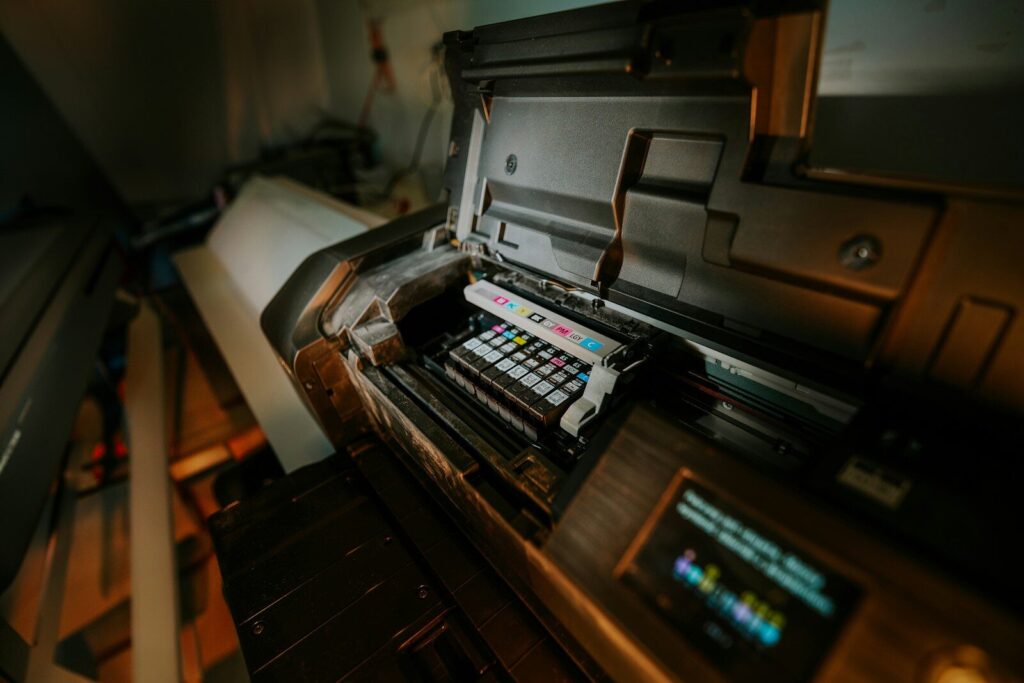
Photo by Jakub Żerdzicki on Unsplash
Why White Ink Requires Constant Maintenance
White ink is the foundation of every DTF print—it creates the opaque base that makes designs pop on dark or colored fabrics. It’s also the most demanding part of the printer to manage.
White DTF ink contains dense titanium dioxide particles that cause it to settle and separate quickly when not agitated. Skip a day of maintenance and it can harden inside your nozzles. The consequences: clogged printheads, missed production deadlines, and expensive repairs.
This is why white ink circulation systems are so critical. The best DTF printers use automatic circulation and stirring mechanisms to keep white ink in constant, gentle motion—preventing the settling that causes clogs. Self-cleaning ink systems take this further by automating the flushing process, reducing the risk of buildup without requiring manual intervention every time.
Still, even with automated systems in place, white ink requires consistent attention. A proper daily and weekly maintenance routine looks like this:
- Daily (5 minutes): Nozzle checks, wiper and capping station cleaning, ink agitation verification. Daily nozzle checks are one of the simplest and most effective ways to catch problems before they become expensive.
- Weekly (30–45 minutes): Deep printhead cleaning to prevent clogs, roller and platen wipe-down, film tension checks. Printheads should be cleaned at a minimum weekly to maintain print fidelity.
- Monthly (1–2 hours): Firmware updates, damper and tubing inspection, environmental condition review.
Environmental conditions matter too. Humidity should be maintained between 45% and 60% for optimal printer performance. Too low, and static causes film handling problems. Too high, and ink adhesion on film can suffer.
Miss any of this consistently and you’re not just risking a bad print run—you’re risking permanent printhead damage. Replacement printheads alone can cost hundreds of dollars.
The best DTF printers balance low maintenance requirements with high print fidelity—and automated cleaning features are a key part of that equation, reducing maintenance headaches for both experienced operators and beginners alike.
Ongoing Consumable Costs
Beyond maintenance, every print consumes materials that need replenishing. Ongoing costs for a DTF setup include inks, transfer film, and cleaning supplies. Inks to start DTF printing cost between $100 and $200 per liter, with white ink typically consumed at a higher rate than color channels. PET film, adhesive powder, cleaning solutions, swabs, and waste from test prints all add up. Monthly consumables typically run between $200 and $500 depending on your production volume.
The Role of RIP Software
RIP software is crucial for managing color gradients and ink droplet density in DTF printing. Without it, color accuracy suffers, white ink layering becomes inconsistent, and achieving repeatable results across print runs is far harder. Most professional DTF printers require a dedicated RIP workflow, and the software itself is often an additional cost—sometimes several hundred dollars—on top of the hardware.
AI-powered software is beginning to simplify design editing for new users in some newer printer platforms, but RIP software proficiency remains a non-negotiable skill for anyone running production-grade DTF equipment.
The Full Learning Curve
DTF printing isn’t just a hardware skill. It’s a system. Getting consistent, sellable results requires understanding:
- RIP software color profiling
- Artwork preparation (transparent PNGs, resolution requirements)
- Heat press temperature and pressure calibration
- Troubleshooting banding, smearing, or transfer adhesion issues
- Material-specific press settings
- White ink circulation monitoring
Many first-time buyers underestimate the learning curve and end up with clogged machines or wasted materials before producing their first quality batch. That time cost is real—and it delays revenue.
Are DTF Printers Worth It?
The honest answer: it depends entirely on your production volume and operational capacity.
Owning a DTF printer makes financial sense when:
- You’re running a full-time commercial print shop with dedicated operators
- Your daily print volume is consistently high (100+ shirts/week minimum)
- You have the workspace, ventilation, and infrastructure to support production
- You have staff trained to manage maintenance and troubleshooting
- Your revenue can absorb the upfront equipment investment and ongoing consumable costs
It often doesn’t make sense when:
- You’re launching a startup or side hustle
- You’re selling through Etsy, Shopify, or Amazon in small batches
- Your order volume fluctuates seasonally
- You’re operating from home with limited space
- You want to focus on sales and growth, not equipment management
Why Ordering Professional DTF Transfers Is Often the Smarter Choice
Photo by Compagnons on Unsplash
No Equipment Investment, No Equipment Headaches
When you order transfers from Limitless Transfers, the cost of the printer, heat press, oven, powder shaker, RIP software, and maintenance supplies disappears from your balance sheet entirely. Your capital stays in the business. Your time stays focused on selling, not troubleshooting.
Award-Winning Print Quality Without the Learning Curve
Limitless Transfers earned back-to-back 1st Place for DTF quality in both 2024 and 2025—recognition built on consistent, professional results that most entry-level in-house setups simply cannot replicate reliably. Every transfer is produced using professionally calibrated equipment and heavily researched ICC color profiles, meaning the quality you receive is consistent across every order.
Customers notice. As one verified reviewer put it: “The quality of the DTF is unmatched—true hot peel, great hand feel and vibrant colors.”
Why Expanded Gamut CMYK+RGBO+W Printing Produces Better Results
Standard DTF printing uses CMYK inks plus white. Limitless Transfers uses an expanded gamut system: CMYK + Red + Green + Blue + Orange + White. As Shirt Show’s comparison of extended gamut vs CMYK explains, expanded gamut printing dramatically widens the color space a printer can reproduce—delivering richer blacks, more vibrant oranges and greens, more accurate skin tones, and tighter brand color matching.
That’s a level of color accuracy that entry-level DTF printers with standard CMYK configurations cannot consistently achieve.
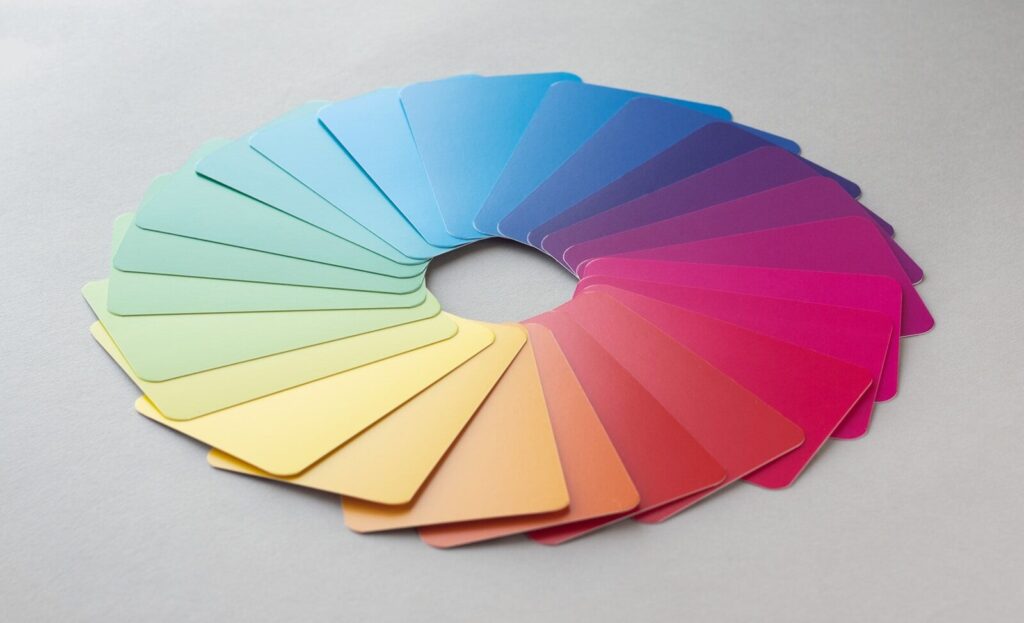
Photo by Andy Brown on Unsplash
True Hot Peel Transfers Speed Up Your Workflow
Limitless Transfers produces true instant hot peel transfers—meaning you press the transfer, peel the film immediately while hot, and move on to the next garment. No waiting for the film to cool. No cold peel delays. Faster production, cleaner workflow, and higher output per hour at your heat press.
Order Exactly What You Need—No Minimums, No Waste
Limitless Transfers offers no or low minimums and a built-in gang sheet builder that lets you upload designs by size, arrange multiple graphics on a single sheet, and maximize every inch of film. You order exactly what your customers need. Small batch? No problem. Bulk run? Even better.
This flexibility is especially valuable for Etsy sellers, Shopify stores, promotional product companies, school and sports organizations, and startup apparel brands that need professional results without committing to large print runs.
Same-Day Shipping Keeps You Competitive
Orders placed by noon ship the same business day. Free UPS Ground shipping applies to all orders over $50, with a $10 flat rate 2nd Day Air option available for time-sensitive jobs. When a customer needs their order fast, Limitless Transfers keeps your fulfillment timeline tight.
Photo by Annie Spratt on Unsplash
DTF Printer vs. Ordering Transfers: A Direct Comparison
|
Feature |
Buying a DTF Printer |
Ordering from Limitless Transfers |
|---|---|---|
|
Upfront Cost |
$800–$7,000+ (printer alone) |
Low |
|
Monthly Consumables |
$200–$500 |
None |
|
Ink Cost |
$100–$200/liter |
None |
|
Daily Maintenance |
Required |
None |
|
White Ink Clog Risk |
Yes (without automated systems) |
No |
|
Equipment Repairs |
Yes |
No |
|
Learning Curve |
High |
Minimal |
|
RIP Software Required |
Yes |
No |
|
Workspace Required |
A3/A4 minimum; large for commercial |
None |
|
Production Setup |
Complex |
Ready to Press |
|
Print Quality |
Depends on Operator & Equipment |
Award-Winning, Consistent |
|
Small Orders |
Less Efficient |
Perfect |
|
Scalability |
Limited by Equipment |
Easily Scalable |
|
Color Accuracy |
Standard CMYK |
Expanded Gamut CMYK+RGBO+W |
When Buying a DTF Printer Actually Makes Sense
This is an honest comparison, not a one-sided argument. For high-volume print shops with dedicated staff, consistent daily order flow, and the infrastructure to support a production environment, owning professional DTF equipment can deliver a strong long-term ROI. At that scale, per-print costs drop, turnaround is fully in-house, and operators develop the expertise to manage maintenance—including white ink circulation and automated cleaning routines—efficiently.
The key phrase is at that scale. If you’re not there yet—and most growing apparel businesses aren’t—the equipment investment is a significant risk that delays profitability rather than accelerating it.
Frequently Asked Questions About the Best DTF Printer
What printer is best for DTF transfers?
The best DTF printer depends on your production volume, available workspace, budget, and willingness to manage daily maintenance. For under 25 shirts/week, compact A3 models like the Punehod A3 or xTool Apparel Printer are solid starting points. For 25–100 shirts/week, automatic maintenance A3 printers reduce the daily burden. For 100–500 shirts/week, dual-head systems like the Prestige R1 or Uninet 1200 deliver the speed and consistency needed at that volume. For over 500 shirts/week, industrial wide-format options like the Epson SureColor F2100 are built for that demand. DTF printer prices range from $800 to $7,000 depending on the tier.
How does DTF compare to DTG and UV printing?
DTF is generally more versatile than DTG printing. DTG printers have height restrictions that limit which garment types they can handle and require pretreatment—especially on dark fabrics. UV printers can print on a wide variety of products but share similar height restriction challenges, making them less practical for apparel. DTF printing requires no pretreatment, has no height restriction issues, and works on virtually any fabric, from cotton and polyester to denim, leather, and more.
Why does white ink require so much maintenance?
White DTF ink contains heavy titanium dioxide particles that cause it to settle and separate quickly when not agitated. Without proper circulation and stirring, white ink clogs printheads fast. The best DTF printers include automatic circulation and stirring systems, self-cleaning ink cycles, and daily nozzle check routines to keep white ink flowing consistently. Printheads should be cleaned at least weekly, and humidity should be kept between 45% and 60% to maintain optimal print quality.
Who makes the best DTF prints?
Consistent, high-quality DTF prints depend on far more than just the printer model. Professional color calibration, quality ink, correct ICC profiles, and controlled production environments all play critical roles. Limitless Transfers has earned back-to-back 1st Place recognition for DTF transfer quality in 2024 and 2025, using expanded gamut CMYK+RGBO+W printing with professionally calibrated systems—a standard that’s difficult for entry-level in-house setups to match reliably.
Are DTF printers worth it for small businesses?
For small businesses with low-to-moderate order volumes—say, under 100 shirts per week—DTF printers are rarely worth the investment at the outset. The combination of upfront hardware costs, monthly consumable expenses of $200 to $500, daily maintenance demands, and the time required to master RIP software and white ink management typically delays profitability. Ordering transfers eliminates all of those barriers while delivering professional-grade results from the first order.
Which DTF printer is best for T-shirt printing specifically?
There’s no universal answer. For beginners, the xTool Apparel Printer’s compact design, AI-powered software, and self-cleaning systems make it one of the more approachable options. For shops in the 100–500 shirts/week range, dual-head systems with roll feed formats are the right fit. For industrial-scale operations, wide-format printers with high-volume ink support—like the Roland BY2-20—are built for that output. For businesses focused on apparel decoration without heavy daily production volume, ordering professionally produced transfers is still the fastest, lowest-risk path to consistent results.
Sometimes the Best DTF Printer Isn’t a Printer at All
The search for the best DTF printer usually begins with a reasonable assumption: that owning equipment is the fastest path to a profitable custom apparel business. For most entrepreneurs, that assumption doesn’t hold.
Equipment sits idle between orders. White ink settles and clogs at the worst possible time—even with automated maintenance systems in place. A failed print run wastes film, ink, and hours of your day. And while you’re troubleshooting your printer, your competitors are pressing transfers and shipping orders.
Limitless Transfers exists to solve that problem. Back-to-back award-winning quality, expanded gamut CMYK+RGBO+W printing, true hot peel transfers, same-day shipping, no minimums, a built-in gang sheet builder, and a team that picks up the phone—it’s everything you need to produce professional custom apparel without the equipment burden.
Start your first order at limitlesstransfers.com and experience the difference that award-winning transfers make—without buying a single piece of equipment.