Understanding neckline types is essential for successful DTF apparel design. Different necklines—from crew necks to sweetheart styles—directly affect artwork placement, sizing, and visual balance. Matching your design to the garment’s neckline ensures a professional, polished result every time.
Getting a DTF transfer to look sharp isn’t just about print quality. It’s about placement. And placement starts with one thing: understanding the neckline.
The neckline is the first thing a viewer’s eye travels to on any garment. It frames the face, accentuates the shoulders, and balances body proportions—acting as the focal point of an outfit while defining its silhouette, comfort level, and degree of formality. Get it right, and your design feels intentional. Get it wrong, and even the most vibrant transfer can look awkward or off-balance.
At Limitless Transfers, we work with garment decorators, print shops, e-commerce sellers, and DIY creators every day. One of the most common challenges they face isn’t the transfer itself—it’s knowing where to place it. That challenge almost always ties back to neckline types.
This guide breaks down every major neckline style you’re likely to encounter, explains how each one affects DTF design placement, and shares practical tips to help you get professional results across every garment you decorate.
Photo by Mohammed Hassan on Pexels
Why Neckline Types Matter in Apparel Design
How does the neckline shape the entire design layout?
The neck area acts as the visual anchor of most shirts and garments. It’s where the eye naturally lands first, which means your artwork placement decisions ripple outward from there. A design that sits too close to the neckline competes for attention. One that sits too low can feel disconnected from the garment’s overall structure.
Necklines also define the silhouette, comfort, and formality of a garment. A high turtleneck reads as polished and business-appropriate. An off-the-shoulder style signals elegance and occasion-wear. A simple crew neck says casual and versatile. Knowing where a neckline falls on that spectrum shapes every placement decision you make.
Different necklines also determine how much printable real estate you have. A standard crew neck offers a generous chest canvas. A high mock neck reduces that space significantly. Knowing this upfront prevents costly resizing after production.
Why can design placement make or break a garment?
Artwork positioned correctly enhances the garment’s silhouette and reinforces the brand or message. Positioned incorrectly, it creates visual tension—the eye doesn’t know where to focus, and the finished product looks unprofessional regardless of transfer quality.
Understanding neckline types gives you the context to make smarter placement decisions before a single transfer is pressed. For a deeper dive into apparel design principles, the guide from Fashion-Enter on garment construction offers useful foundational knowledge.
How do different necklines create different visual effects?
Necklines affect perceived proportions. A deep V-neck elongates the neck and creates the illusion of a longer torso. A wide boat neck visually widens the shoulders. A sweetheart neckline draws attention upward.
These visual effects interact directly with your artwork, either reinforcing or disrupting the overall aesthetic. Designers who understand both the garment and the artwork together produce better results than those who treat them as separate considerations.
Common Neckline Types to Know
Jewel Neckline
The jewel neckline is a simple, rounded collar that sits at the base of the neck. It’s one of the most common necklines in T-shirts, promotional apparel, and everyday basics. Because it provides a neutral, balanced canvas, it’s ideal for front-chest logos, centered graphics, and full-front designs. Standard DTF placement—typically 3 to 4 inches below the collar seam for a left-chest logo—works reliably on jewel necklines.
Crew Neck
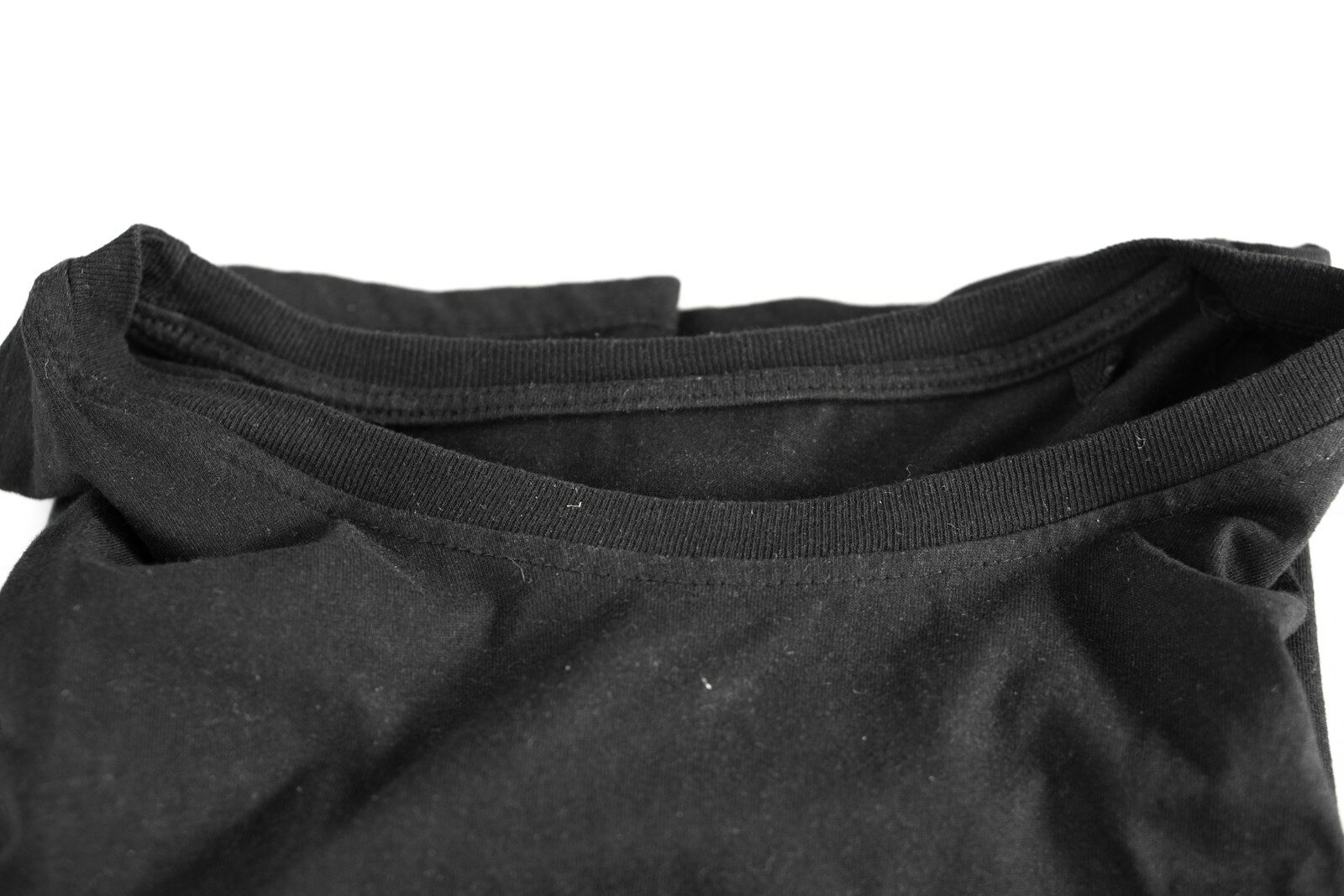
The crew neck is a close relative of the jewel neckline—rounded, sits at the base of the neck, and offers high coverage without going into mock-neck or turtleneck territory. Crew necks are highly versatile for layering and everyday basics, making them a staple in both casual and promotional apparel.
Along with scoop necks, they’re the standard choice for casual comfort. The generous, flat chest canvas makes crew neck tees one of the easiest garments to work with for DTF placement, accommodating everything from small left-chest logos to large full-front graphics.
Scoop Neckline
The scoop neckline features a wide, rounded U-shape that dips lower than a crew or jewel neckline. It draws attention to the collarbone and décolletage, giving it a more feminine and fashion-forward feel while still being a go-to for casual comfort.
That lower opening means your design needs to sit slightly higher to maintain visual balance, or lower to avoid the awkward middle ground near the neckline curve. Graphics that work well on crew necks may need to be repositioned or resized for scoop styles. The WGSN trend resource library regularly covers neckline trends and their visual impact on apparel silhouettes.
V-Neck and V Necklines
The V-neck style originated in the Middle East and has become one of the most universally flattering neckline types in modern apparel. The V creates a pointed shape that elongates the neck and produces the illusion of a longer torso—making it a popular choice across casualwear, formalwear, and everything in between. For DTF placement, the downward V-point at the center front divides the chest visually.
Centered artwork must be placed with care to avoid the V-point interfering with the design. Left-chest logos work well on V-necks since they sit off-center. For centered graphics, ensure the top of the design clears the V-point by at least two inches to maintain clean visual separation.
Boat Neck (Bateau Neckline)
The boat neck, also called a bateau neckline, runs horizontally across the collarbone from shoulder to shoulder with a wide, shallow curve. It emphasizes the neck, visually widens the shoulders, and is one of the most elegant everyday neckline options available.
Boat neck styles—alongside sweetheart and asymmetrical designs—are particularly popular choices for formal elegance. Because the neckline spans the full width of the garment, designs placed near the chest need to be scaled down slightly to avoid visual crowding. Wider, more horizontal layouts work better here than tall, vertical graphics.
High Neck and High Neckline Styles
Mock necks, turtlenecks, and other high-neckline garments offer high coverage and a more structured, polished appearance. Turtlenecks in particular provide a clean, minimalist silhouette that elongates the upper body—making them a strong choice for both fashion-forward and business-casual looks.
High necklines are well-suited to professional settings where a more refined, covered aesthetic is appropriate. From a DTF placement standpoint, these styles leave significantly less front space for artwork. Designs often need to shift lower on the chest or transition to a back placement. When front placement is required, keep graphics compact and avoid any artwork that needs vertical height to read clearly.
Halter Neck and Halter Necklines
The halter neckline is tied or fastened at the back of the neck, exposing the shoulders and back entirely. This open design draws the eye upward and accentuates the shoulders, creating a strong, confident silhouette. The front panel is relatively narrow and tapers toward the neckline.
Custom apparel decoration on halter tops works best with smaller, centered chest graphics or back designs. Large front prints often get lost or distorted, given the reduced and shaped canvas.
Off-the-Shoulder Neckline
The off-the-shoulder neckline has a long and storied history, dating back to the Regency and Victorian eras when it became a hallmark of formal dress. The neckline sits below the collarbones, leaving the décolletage bare and elegantly showing off the collarbones—giving it a timeless, graceful appeal. Today, off-the-shoulder styles expose the shoulder area entirely, leaving a wide horizontal band of fabric across the chest.
The visual center of the garment shifts downward, so designs need to be repositioned accordingly. Large shoulder-area graphics should be avoided since the fabric movement and drape of off-the-shoulder styles can distort transfer adhesion and appearance.
One-Shoulder Neckline
One-shoulder garments are asymmetrical by design and have become a go-to choice for formal events, where their dramatic silhouette makes a strong impression. Standard-centered placement strategies are ineffective here.
Artwork should be balanced to the side of the garment that carries more fabric—typically the side opposite the strap. Understanding how asymmetrical garments affect visual balance is key before committing to a placement decision. The Pantone Fashion Color Trend Report is a helpful reference for understanding how current styles influence garment design choices.
Sweetheart Neckline
The sweetheart neckline is named for its shape: two curved edges that meet at a center dip, closely resembling the top half of a heart. Common in fashion apparel, cocktail party wear, and formalwear, it’s a popular choice for occasion dressing where an elegant, upward-drawing silhouette is the goal.
Boat neck, sweetheart, and asymmetrical designs consistently rank among the top choices for formal elegance. For DTF placement, designs work best when centered well below the neckline curves. Competing with the neckline’s own visual detail is a common and easily avoided mistake.
Square Necklines
Square necklines create sharp, geometric edges rather than curves—forming a structured, modern frame that differs from every other neckline style. This geometry provides a natural lengthening effect for both the face and torso, making square necklines particularly flattering across a wide range of body types. The straight lines of a square neckline complement structured, geometric design layouts.
Rounded or organic graphics can feel mismatched against the angular neckline. Keeping your artwork’s framing aligned with the neckline’s geometry produces a more cohesive finished look.
Cowl Neckline
The cowl neckline is defined by its draped, folded fabric that gathers around the neck at the front of the garment. That relaxed drape gives it a soft, luxurious look that’s flattering for both casual and dressy occasions—a versatility that makes it a favorite in fashion apparel across many style categories. For DTF placement, however, the fabric movement is the biggest challenge.
The folds mean the garment’s surface is never fully flat, which can affect how a transfer lays during pressing and how it appears when worn. Designs should be placed on the flat area below the drape, and the pressing technique needs to account for the fabric’s movement. The Embroidery.com resource blog includes useful articles on applying heat transfers to structured and draped fabrics.
Keyhole Neckline
The keyhole neckline features a narrow vertical or teardrop-shaped opening at the center front, typically with a small clasp or button. Artwork must be positioned to either side of the keyhole opening or below it entirely. Centering a design directly over a keyhole creates visual conflict and can misalign once the garment is worn.
Illusion Neckline
Illusion necklines use semi-transparent mesh, lace, or sheer fabric to create the appearance of a higher neckline while exposing skin beneath. DTF transfers should be placed below the mesh section on solid fabric only. Attempting to press transfers onto sheer or mesh sections risks poor adhesion and visible backing.
Strapless Neckline and Strapless Style Garments
Strapless garments feature a straight or slightly curved neckline at the top of the chest with no shoulder or neck support. They’re a popular choice for semi-formal events, where their clean, open silhouette strikes the right balance between dressed-up and approachable.
The visual center of the garment sits higher than in standard T-shirts, so chest graphics may need repositioning. Smaller centered designs tend to work better than large full-chest graphics on strapless styles.
Surplice Neckline
The surplice neckline features two fabric panels that cross over each other in a V-shape, creating a wraparound effect. The overlapping fabric can shift when worn, which means designs placed over the crossover area may move or appear misaligned. The safest placement for surplice necklines is centered below the wrap point on the most stable section of the front panel.
Slit Neckline
Slit necklines feature a vertical front opening, usually at the center of the chest, that extends a few inches downward from the neck. Artwork should be positioned to avoid the slit entirely, either by centering the design below the slit’s endpoint or by offsetting to one side for a more intentional asymmetrical look.
Photo by Sam Badmaeva on Unsplash
How Do Necklines Affect DTF Design Placement?
What is the right distance from the collar for DTF placement?
Standard placement for a front chest design typically begins 3 to 4 inches below the collar seam. However, this measurement shifts depending on the neckline type. A deep scoop or V-neck may require artwork to start closer to the neckline seam to maintain visual centering.
A high mock neck or turtleneck may push placement further down the chest. Always measure from the actual collar seam, not the shoulder seam, and adjust based on the specific neckline you’re working with. The industry resource at Impressions Magazine provides in-depth placement guides and production tutorials for garment decorators.
How should you match design size to neckline width?
Wider necklines—like boat necks—allow broader, more horizontal design layouts. Narrower or more structured necklines, like jewel and keyhole styles, work better with designs that have more vertical proportions.
As a general rule, your design’s width shouldn’t exceed the visual span set by the neckline. Maintaining proportion across garment styles ensures your artwork looks intentional rather than forced.
How do body types and garment fit influence DTF placement?
Body type and garment fit affect how a design sits on the finished product. Fitted garments pull fabric tighter across the chest, which can shift a centered graphic slightly.
Relaxed fits provide a more stable, flat surface area for pressing. For fashion-forward garments, consider how the neckline interacts with the garment’s cut to ensure your placement translates cleanly from mockup to wearable product.
What are the differences between front chest designs and full front graphics for different necklines?
Left-chest logos (typically 3 to 4 inches wide) work across nearly all neckline types and are the most versatile placement choice. Full front graphics, which span most of the chest, require more careful neckline consideration. Necklines with significant visual detail—sweetheart, cowl, off-the-shoulder—can compete with large front graphics. For these styles, consider scaling down the graphic or opting for a back placement instead.
Why does specialty apparel require custom placement strategies?
Fashion garments are built differently from standard promotional T-shirts. Structured seams, overlapping panels, and unconventional fabric cuts mean that a one-size-fits-all placement approach simply doesn’t work.
Each specialty garment style deserves its own placement assessment before production begins. ApparelSearch is a comprehensive apparel industry reference that covers garment construction, fabric types, and design application across specialty styles.
Common Placement Mistakes to Avoid
Why does placing designs too high cause problems?
Artwork placed too close to the neckline competes with the collar itself. The viewer’s eye gets pulled between two visual focal points rather than settling on the design. For necklines with strong visual detail—sweetheart curves, V-points, keyhole openings—this creates confusion and undermines the overall look.
What happens when you ignore the neckline shape entirely?
A design that works perfectly on a crew neck can look completely wrong on a V-neck or halter top. The neckline changes the shape of the available canvas. Ignoring that shape means your design placement decisions are based on the wrong garment geometry.
Why is using the same placement for every garment a problem?
Different neckline types require genuinely different placement strategies. Using a single standard measurement across all garment styles leads to inconsistent results. Building a quick neckline check into your workflow before pressing eliminates this issue entirely.
How can oversized graphics cause problems near complex necklines?
Large graphics placed near sweetheart curves, keyhole openings, or off-the-shoulder edges often overlap with the neckline’s own design features. This creates visual clutter and can physically interfere with transfer adhesion along curved or shaped seam lines.
How does fabric movement affect the transfer appearance on draped necklines?
Cowl necklines, surplice wraps, and draped garments move constantly. A transfer applied over folded or gathered fabric may appear clean on the press table, but shift or crack after repeated wear. Always press on the flattest, most stable section of the garment and avoid placement over areas with significant fabric movement.
Photo by Oleksii Berdnikov on Unsplash
Pro Tips for Better Shirt Design Layouts
Why should you start with the garment before the artwork?
The garment should always come first in the design planning process. Knowing the neckline style, fabric weight, and garment construction before creating or sizing your artwork means you’re building for the actual canvas rather than retrofitting a design afterward.
How do test prints and mockups improve DTF results?
Mockups let you visualize placement before committing to production. Digital mockup tools help you confirm that your artwork’s size and position work with the specific neckline you’re targeting. For high-value or fashion garments, a physical test press on a similar blank is worth the extra step.
How should you scale graphics based on neckline types?
Wider, horizontal necklines support broader graphic layouts. Narrower or more structured necklines call for more compact designs. A general guideline: for standard T-shirts with jewel or crew necklines, full-chest graphics typically range from 10 to 12 inches wide. For fashion garments with complex necklines, scale down by 20 to 30 percent and assess the visual result against the neckline proportions.
How can businesses keep branding consistent across multiple garment styles?
Consistent brand recognition doesn’t require identical placement on every garment. It requires a consistent visual hierarchy. Keep your logo or brand mark at a consistent size relative to the garment canvas, and establish a clear secondary placement (such as back neck or sleeve) for styles where the standard chest placement doesn’t work.
Why do high-quality transfers matter for every neckline type?
Even the most precise placement decision falls apart if the transfer itself doesn’t deliver. Vibrant colors, fine detail retention, and a soft-hand feel ensure your design looks professional no matter what neckline you’re working with. At Limitless Transfers, our award-winning DTF transfers use expanded gamut CMYK+RGBO+W printing with refined ICC profiles—producing accurate, detail-rich results that hold up across cotton, polyester, blends, nylon, leather, denim, canvas, and more. True hot-peel technology means fast, clean application every time, even on garment styles that require precise, careful pressing.

Why Designers Trust Limitless Transfers for Every Apparel Style
Do Limitless Transfers work across different garment types and fabrics?
Yes. Limitless Transfers are engineered to work across a wide range of materials, including 100% cotton, polyester, tri-blends, nylon, leather, denim, canvas, neoprene, and more. Whether you’re pressing onto a standard crew-neck tee or a structured fashion garment with a complex neckline, the transfers apply cleanly and consistently across all fabric types.
How fast is production and shipping at Limitless Transfers?
Orders placed by noon EST typically ship the same day. Free UPS Ground shipping applies to all orders over $50, with a $10 flat-rate 2nd Day Air option also available on qualifying orders. For decorators working against event deadlines or fulfilling online orders, that turnaround is a genuine competitive advantage.
What ordering options does Limitless Transfers offer?
Limitless Transfers offers three flexible ways to order. Upload a ready-to-print gang sheet file directly. Use the online gang sheet builder to create your layout without needing advanced design software. Or order transfers by size for individual designs. There are no minimums, making Limitless Transfers accessible for DIY hobbyists and high-volume print shops alike.
What recognition has Limitless Transfers received for quality?
Limitless Transfers earned 1st Place for DTF Printing Quality in both 2024 and 2025—back-to-back recognition that reflects consistent performance across thousands of orders. That level of quality matters when you’re pressing onto premium garments where every placement decision counts.
The Neckline Is Where Great Design Starts
Every professional-looking custom garment begins with one decision: understanding the neckline. The neckline determines your available canvas, shapes your placement strategy, and interacts directly with your artwork in ways that either elevate or undermine the finished product.
Designers who take the time to understand neckline types—from the simple crew neck to the complex cowl—produce better, more consistent results. They avoid the common mistakes. They scale artwork correctly. They press with confidence.
Pair that knowledge with premium DTF transfers, and the results speak for themselves.
Ready to create your next apparel project? Limitless Transfers’ award-winning DTF transfers are built for every garment style, every neckline type, and every designer who refuses to settle for average. Start your order today at limitlesstransfers.com.
Frequently Asked Questions About Neckline Types and DTF Placement
What is the most common neckline type for custom T-shirts?
The crew neck and V-neckline are the most common necklines for T-shirts and promotional apparel. Both offer a balanced, neutral canvas that works well with most DTF placement strategies, including left-chest logos and full front graphics. Crew necks are especially valued for their versatility in layering and everyday basics.
How far below the collar should a DTF transfer be placed?
For most standard garments with jewel or crew necklines, the top of a front chest design should sit 3 to 4 inches below the collar seam. This measurement adjusts for other neckline types—deeper scoop and V-necklines may require placement closer to the neckline, while high-neck styles push placement further down the chest.
Can DTF transfers be applied to fashion garments with complex necklines?
Yes. DTF transfers adhere to a wide range of garment styles, including fashion apparel with sweetheart, cowl, off-the-shoulder, and surplice necklines. The key is placing the transfer on stable, flat fabric away from areas with heavy drape, overlapping panels, or significant fabric movement.
Which neckline types are the most challenging for DTF placement?
Cowl necklines, surplice wraps, off-the-shoulder styles, and one-shoulder garments present the most placement challenges due to fabric movement, asymmetrical construction, or overlapping panels. These necklines require custom placement assessments rather than standard measurements.
Do I need to resize my graphic for different neckline types?
Often, yes. Wider necklines like boat necks support broader, more horizontal layouts, while narrower or structured necklines work better with more compact graphics. Scaling artwork proportionally to the available canvas on each neckline type produces cleaner, more professional results.
What is the difference between a V-neck and a scoop neck for design placement?
A V-neck creates a downward point at the center front, which can visually intersect with centered artwork if the design starts too low. It also elongates the neck and creates the illusion of a longer torso.
A scoop neck creates a wide U-shaped curve that dips lower on the chest while drawing attention to the collarbone and décolletage. Both require placement adjustments compared to standard crew necks, but the specific adjustments differ based on the shape of the opening.
What necklines are best for formal or occasion wear?
Boat necks, sweetheart necklines, and asymmetrical one-shoulder styles are popular choices for formal elegance. Sweetheart necklines are a particularly strong fit for cocktail parties, while one-shoulder styles excel at formal events. Off-the-shoulder necklines—with roots in the Regency and Victorian eras—remain a timeless option for occasion wear where décolletage and collarbone definition are central to the look.