
A DTF transfer usually fails to stick due to incorrect temperature, insufficient or uneven pressure, wrong pressing time, garment moisture, or improper peeling. Most issues are fixed by following your supplier’s application guide closely, pre-pressing garments, and using a calibrated heat press. We’ll walk through each cause and how to troubleshoot it below.
Even premium DTF transfers can fail to bond properly if application settings aren’t dialed in. It’s frustrating to open a freshly pressed garment and watch the design peel, crack, or lift at the corners—especially when you know the transfer itself is excellent quality.
The good news? Most pressing problems come down to a handful of fixable variables: temperature, pressure, time, and moisture. Once you understand how these factors interact, troubleshooting becomes straightforward.
In this guide, we’ll cover the most common pressing mistakes, how to identify them, and how to consistently achieve professional and high quality transfer results with every application. We’ll also explain why proper technique matters for long lasting durability, and give you a troubleshooting checklist you can use before your next press.
We produce award-winning, true hot-peel DTF transfers at Limitless Transfers, but even the best transfer underperforms if it isn’t applied correctly. Our goal with this post is to help you get the most out of every sheet you press.
For additional background on the printing process itself, Wikipedia’s overview of direct-to-film printing is a solid primer.
Photo by Willian Santos on Pexels
How Does a Custom DTF Transfer Actually Work?
A DTF transfer starts as a design printed onto PET transfer film using CMYK ink, with a white ink layer added underneath to create opacity. While the ink is still tacky, a fine adhesive powder is applied to the printed surface and cured with heat. That cured film is what gets heat-pressed onto a garment—the heat melts the adhesive powder, bonding the design to the fabric, and the carrier film is then peeled away.
Three variables work together during this process: heat, pressure, and time. Heat melts the adhesive so it can penetrate the fabric fibers. Pressure forces that melted adhesive into firm contact with the garment. Time gives the bond enough opportunity to form fully. If any one of these is off, the adhesive won’t cure correctly, and the transfer won’t stick as intended.
One reason DTF printing has become so popular is its versatility. A DTF transfer works on nearly any fabric, including:
- Cotton
- Polyester
- Blends
- Canvas
- Denim
- Nylon
- Spandex
- Leather
Because DTF heat transfers include a white ink base layer, they work equally well on light and dark garments—something that sets DTF apart from processes that rely on the fabric color showing through so use a transparent background. DTF also skips the fabric pretreatment step required by direct-to-garment (DTG) printing, and unlike heat transfer vinyl (HTV), it supports intricate, multi-color artwork without any weeding.
Because cured DTF transfer film can be stored and pressed later, many print shops and DIY creators keep a stock of ready to press designs on hand, printing in batches and applying them as DTF transfer orders come in. For a deeper look at how time, temperature, and pressure interact during heat application, STAHLS’ heat printing basics guide is a helpful resource.
What Are the Most Common Reasons a DTF Transfer Won’t Stick?
If your transfer isn’t adhering properly, the cause almost always falls into one of the categories below. Let’s go through them one at a time.
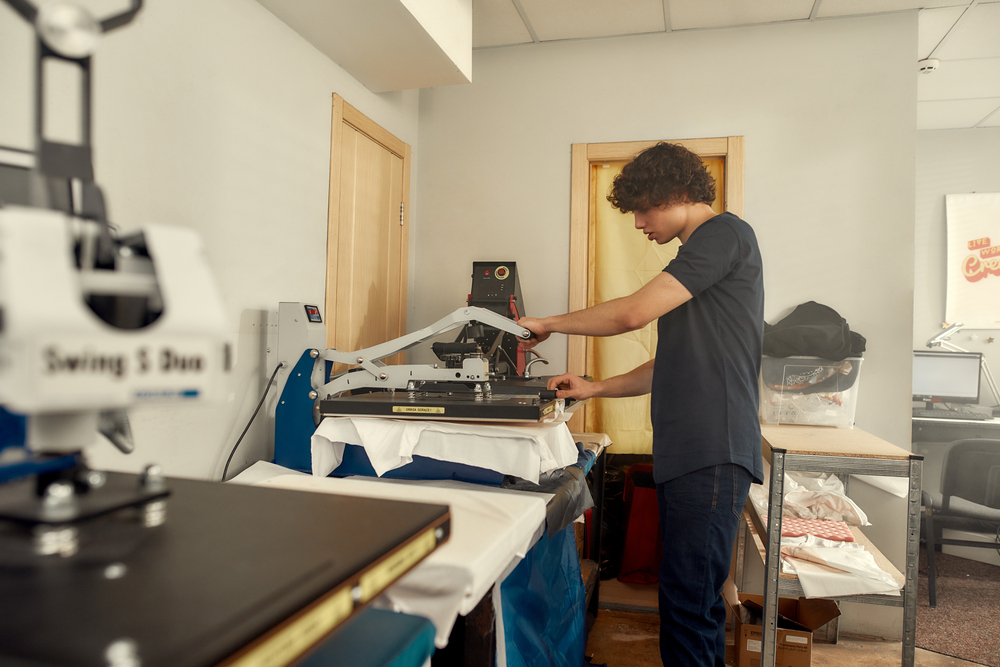
Young cheerful male worker using heat press transfer machine for printing t-shirt at workplace. Printing on clothing and textiles concept. Horizontal shot
Is Your Heat Press Using Enough Pressure?
Pressure is the most commonly underestimated variable in DTF application. Light, inconsistent pressure prevents the adhesive powder from making full contact with the garment fibers, which means the bond never fully forms.
Signs of insufficient pressure include edges that lift immediately after peeling, a design that looks “stamped” rather than bonded, or a transfer that cracks after the first wash. Most DTF transfers need firm, even pressure—similar to what you’d use for vinyl, not a light touch.
If your heat press struggles to apply even pressure across the full platen (common with older or lower-end presses), a pressing pillow can help compensate by adding support underneath uneven areas. Use pressing pillows only when needed, since overcorrecting can create its own unevenness.
Is Your Temperature Too Hot or Too Cold?
Temperature is the second most common culprit. Press too cool, and the adhesive powder won’t fully melt and bond. Press too hot, and you risk scorching the garment, damaging the ink, or over-curing the adhesive so it becomes brittle.
Most DTF transfers perform best in the 300–320°F range, with cotton garments often pressing well around the higher end, near 320°F. These figures reflect typical industry guidance—every transfer supplier formulates their adhesive powder and film slightly differently, so always check and follow the specific instructions that came with your transfers rather than relying on a one-size-fits-all number.
Are You Pressing for the Right Amount of Time?
Pressing time works hand-in-hand with temperature and pressure. Under-pressing (too short a cycle) doesn’t give the adhesive enough time to bond fully, while over-pressing can scorch garments or degrade the ink over time.
Typical press times fall in the 10 to 15 second range, though this varies by supplier, garment thickness, and heat press model. Following your supplier’s specific instructions is the most reliable way to avoid both outcomes—resist the temptation to “eyeball” it based on a different apparel brand’s transfer you’ve used before.
Cold Uneven Pressure Across the Platen Be the Issue?
Not all heat press pressure problems are about the overall PSI setting. Worn heat presses, warped or uneven platens, and thick seams can all create pressure differentials across a single press, meaning part of your design bonds well while another part doesn’t.
This is where pressure mapping—testing your press across different areas of the platen to identify weak spots—becomes useful, especially for shops running high volumes. If you notice pressure issues concentrated in specific zones repeatedly, it may be time to have your press serviced or recalibrated.
Are Seams Interfering With Your Press?
DTF is particularly useful for custom apparel and promotional items like T-shirts and hoodies. Hoodies, sweatshirts, and other heavier garments often have raised seams running directly through the design area. Because these seams sit higher than the surrounding fabric, they absorb a disproportionate amount of pressure, leaving the surrounding flat fabric under-pressed.
Pressing pillows or heat press pads designed to fill in the space around seams can help distribute pressure more evenly, ensuring the entire design area receives consistent contact.
Do Collars, Pockets, Buttons, or Zippers Affect Adhesion on Custom T Shirts and Other Blank Apparel?
Garments with collars, pockets, buttons, or zippers near the print area don’t always sit perfectly flat on the lower platen. Raised areas created by these features can prevent full adhesive contact across the design, leading to partial sticking or lifting at specific points.
Repositioning the garment so the design avoids these raised zones, or using specialty press attachments designed for pocket and collar areas, can help you avoid this problem altogether.
Is Moisture in the Garment Causing Your Transfer to Fail?
Moisture is one of the most overlooked causes of DTF transfer failure. Garments can retain moisture from humidity in storage, shipping, or simply from being new and freshly packaged. That trapped moisture turns to steam during pressing, which interferes with adhesive bonding and can cause the transfer to bubble or lift.
Why Does Pre-Pressing Matter Before Applying a DTF Transfer?
Pre-pressing a garment for a few seconds before you apply dtf’s removes wrinkles, drives out residual moisture, and creates a flatter, more even pressing surface. This simple extra step significantly improves adhesion and is one of the easiest habits to build into your workflow.
Are You Peeling Your DTF Transfer Correctly?
Peel method matters as much as press settings. Some transfers are designed for hot peel, meaning you remove the carrier film immediately after pressing while it’s still warm. Others require cold peel, where you wait for the film to cool completely before peeling.
Peeling at the wrong stage—too early, too late, or using the wrong method for your specific film—can pull the design away from the garment before the adhesive has fully set. Different manufacturers use different peel methods, so always follow the instructions supplied with your specific transfers. At Limitless Transfers, our transfers are true hot-peel, which supports faster production for high-volume orders.
Do Heat-Sensitive Fabrics Need Special Handling?
Fabrics like nylon, performance wear, and other specialty synthetics are more sensitive to high heat and can scorch, shrink, or warp at standard DTF pressing temperatures. For these materials, lower temperatures are often necessary to protect the fabric while still achieving a solid bond.
Before running a full order on an unfamiliar or heat-sensitive fabric, test press a small sample first to confirm your settings won’t damage the garment.
Should You Use a Household Iron Instead of a Heat Press?
A household iron might seem like a convenient substitute for a heat press, but it falls short in two critical areas: pressure and temperature consistency. Irons apply uneven, hand-driven pressure and often fluctuate in temperature as you move them across the garment, making a solid, even bond difficult to achieve.
A heat press, by contrast, delivers consistent pressure and even heating across the entire design, which translates directly into better durability and more reliable results. For anything beyond an occasional one-off project, a heat press is strongly recommended.
Are You Following Your Supplier’s Specific Application Instructions?
Every DTF transfer manufacturer formulates their film, powder, and ink slightly differently, which means temperature, pressure, peel method, and finishing press recommendations can all vary from one supplier to the next. Always refer to the application guide supplied with your specific order rather than assuming settings from a previous supplier will carry over.
If you’re setting up a dedicated pressing station, it’s also worth reviewing general workplace safety guidance around heat equipment. OSHA publishes resources on safe equipment operation that are useful for any shop running heat presses regularly.
Why Does Proper Application Matter for Long-Term Durability In DTF Printing?
Getting your settings right isn’t just about whether the transfer sticks on day one—it directly affects how long the design lasts with repeated wear. A properly cured DTF transfer should offer high elasticity, resist cracking and fading, and maintain strong peel resistance over many wash cycles for wash durability when applied and cared for correctly.
Proper washing habits extend that lifespan further:
- Washing inside out helps DTF transfers last longer.
- Use cold water
- Avoid bleach
- Dry on low heat
For more detailed guidance on fabric care, the American Cleaning Institute offers practical laundry tips, Cotton Incorporated covers fabric performance and care specifics, and ENERGY STAR has useful guidance on low-heat, energy-efficient drying practices that also happen to be gentler on printed garments.
It’s worth noting that durable DTF prints can feel slightly thicker than sublimation prints, since the design sits on top of the fabric rather than dyeing into it. Here’s how DTF compares to other common decoration methods:
- DTF transfer printing: Works on cotton, polyester, blends, and dark garments; sits on top of fabric with a soft-hand feel.
- Sublimation: Limited to polyester and light-colored garments; dye infuses into the fabric with no raised feel.
- Screen printing: Cost-effective at very high volumes but requires setup for each color and design.
- HTV: Requires weeding for detailed designs, which limits complexity.
DTF excels for small runs, personalized orders, and businesses and transfer companies that want to avoid setup fees while keeping ready to press inventory on hand for fast turnaround. That said, very large industrial production runs may still favor screen printing for cost efficiency at scale.
For a broader look at how different fabric types behave under heat and pressure, Britannica’s textile overview is a useful reference.
Troubleshooting Checklist Before Pressing Your Next Garment
Before you press your next DTF transfer, run through this checklist:
✔ Correct temperature set for your specific transfer and fabric
✔ Correct pressure applied evenly across the platen
✔ Correct pressing time followed per supplier instructions
✔ Garment pre-pressed to remove wrinkles and moisture
✔ Moisture fully removed from the garment
✔ Flat, even pressing surface confirmed
✔ Seams accounted for with pressing pillows or pads if needed
✔ Correct peel method used (hot peel vs. cold peel)
✔ Garment type and fabric sensitivity confirmed
✔ Supplier’s specific application instructions followed
✔ Heat press calibrated and in good working condition
Why We Focus on Consistent Results For Premium DTF Transfers
At Limitless Transfers, we know that even the best DTF transfer is only as good as its application. That’s why we focus on more than just print quality—we aim to help customers succeed at every step of the process.
Our transfers are known for vibrant colors, fine detail, and a soft hand feel, and they work on nearly every fabric type. We offer no minimum order requirements, so hobbyists and production shops alike can order the minimum quantity they need . Orders placed by our cutoff time ship same-day, with fast turnaround on every order, and we offer free shipping once your order reaches our qualifying amount.
Use Our Gang Sheet Online Builder For Your Customer Apparel
For design prep DTF transfers by size, our full Gang Sheet Builder makes it easy to upload your own print ready gang sheet or build one sheet by size and arrange multiple designs directly on our site. We’re also a one-stop print shop—beyond custom DTF transfers, we carry heat presses and supplies so you can source everything you need for your custom apparel business in one place, whether you’re working with blank apparel for a small side project or managing high-volume production.
Whether you’re new to premium DTF transfers and plan to not make more than one custom t-shirt or one transfer or have been ordering dtf gang sheet prints for years, the fundamentals covered in this guide will help you get consistent, long-lasting results order after order along with the ordering process.
Frequently Asked Questions
What exactly is a DTF transfer?
A DTF transfer is a design printed onto PET film using CMYK ink with a white ink base layer, then coated with a fine adhesive powder and cured with heat. The cured DTF film is heat-pressed onto a garment, bonding the design to the fabric, after which the carrier film is peeled away. DTF transfers work on nearly every fabric type and produce vibrant colors with fine detail.
Can a Cricut do DTF transfers?
No. A Cricut cutting machine does not print high quality DTF transfers—it’s a cutting tool, not a printer capable of applying ink, white underbase, and adhesive powder. Cricut users can still apply pre-printed DTF transfers to garments using a heat press or another compatible pressing method; the Cricut simply isn’t involved in producing the transfer itself.
Which is better, DTF or sublimation?
Choose DTF if you need to print on cotton, polyester, blends, or dark-colored garments, since DTF transfers work across a much wider range of fabrics and colors. Choose sublimation if you’re working exclusively with light-colored polyester and want a design that’s fully infused into the fabric with no raised hand feel. DTF sits slightly on top of the fabric surface, while sublimation becomes part of the fabric itself.
Can I print my own Custom DTF transfers Or Do I need to order DTF transfers?
It’s possible, but it comes with real costs and challenges. Printing in-house requires a dedicated DTF printer, PET film, adhesive powder, specialized ink, and a curing oven, plus ongoing maintenance to prevent print head clogging and ink sedimentation.